Table of Contents
How to create a podcast for a business is a question many tech-savvy professionals are asking in today’s digital age. Creating a podcast offers an excellent way to connect with a wide audience, build industry authority, and promote your brand in a unique format. Here’s a quick rundown to guide you:
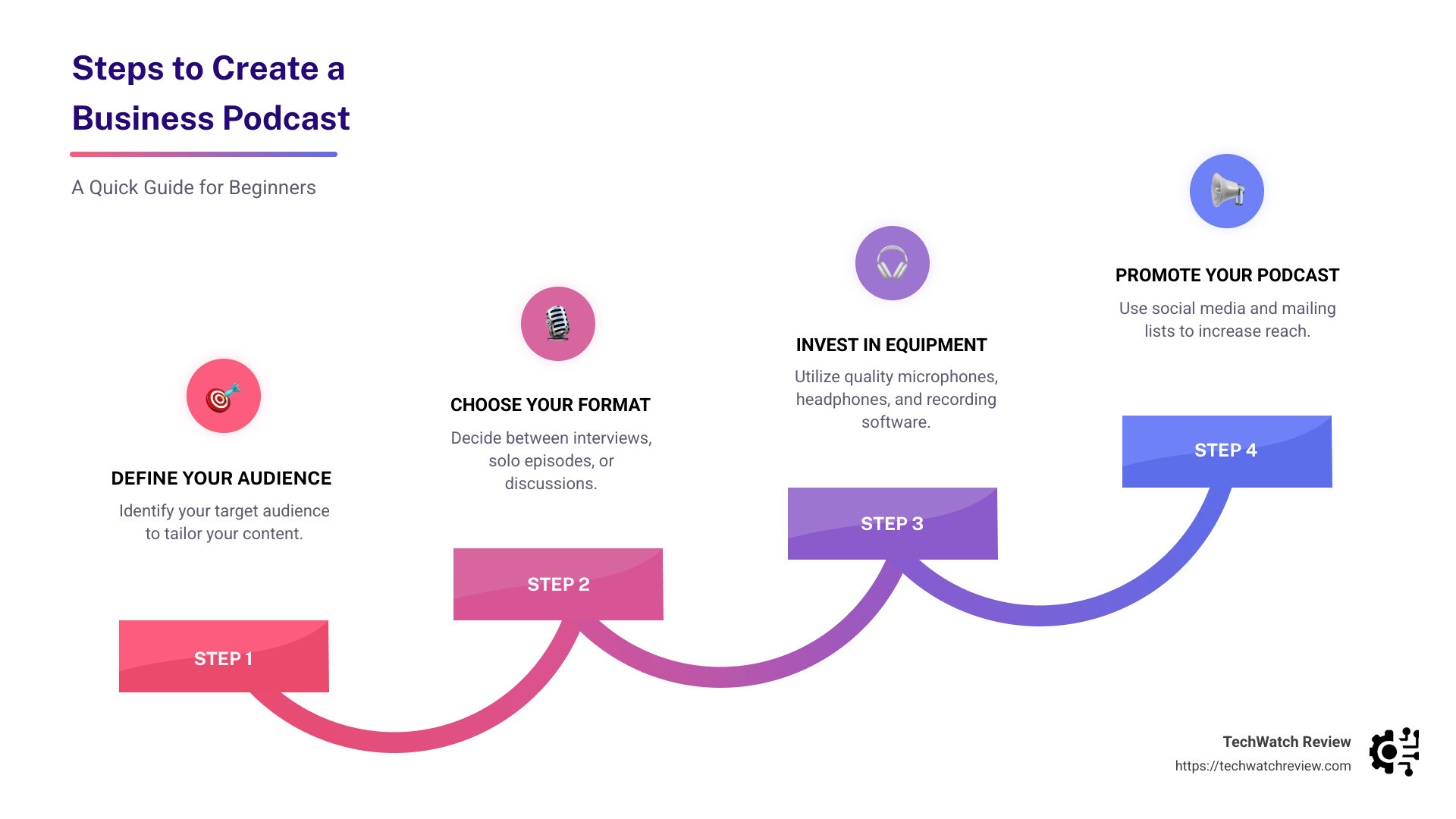
- Define your target audience: Identify who you want to reach and tailor your content accordingly.
- Choose a format: Decide between interviews, solo episodes, or panel discussions.
- Invest in quality equipment: Basic essentials include a microphone, headphones, and recording software.
- Record and edit episodes: Use tools like Adobe Audition or Audacity for production.
- Distribute your podcast: Submit to major directories like Apple Podcasts and Spotify.
- Promote your show: Use social media, mailing lists, and promotional clips to increase your reach.
A podcast is a pre-recorded audio series available online for listeners to access on demand. Unlike traditional radio shows, podcasts can be consumed at any time, making them perfect for busy professionals seeking engaging content during commutes or at home.

The podcast audience spans all demographics, with over 55% of Americans aged 12 and above having listened to one. Podcasts provide an indirect marketing outlet due to their targeted nature, offering businesses a unique opportunity to engage with potential customers without the noise of traditional advertising.

The benefits of podcasting for businesses are manifold: it offers a channel for storytelling, an avenue for establishing authority in your industry, and a method to foster community among listeners. With minimal setup requirements and the potential for monetization through sponsorships and partnerships, podcasting is a worthwhile venture for any business looking to diversify its digital footprint.
For more insights, check out our articles on being boss a podcast for creative entrepreneurs, best podcasts for building a business, and creative business podcast.
Why Start a Business Podcast?
In the busy world of digital marketing, starting a business podcast is a strategic move that can yield numerous benefits. Let’s explore why this medium is gaining traction among businesses.
Increase Website Traffic
A business podcast acts as a magnet for website traffic. By consistently promoting your products or services within your episodes, you encourage listeners to visit your site for more information. This not only boosts your site visits but also improves your chances of converting listeners into customers. According to research, a well-executed podcast can significantly increase your online visibility and drive sales. For more insights on increasing website traffic, check out this article on TechWatch Review.
Amplify Your Digital Marketing Efforts
Podcasts offer a unique opportunity to amplify your digital marketing strategy. They allow you to engage with your audience in a more personal and interactive manner. Unlike traditional forms of marketing, podcasts invite listeners into a conversation, making your brand more relatable and memorable. This medium is especially effective for building brand awareness and establishing a strong digital presence. Learn more about enhancing your digital marketing efforts here.
Diversify Your Brand
Podcasting is an excellent way to diversify your brand. It allows you to showcase the human side of your business by featuring the voices and stories behind your brand. This not only strengthens your brand personality but also adds depth to your existing marketing strategies. By offering valuable content that resonates with your audience, you can improve customer loyalty and retention. Discover more about brand diversification in this article.
Establish Industry Authority
Hosting a business podcast positions you as an authority in your industry. By sharing insights, tips, and interviews with industry leaders, you can demonstrate your expertise and build credibility. This not only earns you respect within your field but also fosters trust among your listeners. As you continue to provide valuable content, your podcast can become a go-to resource for industry-related information. For tips on establishing industry authority, visit this page.
Build a Community
Finally, podcasts are a powerful tool for community building. They help you reach new audiences who may find your business through their favorite podcast platforms. Over time, you can cultivate a community of loyal listeners who engage with your content and support your brand. This community can be a valuable asset, providing feedback, spreading the word about your podcast, and even contributing to your content. Learn more about building a community here.
In summary, a business podcast is more than just a marketing tool; it’s a platform for growth and engagement. Whether you’re looking to increase website traffic, improve your digital marketing efforts, diversify your brand, establish authority, or build a community, podcasting offers a versatile solution.
How to Create a Podcast for Your Business
Creating a podcast for your business involves several key steps, each designed to ensure that your show resonates with your target audience and stands out in a crowded market. Let’s break it down.
Choosing a Podcast Topic and Format
Podcast Topic and Niche Selection
The first step is selecting a podcast topic that aligns with your business goals and interests. A well-defined niche helps you attract a specific audience, which is crucial for building a loyal listener base. For instance, if your business operates in the tech industry, you might focus on emerging technologies or digital marketing trends.
Audience Persona and Content Plan
Understanding your audience is essential. Create an audience persona to identify their interests, challenges, and preferences. This will guide your content plan, ensuring that each episode is relevant and engaging. For example, if your audience consists of small business owners, your content might focus on practical tips for business growth.
Podcast Format and Style
Choosing the right format and style is equally important. Whether it’s an interview-based show, a solo narrative, or a panel discussion, the format should fit your content and appeal to your audience. Keep the podcast length in mind as well; most listeners prefer episodes that are concise and packed with valuable insights.
Setting Up Your Podcast Equipment
Microphones and Headphones
Investing in quality equipment is crucial for producing clear and professional audio. The Samson Q2U and Rode PodMic are popular microphone choices for podcasters, offering excellent sound quality without breaking the bank. Pair these with comfortable, noise-canceling headphones to monitor your recordings effectively.
Recording Software
Selecting the right recording software can improve your production process. Adobe Audition and Audacity are both excellent options for editing your podcast. Audacity is a free, open-source platform suitable for beginners, while Adobe Audition offers advanced features for more experienced users. For a reliable and user-friendly interface, consider Riverside.fm, which is designed specifically for podcasters.
Additional Equipment
If you’re using XLR microphones, you’ll need an audio interface like the Focusrite Scarlett to connect them to your computer. For those using multiple USB microphones, the ASIO4All driver can help manage recording inputs on your computer.
Recording, Editing, and Producing Your Podcast
Recording Tips
When recording, ensure your environment is quiet and free from distractions. Position your microphone correctly and maintain a consistent distance to avoid fluctuations in volume. Test your equipment and settings before the main recording to prevent technical issues.
Editing and Producing
Editing is where your podcast truly comes to life. Use your chosen software to remove background noise, trim unnecessary segments, and add music or sound effects to improve the listening experience. While it’s tempting to aim for perfection, a few minor errors can add authenticity to your podcast.
By carefully selecting your topic, investing in the right equipment, and mastering the basics of recording and editing, you can create a podcast that not only represents your business well but also captivates and retains your audience.
Next, we’ll explore strategies for promoting your business podcast effectively.
Promoting Your Business Podcast
Promoting your business podcast is crucial for reaching a wider audience and ensuring the success of your show. Here’s how you can effectively market your podcast using various strategies.
Leverage Social Media
Social media platforms are powerful tools for promoting your podcast. Identify where your target audience spends most of their time online—whether it’s Instagram, Twitter, LinkedIn, or Facebook—and focus your efforts there. Create engaging content such as graphics, soundbites, and short video clips from your podcast episodes to capture attention. Use relevant hashtags and encourage your followers to share your content to boost visibility.
Collaborating with other podcasters or influencers in your niche can also expand your reach. By sharing each other’s content, you can tap into new audiences who are likely to be interested in your podcast. For more tips on leveraging social media, check out this article on social media strategies.
Build a Mailing List
A mailing list is an effective way to keep your audience updated and engaged. Send out regular newsletters featuring new episodes, behind-the-scenes content, and exclusive offers. Personalize your emails to make your subscribers feel valued and encourage them to share your podcast with their networks. Email marketing not only helps in building a community but also drives traffic back to your podcast. Learn more about building a mailing list in this guide.
Create Promotional Clips
Promotional clips are short, engaging snippets from your podcast that highlight key moments or interesting quotes. Tools like Headliner allow you to create audiograms—visual soundbites with animated waveforms and captions—that are perfect for sharing on social media. These clips can entice potential listeners by giving them a taste of what your podcast offers. For a detailed look at creating promotional clips, visit this resource.
Use Magic Clips
Magic Clips are a fantastic way to repurpose your podcast content. These are curated highlights from your episodes that can be shared across different platforms. By using tools like OpusClip, you can automatically generate video clips from your podcast, making it easy to post on Instagram, TikTok, and other social media channels. This not only saves time but also helps maintain a consistent promotional strategy. Discover more about using Magic Clips here.

By effectively using social media, email marketing, and promotional tools, you can significantly improve your podcast’s reach and build a loyal listener base. Next, we’ll address some frequently asked questions about starting a business podcast.
Frequently Asked Questions about Business Podcasting
Can You Start a Podcast for Free?
Yes, you can start a podcast for free! Platforms like Anchor and Buzzsprout offer free plans that allow you to host and distribute your podcast without any initial investment. Anchor is particularly user-friendly, providing tools to record, edit, and publish your podcast directly from your phone or computer. This makes it an excellent choice for beginners looking to dive into podcasting without spending money upfront.
Buzzsprout also offers a free plan, though it limits the amount of content you can upload monthly. Despite this, it’s a great way to test the waters and get familiar with podcasting basics. Both platforms distribute your podcast to major directories like Apple Podcasts and Spotify, ensuring your show reaches a wide audience.
How Does a Beginner Start a Podcast?
Starting a podcast as a beginner involves several steps, but it’s easier than you might think. First, develop a podcast script to give your episodes structure and ensure you cover all the important points. A well-organized script can make your podcast sound professional and keep your audience engaged.
Next, choose a podcast hosting service. This is where your podcast files will be stored and distributed to various podcast directories. Platforms like Anchor and Buzzsprout are popular choices for beginners due to their ease of use and free options.
Once your podcast is recorded and edited, submit it to podcast directories. These are platforms where listeners can find and subscribe to your podcast. Getting listed in major directories like Apple Podcasts, Spotify, and Google Podcasts is crucial for reaching a larger audience.
Do Podcasts Make Money?
Yes, podcasts can be monetized in several ways, though it often requires time to build a substantial audience. Sponsorships are a common revenue stream, where companies pay you to mention their products or services during your podcast. As your listener base grows, you can also incorporate ads into your episodes, earning money based on the number of listens.
Other monetization strategies include affiliate marketing, where you earn a commission for sales made through links shared in your podcast. You can also sell merchandise or offer premium content, such as bonus episodes or ad-free listening, through platforms like Patreon.
Choosing the right monetization strategy depends on your audience and the type of content you offer. With consistency and quality content, your podcast can become a profitable venture.
Conclusion
Creating a podcast for your business can be a game-changer in today’s digital landscape. At TechWatch Review, we provide expert insights and reviews on the latest technology products, helping you steer the complex world of podcasting and other tech solutions.
Podcast Hosting Services
Choosing the right podcast hosting service is crucial for your podcast’s success. Hosting platforms like Libsyn and Captivate offer managed hosting for your audio files and automatic creation and management of your RSS feed. They also provide distribution to major directories like Apple Podcasts, Spotify, and Google Podcasts. These services ensure that your podcast reaches a broad audience and is easily accessible.
Libsyn, for example, offers a robust platform starting at just $5 per month, allowing you to distribute your podcast to various platforms, including Facebook and YouTube. Captivate is another excellent choice, known for its creator tools and ability to host multiple podcasts under one plan.
Podcast Distribution
Effective podcast distribution is key to reaching your target audience. Once your podcast is hosted, you need to submit it to various podcast directories. While some directories automatically pick up new podcasts, it’s important to manually submit your podcast to platforms like Apple Podcasts to gain access to valuable analytics and ranking information.
The New & Noteworthy section on Apple Podcasts is a coveted spot for new podcasts, offering significant exposure. You have about eight weeks from your podcast’s launch to make it into this section, so plan your promotion strategy accordingly.
Podcast Growth Strategies
Growing your podcast involves a mix of strategic promotion and content excellence. Use social media platforms like Twitter, Instagram, and Facebook to share promotional clips and engage with your audience. Tools like Magic Clips can help you create shareable content snippets, increasing your podcast’s reach.
Collaborating with other podcasters can also boost your growth. Consider participating in podcast swaps or joint episodes to tap into each other’s audiences. This strategy not only expands your listener base but also builds a sense of community within your niche.
By following these strategies, you can create a successful business podcast that not only improves your brand but also potentially becomes a profitable venture. For more insights on business management software and to explore our comprehensive guides, visit our Business Management Software page.