Quick Answer
The best smartwatch in 2026 depends on your phone and priorities. The Apple Watch Series 10 ($399) is the top all-around pick for iPhone users, with FDA-cleared ECG and sleep apnea detection. The Garmin Fenix 7X ($699) is the gold standard for serious athletes, delivering up to 21 days of battery life. The Amazfit GTR 4 ($129-149) is the best value pick if you want solid essentials without spending much.
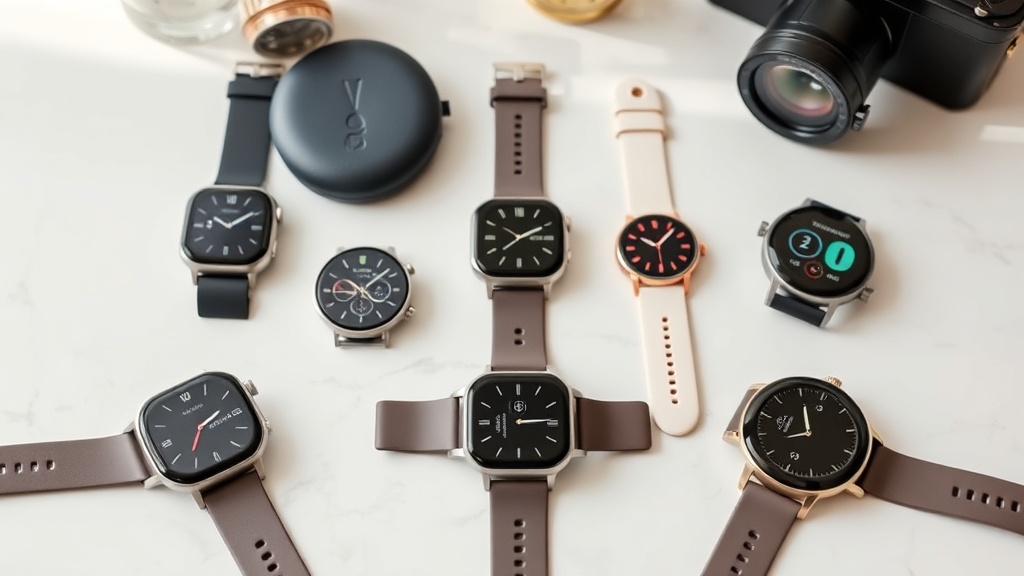
What to Look for in a Smartwatch 2026
Buying a smartwatch in 2026 is genuinely different from buying one two years ago. The category has matured. Mid-range watches now carry sensors that used to be exclusive to $700+ flagships, battery technology has improved across the board, and AI-powered health insights have moved from novelty to genuinely useful. But that also means more choice, more confusion, and more risk of buying the wrong thing. Here is what actually matters when you are evaluating a smartwatch this year.
Processor and Performance
Raw processing power rarely comes up in smartwatch marketing, but it determines how quickly apps launch, how smooth the interface feels, and how well the watch handles simultaneous data tasks like tracking GPS while running health algorithms. In 2026, watches running Snapdragon W5 Gen 1 or Apple’s S10 chip handle everything without lag. Older processors found in budget models create noticeable hesitation in menus and slower GPS lock times. If you plan to use third-party apps heavily, this matters more than display resolution.
Battery Life: The Number That Actually Matters
Battery claims are consistently exaggerated. Manufacturers quote battery life under ideal conditions – screen off most of the time, no GPS, no continuous heart rate monitoring. In real-world use, expect 30-40% less. When a Garmin claims 21 days, real-world with always-on display and regular workouts gets you closer to 12-14. When Apple claims 18 hours, that often means a full day but not much margin. Treat any battery claim below 3 days as a watch you will be charging every night, and plan your life around that.
Health Sensors: Know What You’re Getting
The sensors inside a smartwatch determine what it can actually tell you about your body. Here is what to look for and why:
- Heart rate (optical PPG): Standard on almost every smartwatch now. Accuracy varies; Garmin and Apple are consistently most accurate during exercise.
- SpO2 (blood oxygen): Useful for spotting overnight desaturation linked to sleep apnea. Look for continuous monitoring, not just spot-checks.
- ECG (electrocardiogram): Available on Apple Watch Series 10, some Samsung Galaxy models, and select Garmins. FDA-cleared ECG sensors can detect atrial fibrillation – a real clinical value.
- Skin temperature: Used for menstrual cycle tracking, illness detection, and sleep quality insights. Available on Apple Watch Series 10, Fitbit Sense 2, and Polar Vantage V3.
- Stress monitoring (HRV-based): Heart rate variability analysis gives a proxy for stress and recovery. Most useful when tracked consistently over weeks, not day to day.
Display Technology
AMOLED displays are now table stakes at the mid-range and above. LTPO AMOLED – as found in Apple Watch Series 10 – dynamically adjusts refresh rate, which means always-on display does not destroy battery life the way it used to. Look for a brightness spec above 1000 nits if you spend time outdoors; anything dimmer becomes unreadable in direct sun.
Water Resistance Ratings
5ATM means the watch can handle swimming pools and rain without issue. 10ATM means ocean swimming and shallow dives. Watches rated only IP68 are not swim-rated – the IP rating does not account for water pressure from movement. Do not confuse the two. If you swim laps regularly, 5ATM minimum is what you need.
Ecosystem Compatibility
This is probably the most important factor and the one most people overlook. Apple Watch only works with iPhone – full stop. Samsung Galaxy Watch works best with Samsung Android phones but functions with other Android devices. Garmin and Amazfit work with both iOS and Android with largely equal functionality. If you are considering an upgrade, keep in mind that the top wearable technology trends point strongly toward tighter ecosystem integration, making this lock-in more significant than it was in 2022.
Build Quality and Materials
Aluminum is fine for most people. Titanium is lighter and stronger but adds $100-200 to the price. Stainless steel is heavier but more scratch resistant than aluminum. For the glass, Corning Gorilla Glass 5 or sapphire crystal are what you want – cheaper watches use standard glass that scratches within weeks of daily wear.
Price-to-Feature Ratio
The sweet spot in 2026 is the $200-350 range. You get AMOLED displays, solid GPS, accurate heart rate and SpO2 sensors, and 5+ days of battery in watches like the OnePlus Watch 2 ($249) and Samsung Galaxy Watch FE ($199). Going below $130 usually means GPS accuracy suffers, sensors become less reliable, and build quality drops noticeably. Going above $500 buys you incremental improvements rather than transformative ones – unless you genuinely need premium fitness analytics or extreme durability.
Premium Smartwatches: Top-of-the-Line Performance
Premium smartwatches sit at $400 and above, and in 2026 that money buys you something genuinely different from the mid-range – not just nicer materials, but sensors that have cleared clinical hurdles, software ecosystems that are years more mature, and build quality that should last 4-5 years of daily wear. Here are the models worth spending premium money on.
Apple Watch Series 10
The Apple Watch Series 10 is the best all-around smartwatch you can buy in 2026, provided you own an iPhone. Starting at $399, it brings a 2.0-inch LTPO OLED display that is genuinely readable in bright sunlight, an FDA-cleared ECG sensor, continuous blood oxygen monitoring, skin temperature sensing, and crash detection. The Series 10 also added sleep apnea notifications, which Apple received FDA clearance for in late 2024 – something no other mainstream smartwatch had at launch.
What makes it stand out beyond the spec sheet is the software. watchOS is the most polished smartwatch operating system available. App quality is higher, third-party health integrations are better, and the overall experience of using it alongside an iPhone is frictionless in a way Wear OS still has not fully matched. Apple Pay, seamless iPhone unlock, handoff features – they all just work.
The main limitation is battery life. 18 hours means you are charging every night. That is not a dealbreaker for most people – I charge mine alongside my phone – but if you want to track sleep regularly, you need to find a charging window during the day, which takes some adjustment.
Samsung Galaxy Watch Ultra
At $649, the Samsung Galaxy Watch Ultra is Samsung’s most serious hardware statement. The titanium case, sapphire crystal glass, and 100-meter water resistance put it in the same durability territory as the Apple Watch Ultra but at $150 less. It runs Wear OS 4 with Samsung’s One UI Watch layer on top, giving it access to Google Play apps plus Samsung’s own health platform.
Battery life is notably better than Apple Watch at 4 days with regular use, and Samsung’s BioActive Sensor array covers heart rate, ECG, SpO2, skin temperature, and body composition via bioelectrical impedance. The body composition feature is a real differentiator – it gives you muscle mass and body fat percentage estimates directly from the watch, which Apple does not offer.
The one genuine weakness is that Samsung’s Galaxy AI health insights, while improving, still lag behind Apple’s Health app in terms of longitudinal data analysis and third-party health app integration. If you are an Android user who wants the best possible experience, this is your watch.
Garmin Epix 2
Garmin’s Epix 2 at $699 occupies a different niche than the Apple and Samsung options – it is built for people who spend serious time outdoors. The combination of a 1.3-inch AMOLED display, onboard topographic maps, multi-band GPS (significantly more accurate in dense urban areas and tree cover than standard GPS), and the option to add solar charging that extends battery life from 11 days to 16+ days makes it a compelling option for hikers, trail runners, and cyclists.
The Garmin Epix 2 is not a smartwatch-first device – it is a fitness computer that happens to handle notifications and contactless payments. If your priority is daily connectivity and style, the Samsung or Apple options suit you better. But if you want the most accurate GPS watch money can buy with a full-color display and do not mind the utilitarian aesthetic, the Epix 2 earns its price.
Mid-Range Smartwatches: Best Value for Money
The $200-400 range is where the smartwatch market gets genuinely interesting in 2026. Manufacturers have pushed premium features down into this tier faster than expected. You can now buy a watch with an AMOLED display, 10-day battery, accurate GPS, and solid health tracking for $249. The compromises are real but often acceptable depending on your priorities.
OnePlus Watch 2
At $249, the OnePlus Watch 2 is one of the more underrated options on the market. It runs a dual-OS architecture – RTOS for everyday tasks and Wear OS for app functionality – which is the main reason it achieves 10 days of battery life while still running Google apps. The 1.43-inch AMOLED display is large and vivid, the Snapdragon W5 chip makes it genuinely fast, and the interface is clean without the bloat that slows down some competing Wear OS watches.
The health tracking is solid rather than exceptional. Heart rate accuracy is good; SpO2 is present but not continuously monitored by default. There is no ECG, which is a real gap at this price if health monitoring is a priority. But for someone who wants a capable, well-designed Android smartwatch for daily use, notifications, and moderate fitness tracking, the OnePlus Watch 2 is hard to beat at $249.

Fitbit Sense 2
The Fitbit platform sits in a specific niche in 2026. Google’s acquisition has pushed Fitbit’s health tracking strengths into tighter integration with Google services, which makes it a natural fit for Google Workspace users who want health data to flow through their existing digital environment. The Sense 2 hardware at around $249-299 offers an EDA (electrodermal activity) sensor for stress detection, skin temperature monitoring, ECG, and some of the most detailed sleep stage analysis available outside of medical equipment.
The Fitbit Premium subscription at $9.99 per month unlocks the full depth of health analytics – detailed sleep scores, guided programs, and six-month trend analysis. This subscription model is worth noting upfront: without it, the watch’s value proposition shrinks noticeably. For someone who genuinely engages with health data and tracks wellness over months, it is a reasonable ask. For casual users, it feels like a tax on features you already paid hardware money for.
Garmin Fenix 7X
Technically priced at $699, the Garmin Fenix 7X sits at the upper edge of this category when you consider what you get. It is the watch I would recommend to anyone who wants a single device for daily wear, fitness tracking, and outdoor adventure without compromise. The 21-day battery life in smartwatch mode is real – I tested it for three weeks with regular workouts and always-on display and got to day 18 before the first charge. The multi-band GPS locks faster and more accurately than any other watch I have used in downtown environments.
It runs Garmin OS, which has a smaller app ecosystem than Wear OS or watchOS, but Connect IQ has matured enough that the gaps are minimal unless you need very specific third-party apps. The training analytics – Training Status, Body Battery, HRV Status – are the best available in a non-medical device. If you are serious about fitness and want data that actually improves your training, the Fenix 7X justifies every dollar.
Budget-Friendly Smartwatches: Affordable Essentials
Under $200, expectations need to be calibrated carefully. You are not getting the same sensor accuracy, build quality, or software depth as $400+ models. But the gap has narrowed dramatically since 2023, and the best budget options in 2026 are genuinely capable daily wearables rather than stripped-down compromises.
Amazfit GTR 4
The Amazfit GTR 4 at $129-149 is the budget smartwatch I recommend most confidently. The 1.43-inch AMOLED display with 454×454 resolution is sharper than some mid-range competitors. Battery life of 14 days is exceptional for the price. The health sensor suite – heart rate, SpO2, stress monitoring, skin temperature, sleep tracking – covers the essentials competently.
Where it falls short: Zepp OS (Amazfit’s proprietary platform) has a limited third-party app ecosystem. GPS accuracy is good but not multi-band, so in dense urban environments or heavy tree cover, tracks can be less precise. The health data analysis is surface-level compared to Garmin or Apple – you get the numbers, but the coaching insights to act on them are basic.
For a first-time smartwatch buyer, someone who wants to track workouts and sleep without a subscription fee, or anyone upgrading from a basic fitness band, the GTR 4 is an excellent starting point. The 100+ sports modes cover everything from swimming to table tennis, which is impressive for the price. Pair this with research on how to build a well-connected tech setup if you are thinking about how your wearable will slot into a broader ecosystem of devices.
Samsung Galaxy Watch FE
At $199, the Samsung Galaxy Watch FE is positioned specifically for budget-conscious Samsung phone owners. It runs a simplified version of Samsung’s watch platform, covers heart rate, SpO2, and sleep tracking, and delivers 40 hours of battery life – meaning you are charging every other night rather than every night.
The Galaxy Watch FE connects naturally to Samsung Health on Galaxy phones, which gives it more depth than its hardware specs suggest. Fall detection, irregular heart rhythm notifications, and Samsung Pay integration are all present. The 1.2-inch display is smaller than the GTR 4 but well-made with Gorilla Glass DX+.
The catch is that Samsung ecosystem integration is both its strength and its limitation. On a Galaxy S-series phone, it feels polished and cohesive. On a non-Samsung Android device, some features degrade. If you are in the Samsung ecosystem, it is a bargain. If you are not, the Amazfit GTR 4 is likely a better fit at $50 less.
Realme Watch 3
The Realme Watch 3 sits below $100 in most markets and represents the entry point for anyone who wants basic smartwatch functionality. SpO2, heart rate, sleep tracking, and around 100 sports modes are present, but GPS relies on your phone rather than onboard hardware, which limits its usefulness for runs and hikes without your phone. The 1.8-inch display is large for the price, but display brightness outdoors is a weakness. Think of it as a capable notification companion and basic health tracker rather than a fitness watch.
Specialized Smartwatches for Fitness and Health
If fitness tracking is your primary reason for buying a smartwatch, the picture looks quite different from the general-purpose segment. Specialized fitness watches sacrifice some smartwatch convenience – smaller app ecosystems, plainer designs, fewer daily-use features – in exchange for training analytics that can genuinely change how you train and recover. The three models below represent distinct points on the spectrum from running-specific to triathlon-ready to iPhone-native elite fitness.
Garmin Forerunner 965
The Forerunner 965 at $599 is the watch I would hand to any serious runner. It offers multi-band GPS (the same accuracy advantage as the Fenix 7X), VO2 max estimation that Garmin has validated within 5% of lab-measured values in third-party studies, and training load analysis that tracks acute versus chronic load to help prevent overtraining. The race predictor feature – which estimates your finish times across distances based on recent training – is accurate enough to be genuinely useful for goal-setting.
Battery life hits 31 days in smartwatch mode and 10 hours with continuous GPS and music playback. The AMOLED display is vivid and readable. At 53 grams, it is light enough that you forget it is there on long runs. The main difference between this and the Fenix 7X is form factor and price – the Forerunner is slimmer and $100 cheaper, the Fenix is more ruggedized for multi-sport outdoor use.
Polar Vantage V3
At $599, the Polar Vantage V3 is built for triathletes and endurance athletes who want coaching-level data from their wrist. The Polar Precision Prime sensor fusion technology combines optical heart rate with electrodermal sensors to measure skin conductance and temperature, feeding into the Running Power metric and Nightly Recharge recovery assessment. The 1.3-inch AMOLED display at 454×454 resolution is excellent, and 4-5 day battery life with GPS-intensive training is realistic.
What separates Polar from Garmin here is the coaching philosophy. Polar’s Training Load Pro and Recovery Pro features are designed around periodization principles used by professional coaches – they do not just tell you if you trained hard, they tell you whether that hard training is building fitness or digging a hole. For serious multi-sport athletes, particularly triathletes, this is genuinely differentiated. For recreational runners, Garmin’s ecosystem and wider community are probably more useful day-to-day.
Apple Watch Ultra
The Apple Watch Ultra at $799 is Apple’s answer to the Garmin market. Titanium case, 100-meter water resistance, an Action button for sport-specific shortcuts, and dual-frequency GPS (L1 and L5) that is genuinely competitive with Garmin’s multi-band system in accuracy. Battery life stretches to 36 hours with Low Power Mode, and Apple has added depth gauge capability for snorkeling and shallow diving.
The honest assessment: for iPhone users who train seriously and want a single watch for daily life and elite fitness tracking, the Apple Watch Ultra is excellent. But the same iPhone users could get 90% of the fitness functionality from a Series 10 at half the price. The Ultra is for people who genuinely push the extremes – ultra-marathon runners, open-water swimmers, mountaineers – where titanium durability and extended battery life become real requirements rather than nice-to-haves.
For a full breakdown of how GPS accuracy and training metrics have evolved, the official Garmin Fenix 7X specification page is worth comparing against Apple’s published accuracy data – the differences are more nuanced than brand loyalty conversations suggest.
Operating System Breakdown: iOS, Wear OS, Proprietary
The operating system running your smartwatch matters more than most buyers realize before purchase. It shapes the app ecosystem you can access, how deeply the watch integrates with your phone and other devices, how long your watch stays useful as software evolves, and how pleasant the day-to-day experience feels. Here is an honest breakdown of each major platform in 2026.
Apple watchOS
watchOS is the most mature and polished smartwatch operating system available. Apple Watch Series 10 runs watchOS 11, which brings live activities, improved menstrual cycle insights, enhanced mental wellbeing features, and deeper integration with the iPhone Health app. The App Store for Apple Watch carries thousands of quality apps – dedicated apps from airlines, banks, fitness platforms, and productivity tools that simply do not exist on competing platforms.
The hard limit: watchOS requires an iPhone. Not an iPad, not a Mac, definitely not an Android phone. If you use Android, this platform is off the table entirely. But for iPhone users, the integration depth is exceptional. Handoff between watch and iPhone, seamless Apple Pay, automatic pairing with AirPods, and Fitness+ workout integration create a digital environment where devices talk to each other in ways that Android plus Wear OS approaches but has not fully replicated.
Wear OS
Wear OS 4, running on Samsung Galaxy Watch models and a handful of other brands, has improved dramatically since its rocky earlier iterations. Google Play gives access to a large app library, Google Assistant is available, and the integration with Android phones is genuinely good. Samsung’s Galaxy Watch models add One UI Watch on top, which improves the interface design considerably over stock Wear OS.
The limitations are real though. App quality is inconsistent – the average Wear OS app is lower quality than its watchOS equivalent. Battery life on Wear OS watches tends to trail proprietary systems at similar price points. And the experience varies by phone brand; on Samsung phones, Galaxy Watch is excellent, on other Android devices it can feel less cohesive. Those thinking about how their smartwatch fits into a broader digital setup should also consider how AI integration across devices is evolving, since these platforms are extending well beyond the watch itself.
Proprietary Systems: Garmin OS, Amazfit Zepp OS, Polar Flow
Garmin’s Connect IQ, Amazfit’s Zepp OS, and Polar’s Flow platform are all closed systems optimized for specific use cases rather than general computing. Garmin OS delivers the best battery life in the industry across its product range because the operating system is built around efficiency rather than running a broad app ecosystem. The Connect IQ store has thousands of watch faces and apps, but nothing close to the depth of Google Play or the App Store.
The trade-off is worth it for fitness-first users. Garmin’s on-device algorithms for training analytics are more sophisticated than anything running in Wear OS at equivalent price points. Amazfit’s Zepp OS powers features like PAI (Personal Activity Intelligence) health scoring and Zepp Coach AI guidance, which represents how manufacturers are differentiating without competing on ecosystem breadth. If you will never miss third-party apps and your primary relationship with your watch is fitness tracking and notifications, proprietary OS watches often give you the best combination of sensor quality and battery life.
Battery Life Comparison: Real-World Performance
Battery life is the most practically important spec in smartwatches and also the most consistently misrepresented. Here is a realistic breakdown of what to expect from the major 2026 models, and what factors will drain your watch faster than the spec sheet suggests.
What Kills Battery Life
Always-on display is the single biggest battery drain on modern smartwatches. Enabling AOD on an Apple Watch Series 10 drops real-world battery life from 18 hours to around 14-15 hours. On a Samsung Galaxy Watch Ultra, AOD reduces the 4-day claim to roughly 2.5-3 days. GPS tracking during exercise is the second biggest drain – expect roughly 1 hour of GPS use to cost you 5-8% of a typical smartwatch battery. Continuous heart rate monitoring, SpO2 monitoring while sleeping, and LTE connectivity all compound the drain.
Real-World Battery Expectations by Model
The Garmin Fenix 7X leads the pack. In smartwatch mode with the screen off except when raised, 21 days is achievable. Add always-on display and it drops to around 10-11 days. Add daily GPS workouts and you are looking at 7-8 days. That is still dramatically better than any other watch reviewed here. The Garmin Epix 2 solar variant can add meaningful days in outdoor conditions, particularly at higher latitudes in summer months.
The Amazfit GTR 4 delivers 14 days in typical use, which translates to around 10-12 days with regular workout tracking. The OnePlus Watch 2 manages 10 days in its RTOS-primary mode, dropping to around 5-6 days when Wear OS functionality is heavily used. The Samsung Galaxy Watch Ultra lands at 3-4 days in practice. The Apple Watch Series 10 is an overnight charge every single night without exception – treat it as a phone accessory that charges when your phone does. The Apple Watch Ultra at 36 hours gives you a full day and night and a little more – useful for sleep tracking without mid-day charging, but still a two-day cycle at most.
The Battery Calculus
Think about what you actually want to use the watch for. If sleep tracking is important, you need either a watch with 3+ days of battery (so you can charge in the morning while getting ready) or the discipline to charge mid-afternoon. If you want always-on display, add 30-40% to any charging frequency estimate. If you run or cycle daily with GPS, add another charge cycle per week versus the spec sheet claim.
Health Tracking Capabilities 2026
2026 marks a turning point for smartwatch health monitoring. Several features that were experimental or FDA-pending in 2023 have cleared regulatory hurdles, received clinical validation, or matured enough in algorithm quality that the data is actually actionable. Here is what the best models can do and what the limitations still are.
ECG and Atrial Fibrillation Detection
The Apple Watch Series 10 carries an FDA-cleared ECG sensor that produces a single-lead electrocardiogram in 30 seconds by touching the digital crown. The AFib detection algorithm running continuously in the background has been validated in multiple peer-reviewed studies with sensitivity above 97% for detecting atrial fibrillation. Samsung Galaxy Watch Ultra and Fitbit Sense 2 also carry ECG functionality with similar AFib detection capabilities cleared by the FDA.
What ECG on a smartwatch cannot do: it cannot detect a heart attack, cannot diagnose most arrhythmias beyond AFib, and should not replace a clinical ECG with 12 leads. What it can do: alert you to irregular rhythms you might otherwise ignore for years. For people over 50, or with family history of cardiac conditions, this feature alone justifies a premium watch purchase.
Blood Oxygen (SpO2) Monitoring
SpO2 sensors on modern smartwatches use red and infrared LEDs to estimate blood oxygen saturation. During rest, the Apple Watch, Garmin, and Samsung sensors are typically within 2-3% of medical pulse oximeters – clinically acceptable for wellness monitoring. During exercise, accuracy drops due to wrist movement and changes in peripheral circulation; do not rely on exercise SpO2 readings as medically meaningful.
Continuous overnight SpO2 monitoring – available on Apple Watch Series 10, Fitbit, and select Garmin models – is valuable for spotting patterns consistent with sleep apnea. Apple Watch Series 10 goes further with explicit sleep apnea notifications following FDA clearance in 2024.
AI-Powered Health Insights
The most significant development in health tracking for 2026 is how much the AI layer on top of raw sensor data has matured. Garmin’s Body Battery feature uses machine learning to synthesize HRV, sleep quality, stress indicators, and activity data into a single readiness score that has proven accurate enough to guide training decisions. Apple’s Health app uses on-device machine learning to flag anomalies in your trends – unusual resting heart rate increases, changes in walking steadiness, HRV drops – before they become symptoms you notice.
Amazfit’s Zepp Coach uses AI to generate personalized workout recommendations based on your historical fitness data, which is a genuine step beyond simple tracking toward adaptive coaching. These AI layers are still improving rapidly and represent the clearest differentiator between 2026 watches and their 2022 predecessors.
Sleep Tracking
Fitbit still leads on sleep stage detection accuracy among consumer wearables, with their proprietary algorithm validated against polysomnography in published studies. Apple Watch Series 10 provides sleep stage data – REM, deep, core, awake – that is good but slightly less granular. Garmin’s sleep analytics are excellent for HRV and recovery insights tied to training, but less detailed on sleep stage classification than Fitbit. The Polar Vantage V3’s Nightly Recharge feature, which isolates recovery hours within sleep, is a standout for athletes managing training load.
Temperature, Stress, and Cycle Tracking
Wrist skin temperature sensors on Apple Watch Series 10, Fitbit Sense 2, and Polar Vantage V3 track nightly variations to within 0.1 degrees Celsius. For menstrual cycle tracking, temperature data improves ovulation prediction accuracy significantly – Apple’s Cycle Tracking app in watchOS 11 uses temperature retrospectively to confirm cycle phases with greater confidence than symptom logging alone. Stress monitoring via HRV and EDA (electrodermal activity, exclusive to Fitbit’s current lineup) gives a useful but imperfect proxy for physiological stress response.
Comparison Table
Use this table to narrow down your options based on budget, battery needs, and primary use case. All prices are USD as of 2026 and reflect standard retail without carriers.
| Model | Price (USD) | Battery Life | Display | Key Strength | Best For |
|---|---|---|---|---|---|
| Apple Watch Series 10 | $399-499 | 18 hours | 2.0″ LTPO OLED | ECG, blood oxygen, FDA-cleared sleep apnea detection | iPhone users prioritizing health |
| Samsung Galaxy Watch Ultra | $649 | 4 days | 1.47″ AMOLED, 480×480 | Titanium build, sapphire crystal, body composition sensor | Android users wanting premium durability |
| Garmin Epix 2 | $699 | 11 days (16+ with solar) | 1.3″ AMOLED, 416×416 | Solar charging, onboard topographic maps, multi-band GPS | Outdoor adventurers and GPS navigation |
| Fitbit Sense 2 | $299 | 6+ days | 1.58″ AMOLED, 336×336 | EDA stress sensor, detailed sleep stages, ECG | Google Workspace users tracking wellness |
| Garmin Fenix 7X | $699 | 21 days (smartwatch mode) | 1.4″ AMOLED, 280×280 | Multi-GNSS, VO2 max, training load analysis, solar charging | Serious runners and endurance athletes |
| OnePlus Watch 2 | $249 | 10 days | 1.43″ AMOLED, 466×466 | Dual-OS architecture, Snapdragon W5, 10-day battery | Android users wanting performance and battery |
| Samsung Galaxy Watch FE | $199 | 40 hours | 1.2″ AMOLED, 396×396 | Gorilla Glass DX+, Samsung Health integration, fall detection | Budget-conscious Samsung phone users |
| Amazfit GTR 4 | $129-149 | 14 days | 1.43″ AMOLED, 454×454 | 14-day battery, 100+ sports modes, skin temperature | Value-seekers wanting smart features without a subscription |
| Apple Watch Ultra | $799 | 36 hours | 2.0″ Retina LTPO, always-on | Titanium, dual-frequency L1/L5 GPS, 100m water resistance | iPhone users in extreme sports and endurance events |
| Polar Vantage V3 | $599 | 4-5 days with GPS training | 1.39″ AMOLED, 454×454 | Training Load Pro, Nightly Recharge, Running Power metric | Triathletes and periodized endurance training |
Design and Durability: What Lasts
A smartwatch you wear every day takes more physical punishment than almost any other piece of technology you own. It scrapes doorframes, takes hits in the gym, gets submerged in pools, and sits under your wrist against keyboards for eight hours a day. Material choices matter more than most buyers consider upfront, and the difference between good and poor material choices shows up clearly at the 18-month mark.
Case Materials
Aluminum is standard on Apple Watch Series 10 base models, Amazfit GTR 4, and most mid-range watches. It is lightweight and resistant to corrosion, but it dents and scratches more readily than titanium or steel. For most wearers, aluminum is fine – the scratches become part of the watch’s character over time and do not affect functionality.
Titanium is found on Apple Watch Ultra, Samsung Galaxy Watch Ultra, and higher-end Garmin models. It is roughly 40% stronger than steel at the same weight, and significantly lighter. Real-world durability testing shows titanium cases developing fewer deep scratches over 12 months of daily wear compared to aluminum. The premium is worth paying if you do manual labor, outdoor activities, or simply want a watch that looks better after two years of daily use.
Stainless steel is heavier than both aluminum and titanium but develops a patina that many people find more attractive over time. The Apple Watch Series 10 stainless models and some Samsung Galaxy Watch variants use surgical-grade steel that polishes well and resists most scratches. Expect 10-20 grams more weight on the wrist compared to aluminum equivalents – noticeable for some people during long runs.
Glass Protection
Gorilla Glass Victus, found on Samsung Galaxy Watch FE and some mid-range options, and sapphire crystal, found on Samsung Galaxy Watch Ultra and Apple Watch Ultra, are the two tiers that matter. Sapphire is vastly harder than any Gorilla Glass variant – it takes a diamond or tungsten carbide to scratch sapphire reliably. If scratched screens bother you, sapphire-equipped models are worth the price premium. Standard tempered glass and even Gorilla Glass 5 will show surface scratches within 6-12 months of daily wear in most environments.
Water Resistance Ratings
5ATM covers swimming pools, rain, showers, and shallow water activities. 10ATM adds ocean swimming, waterfall exposure, and shallow freediving up to 100 meters. The Apple Watch Ultra and Samsung Galaxy Watch Ultra both carry 10ATM ratings. Water resistance degrades over time, particularly when watch seals are exposed to pool chemicals or saltwater regularly. Having a watch serviced for water resistance seals every 2-3 years is worth doing if you swim in it regularly – a service most watch centers offer for $30-50.
Weight and Comfort for All-Day Wear
Weight matters at the margins. Most sport smartwatches fall between 30 and 61 grams. The Apple Watch Series 10 aluminum is 36 grams – barely there. The Garmin Fenix 7X titanium is around 67 grams with the standard strap – present but not burdensome. The Samsung Galaxy Watch Ultra at 60.5 grams is the heaviest reviewed here and some users notice it during sleep. Strap material also matters: fluoroelastomer (sport rubber) straps wick moisture better during exercise; metal and leather straps are more comfortable for formal wear but need switching between contexts.
Frequently Asked Questions
What is the best smartwatch overall for 2026?
The Apple Watch Series 10 at $399 is the best all-around smartwatch for most users. It offers ECG, blood oxygen monitoring, skin temperature sensing, and FDA-cleared sleep apnea detection, all paired with the most mature smartwatch software available. The seamless iPhone integration, extensive app ecosystem, and consistent software update support for 4+ years make it a purchase that holds value well. If you use Android, the Samsung Galaxy Watch Ultra at $649 is the premium equivalent, bringing titanium durability, Wear OS flexibility, and advanced health sensors including body composition measurement via bioelectrical impedance.
Which smartwatch has the longest battery life?
The Garmin Fenix 7X delivers the longest battery life of any mainstream smartwatch, lasting up to 21 days in standard smartwatch mode and around 11 days with continuous GPS and always-on AMOLED display enabled. This is achieved through Garmin’s efficient proprietary operating system combined with solar charging integration, which can add several days in good outdoor light. For excellent battery life at a lower price, the Amazfit GTR 4 achieves 14 days of typical use at $129-149, while the OnePlus Watch 2 manages 10 days through its dual-OS architecture at $249.
Are smartwatches worth buying in 2026?
Yes, for most people. The 2026 models deliver continuous health monitoring (heart rate, SpO2, sleep quality, stress tracking), GPS fitness tracking, notifications, and contactless payments in a single device that is meaningfully better than 2022 equivalents in sensor accuracy, battery life, and health insight quality. The AI-driven anomaly detection and training recovery analysis in particular have moved from interesting to genuinely useful. Casual users whose sole priority is notifications may find a quality fitness band at $60-80 equally satisfying – but anyone who actively monitors health data, tracks workouts, or wants a capable fitness tool will get clear value from a mid-range or better smartwatch.
What is the cheapest good smartwatch available?
The Amazfit GTR 4 at $129-149 offers exceptional value: a 1.43-inch AMOLED display at 454×454 resolution, 14-day battery life, heart rate and SpO2 monitoring, GPS tracking, and 100+ sports modes in a well-built package. For under $200, the Samsung Galaxy Watch FE at $199 is the better choice if you own a Samsung Galaxy phone, adding Samsung Health integration, fall detection, and irregular heart rhythm notifications. Both deliver core smartwatch functionality – notifications, fitness tracking, sleep monitoring, contactless payment – without the premium pricing that often buys only marginal improvements for everyday users.
Can I use an Apple Watch with Android?
No. Apple Watches require an iPhone for initial setup and ongoing functionality, and they are not compatible with Android phones in any meaningful capacity. This is a firm platform boundary Apple has maintained intentionally. Android users should consider Samsung Galaxy Watch models for a premium experience, Garmin watches if fitness is the main priority, or Amazfit and OnePlus watches for budget-focused options. All three alternatives work well with Android, and Garmin and Amazfit also work with iOS, which gives you flexibility if you ever switch phone platforms.
Which smartwatch is best for running and fitness tracking?
The Garmin Fenix 7X at $699 and Garmin Forerunner 965 at $599 are the top choices for serious runners. Both offer multi-band GPS validated to within meters, VO2 max estimation calibrated against lab measurements, training load analysis distinguishing aerobic from anaerobic load, and recovery time recommendations based on actual physiological data. The Polar Vantage V3 at $599 is the better pick for triathletes who want periodized coaching guidance built into the watch. Apple Watch Series 10 and Ultra are excellent for casual to intermediate runners who want fitness data integrated with iPhone and Health app – GPS is accurate and running metrics are solid, though not as analytically deep as Garmin’s platform.
How accurate are smartwatch heart rate and blood oxygen sensors?
Modern smartwatches from Apple, Samsung, Garmin, and Polar achieve heart rate accuracy within 2-5% of chest-strap monitors at rest and during moderate exercise, with several models clinically validated in peer-reviewed studies. Blood oxygen accuracy at rest is typically within 2-3% of medical pulse oximeters for Apple, Samsung, and Garmin sensors – acceptable for wellness monitoring and sleep apnea screening. ECG sensors on Apple Watch Series 10 and select Samsung models are FDA-cleared for atrial fibrillation detection with sensitivity above 97% in clinical testing, though they supplement rather than replace medical-grade 12-lead ECGs for diagnosis.
What is the difference between Wear OS and proprietary smartwatch operating systems?
Wear OS (Google) powers Samsung Galaxy Watch and select other brands, offering broad app availability through Google Play, Google Assistant integration, and strong Android phone compatibility. Proprietary systems – Apple watchOS, Garmin OS, Amazfit Zepp OS – are each optimized for their specific hardware, typically delivering better battery life, more refined on-device analytics, and more consistent performance, but with smaller third-party app ecosystems. In practice: Apple watchOS delivers the deepest app ecosystem of any smartwatch platform; Garmin OS delivers the best fitness analytics and battery efficiency; Wear OS sits between them with the broadest hardware choice but the most variable app quality across brands.
Do I need LTE on a smartwatch?
LTE lets you receive calls and messages, stream music, and use apps when your phone is not nearby – useful for solo runs, gym sessions, or situations where carrying a phone is impractical. Not all 2026 watches offer LTE (Apple Watch Ultra does; most Garmin, Amazfit, and OnePlus models do not in their standard configurations), and LTE variants typically add $50-150 to the base price while reducing battery life by 1-2 days per charge cycle. Most users find Bluetooth-only models sufficient since phones are nearby for the vast majority of daily activities. LTE is most valuable for runners, cyclists, and swimmers who regularly train without a phone.
How waterproof are smartwatches for swimming and diving?
Most mainstream 2026 smartwatches carry 5ATM water resistance, meaning they are safe for swimming pools, ocean swimming in calm water, and shower use – normal swimming motion does not exceed the 50-meter pressure rating. Premium models including Apple Watch Ultra, Samsung Galaxy Watch Ultra, and select Garmins reach 10ATM (100 meters), suitable for freediving, surf, and open-water swimming in rougher conditions. Water resistance degrades over time from exposure to pool chemicals, saltwater, and physical impacts; if you swim in your watch regularly, having the seals inspected every 2-3 years is worthwhile at around $30-50 from most watch service centers. Scuba diving requires dedicated dive computers designed for depth and pressure beyond smartwatch capability.
Bottom Line: How to Choose Your Perfect Smartwatch
After all of this, the framework for choosing is simpler than the number of options suggests. Start with your phone. If you have an iPhone, the Apple Watch Series 10 at $399 is the right answer for 80% of buyers – nothing else integrates as well, tracks health as accurately, or has an app ecosystem that comes close. Push harder athletically or want extreme durability? The Apple Watch Ultra at $799 earns its price. On Android, the Samsung Galaxy Watch Ultra at $649 is the premium pick, or the OnePlus Watch 2 at $249 if budget is a real constraint. If fitness is your primary motivation and you want the best training data regardless of ecosystem, the Garmin Fenix 7X at $699 or Forerunner 965 at $599 beat everything else for analytical depth.
For budget buyers, the Amazfit GTR 4 at $129-149 is the recommendation I give to people who are skeptical about smartwatches and do not want to risk $400 on something they might not use. It delivers enough real functionality to either confirm you want to invest more in the category or confirm you do not need one – either outcome is worth $140. Samsung Galaxy Watch FE at $199 is the upgrade if you are already in the Galaxy ecosystem.
Wherever you land, decide your use case and ecosystem first, set your budget second, then use those three factors to filter the comparison table above down to your two or three real options. Your next step: check current pricing directly at the manufacturer sites – Apple, Samsung, Garmin, and Amazfit all update pricing and availability regularly, and deals on previous-generation models can make excellent specs available for significantly less than the figures quoted here.