Table of Contents
- Why Use College Admissions Software?
- Key Features to Look for in College Admissions Software
- Top College Admissions Software Solutions for 2026
- 1. Acceptd
- 2. Salesforce Education Cloud
- 3. Slate by Technolutions
- 4. Start Campus
- 5. Element451
- 6. LeadSquared
- 7. Mautic by Higher Education Marketing
- 8. DegreeSight
- 9. Wisenet
- 10. VidCruiter
- How to Keep Track of College Admissions
- Frequently Asked Questions about College Admissions Software
College admissions software is changing the way educational institutions manage their application processes. This software is essential in today’s world, offering numerous benefits that cater to both universities and prospective students. Here’s what you need to know about why it’s so important:
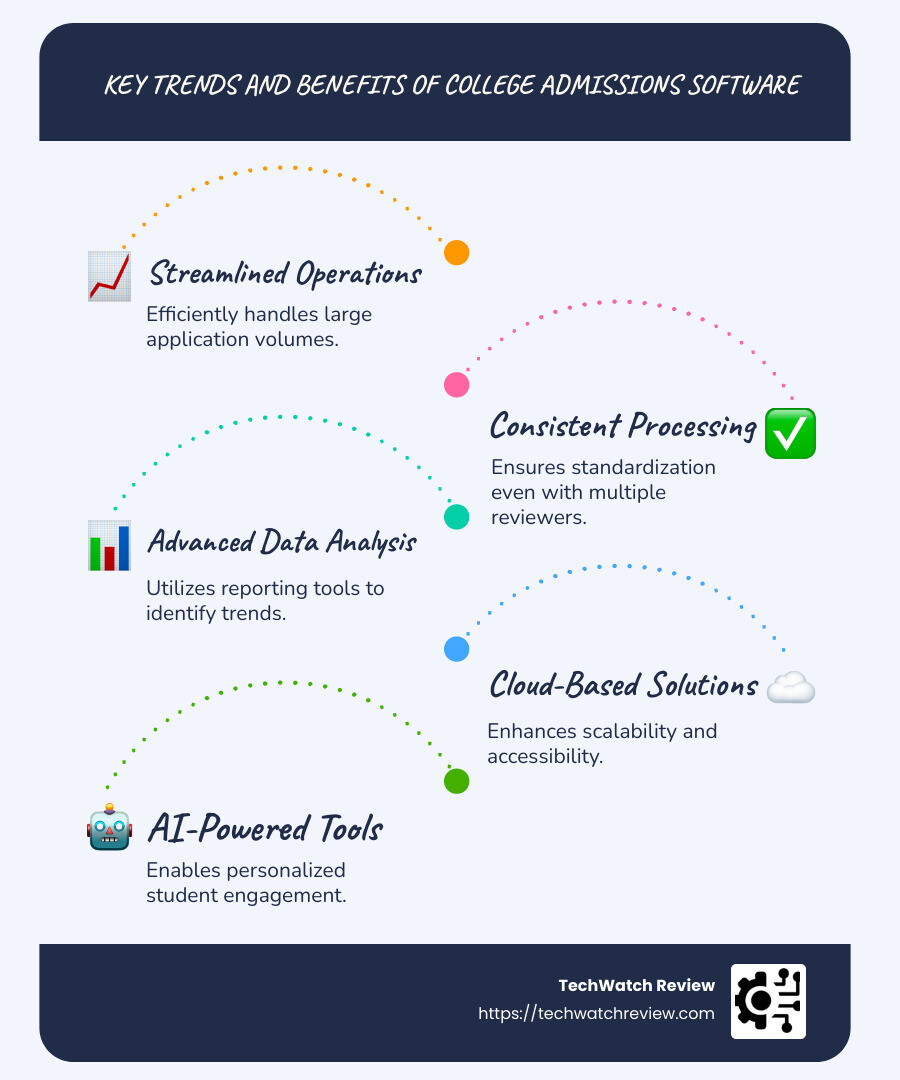
- Streamlines operations by making the application process more efficient, allowing admissions teams to handle a large volume of applications swiftly.
- Ensures consistency across the board with a standardized processing system, even when multiple reviewers are involved.
- Improves data analysis through advanced reporting tools, helping universities spot trends and make informed decisions.
In recent years, a few notable trends have emerged in the field of college admissions. Universities are increasingly adopting cloud-based solutions like Salesforce Education Cloud, which improve scalability and accessibility. There’s also a growing emphasis on AI-powered tools such as those offered by Element451, which enable personalized student engagement and support.
Moreover, as universities strive for a holistic view of applicants amid changing affirmative action policies, students are encouraged to present authentic narratives in their essays, reflecting personal challenges and achievements.

By staying informed about these developments, tech-savvy professionals can choose the most effective college admissions software solutions for their institutions, ensuring they remain competitive and capable of attracting the best candidates.
Similar topics to College admissions software:
– Student information systems
– Higher ed software solutions
– Best college management software
Why Use College Admissions Software?
College admissions software is a game-changer for educational institutions, streamlining the entire admissions process and offering significant advantages for both colleges and prospective students.
Streamlined Operations
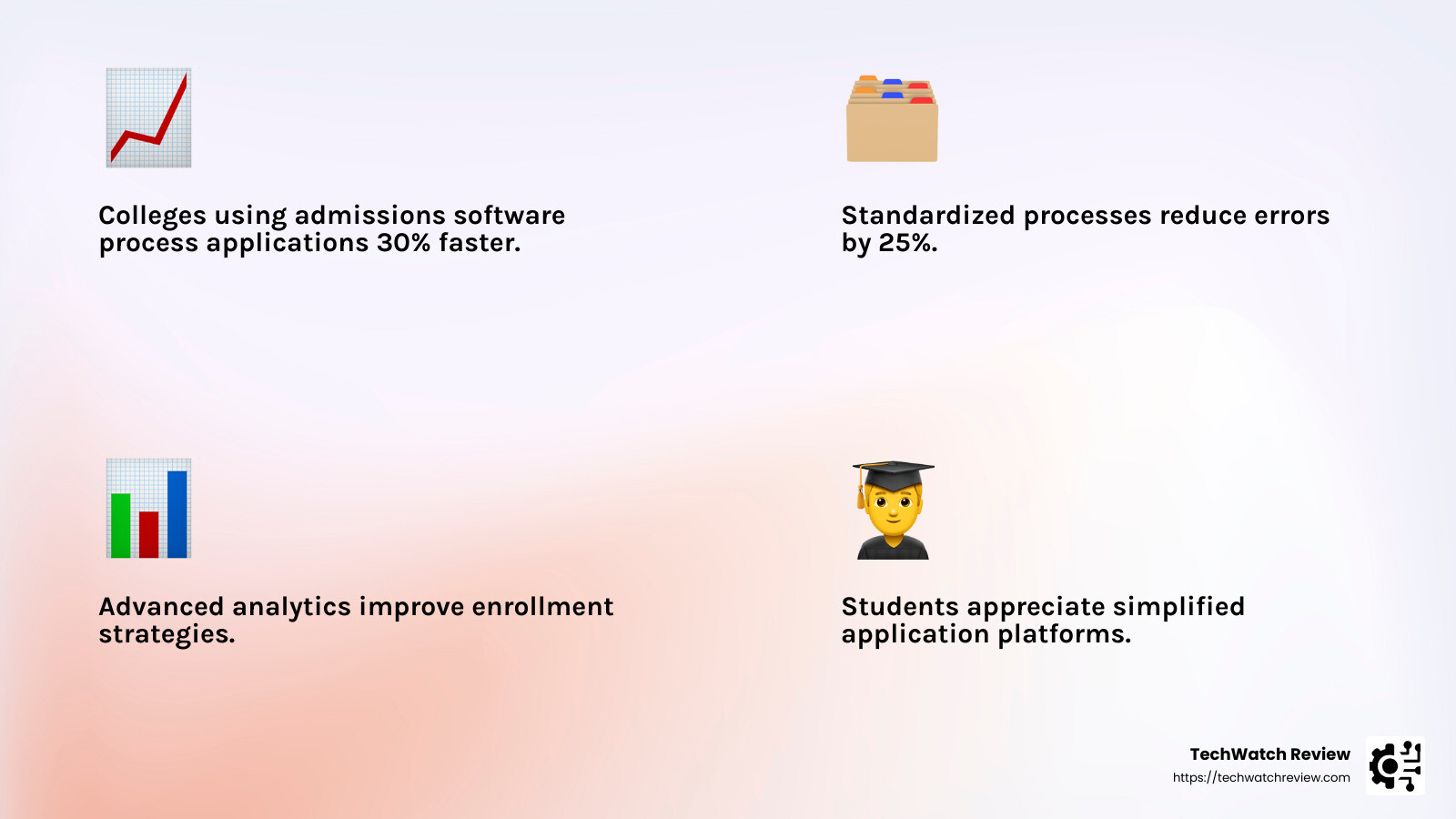
Admissions teams can now process a high volume of applications efficiently. With the right software, tasks such as receiving submissions and issuing decisions become quicker and more manageable. This efficiency is crucial, especially for large universities like New York University and The University of California, which have seen application numbers surge well over 100,000 for fall 2023 admissions.
Organization and Standardization
Implementing a consistent system for processing applications ensures that all applications are handled uniformly, even when multiple reviewers are involved. This standardization means that every team member is on the same page regarding an application’s status, reducing confusion and errors.
Improved Data Analysis
Most college admissions software includes robust reporting tools that provide valuable insights. For example, Blackbaud’s enrollment management system offers advanced analytics to identify trends and optimize the admissions process. These insights enable universities to make data-driven decisions, improving their strategies over time. For more insights on data-driven decision-making, you can explore TechWatch Review’s article on data analytics.
Benefits for Students
For students, college admissions software simplifies the application process. Platforms like the Common Application allow students to apply to multiple colleges with a single set of information, reducing redundancy and stress. Additionally, students can track their application status in real-time, ensuring they’re always informed.
Moreover, features like secure payment processing and messaging tools make it easier for students to communicate with admissions offices and complete their applications smoothly. For more on how technology is enhancing student experiences, check out TechWatch Review’s insights on educational technology.
By embracing college admissions software, educational institutions can improve their operational efficiency and offer a seamless experience for students, ultimately attracting and enrolling the best candidates.
Key Features to Look for in College Admissions Software
When selecting college admissions software, it’s crucial to focus on features that can significantly improve the admissions process. Here are some key features to consider:
Customization
Every educational institution has unique needs. Customization allows colleges to tailor the software to fit their specific requirements. For instance, Slate by Technolutions offers a drag-and-drop form builder, enabling institutions to create personalized application forms. This flexibility ensures that the software aligns with the college’s branding and specific data collection needs. For more insights on customization, you can explore this article on TechWatch Review.
Progress Tracking
Keeping track of where each application stands is vital for both admissions teams and applicants. Effective progress tracking features allow institutions to monitor each step of the application process. Tools like Start Campus provide a clear view of each application’s status, from submission to decision, ensuring that nothing falls through the cracks. Learn more about progress tracking in admissions software here.
Communication Tools
Communication is key in the admissions process. Software with robust communication tools, such as messaging and email capabilities, can improve interaction between admissions officers and applicants. For example, Element451 uses AI-powered marketing to deliver personalized messages across various channels, keeping students informed and engaged throughout the process. Discover more about effective communication tools in admissions software in this article.
Secure Reporting
Data security is a top priority for any institution handling sensitive student information. Secure reporting features ensure that all data is protected while providing valuable insights into application trends. Wisenet emphasizes security and compliance, offering a secure environment for managing student data and generating reports that help improve decision-making. For further reading on secure reporting, visit TechWatch Review’s guide.
By focusing on these features, colleges and universities can choose software solutions that streamline their admissions process, improve communication, and ensure data security. This strategic approach not only improves operational efficiency but also provides a better experience for prospective students.
Top College Admissions Software Solutions for 2026
In 2024, the landscape of college admissions software is more dynamic than ever. Institutions are seeking solutions that not only streamline the application process but also improve communication and data management. Here’s a look at some of the leading software solutions available this year:
1. Acceptd
Acceptd stands out for its specialized focus on audition management for performing arts programs. It offers custom applications to recruit top talent in music, theater, and dance. With features like multiple reviewer access during both prescreen and live auditions, Acceptd ensures a comprehensive evaluation process. The platform also supports secure payment processing and data reporting tools, making it a valuable asset for arts departments. Additionally, it integrates seamlessly with platforms like Salesforce Education Cloud and Slate by Technolutions, enhancing its utility across the institution.
2. Salesforce Education Cloud
As a part of the renowned Salesforce CRM network, Education Cloud provides a scalable solution for colleges of all sizes. Its customizable processes and user-friendly interface make it a versatile choice. Salesforce’s strength lies in its ability to manage a wide range of admissions functions, from recruitment to data analysis, ensuring consistency and efficiency across the board. For more information, visit Salesforce Education Cloud.
3. Slate by Technolutions
With over 1,700 institutions using it, Slate by Technolutions offers a comprehensive platform that includes recruitment, application management, and data analysis. Its drag-and-drop form builder allows for easy customization of application forms. Slate’s unified CRM helps track interactions and store applicant materials, while its automation features streamline communication through SMS and email marketing. Learn more at Slate by Technolutions.
4. Start Campus
Start Campus focuses on improving student outcomes by streamlining the application process for both undergraduate and graduate programs. It offers features like video interviews and customized application sites, providing a professional experience for prospective students. Start’s Applicant Support Center ensures that both students and staff receive the assistance they need throughout the admissions process. Visit Start Campus for additional details.
5. Element451
Element451 leverages AI-powered tools to improve recruitment efforts. Its platform delivers personalized support to applicants, reducing uncertainty and building stronger relationships. By organizing student information efficiently, Element451 helps admissions teams make informed decisions and stay ahead of recruitment trends. More information can be found at Element451.
6. LeadSquared
LeadSquared offers a suite of features designed for higher education, including automated pre- and post-application processes and a mobile-friendly interface. Its counselor efficiency dashboard provides insights into admissions performance, making it easier to optimize recruitment strategies. LeadSquared’s advanced communication tools ensure that applicants receive timely updates and support. Explore more at LeadSquared.
7. Mautic by Higher Education Marketing
Mautic by HEM excels in lead tracking and workflow management. Its focus on segmentation allows admissions teams to group prospective students based on various criteria, ensuring targeted communication. This feature is particularly useful for institutions looking to tailor their outreach efforts and improve conversion rates. Visit Mautic by HEM for more information.
8. DegreeSight
DegreeSight specializes in managing transfer applications, offering tools for transfer credit management and advisor support. Its platform facilitates targeted communications with prospective transfer students, ensuring a smooth transition and enhancing the overall admissions experience. Learn more at DegreeSight.
9. Wisenet
Wisenet provides a secure environment for student management, emphasizing compliance and data security. Its enrollment pipeline and CRM integration features help institutions manage the entire student lifecycle, from initial inquiry to enrollment. For more details, visit Wisenet.
10. VidCruiter
VidCruiter offers a robust platform for video interviews and skills assessments. Its accessibility options and structured rating scales make it an excellent choice for institutions looking to incorporate virtual elements into their admissions process, ensuring a fair and comprehensive evaluation of candidates. More information is available at VidCruiter.
These solutions represent the cutting edge of college admissions software in 2026, offering a range of features to meet the diverse needs of educational institutions. By adopting these tools, colleges and universities can improve their admissions processes, improve communication, and provide a better experience for applicants.
1. Acceptd
Acceptd is a specialized college admissions software designed specifically for performing arts programs. It streamlines the audition management process, making it easier for arts departments to handle applications and auditions effectively.
Key Features
-
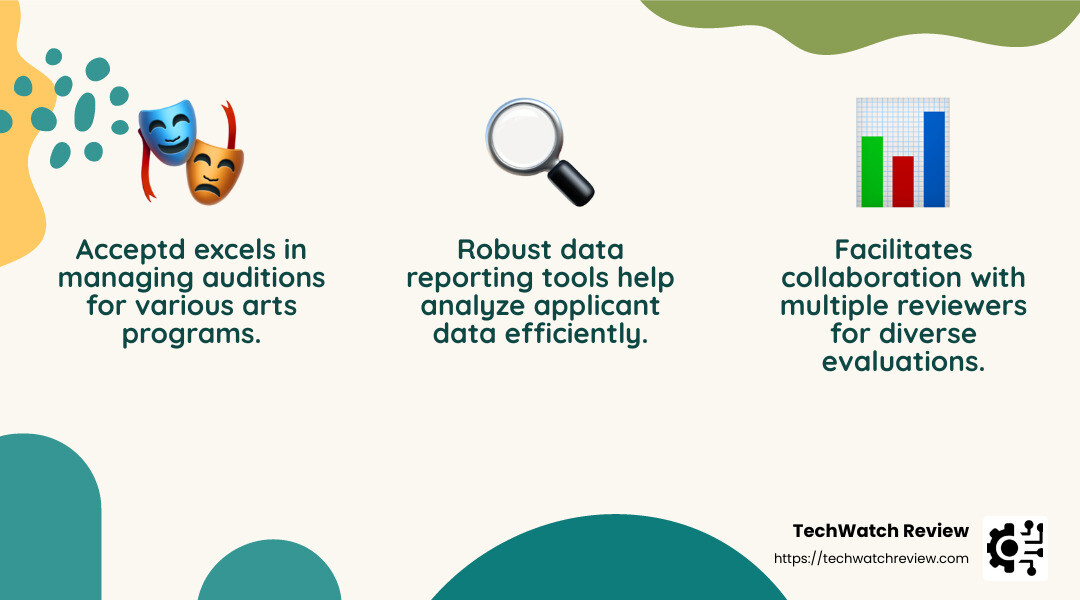
Audition Management: Acceptd excels in managing auditions for music, theater, and dance programs. It allows departments to schedule and conduct both prescreen and live auditions, providing a comprehensive platform for evaluating candidates.
-
Custom Applications: The software supports the creation of custom applications tailored to the specific needs of each program. This customization helps departments attract the most suitable candidates for their unique offerings.
-
Multiple Reviewers: Acceptd facilitates collaboration by allowing access for multiple reviewers during both the prescreen and live audition stages. This feature ensures a thorough and diverse evaluation process, critical for arts programs.
-
Payment Processing: With integrated payment processing capabilities, Acceptd simplifies the collection of application fees. This feature ensures that transactions are secure and efficient, reducing administrative burdens.
-
Data Reporting: The platform includes robust data reporting tools, allowing departments to analyze applicant data and make informed decisions. These tools also support exporting and API integration, enhancing data accessibility and usability.
-
Integration with Salesforce and Slate: Acceptd integrates seamlessly with popular platforms like Salesforce Education Cloud and Slate by Technolutions. This integration ensures that data flows smoothly across different systems, providing a unified approach to admissions management.
Acceptd’s comprehensive features make it an essential tool for performing arts departments looking to improve their admissions processes. By focusing on the specific needs of arts programs, Acceptd ensures that departments can efficiently manage applications and auditions, ultimately recruiting the best talent for their programs.
2. Salesforce Education Cloud
Salesforce Education Cloud offers a powerful CRM (Customer Relationship Management) solution custom for higher education institutions. It’s renowned for its scalability and ability to support colleges and universities of all sizes, from small liberal arts colleges to large state universities.
Key Features
-
CRM Functionality: At its core, Salesforce Education Cloud is a comprehensive CRM platform. It helps manage all interactions with students, alumni, faculty, and staff in one place. This centralization simplifies engagement and ensures that communications are consistent and effective. For more insights on CRM systems, you can explore TechWatch Review’s CRM insights.
-
Scalability: One of the standout features of Salesforce Education Cloud is its scalability. Whether your institution is small or large, this platform can grow with you, adapting to your changing needs without compromising performance. Its robust infrastructure supports a vast number of users and applications, making it a reliable choice for expanding institutions.
-
Customizable Processes: Salesforce Education Cloud allows for the customization of application processes to fit the unique needs of each institution. You can configure workflows, forms, and timelines to ensure they align with your school’s admissions strategy. This flexibility means that colleges can create processes that reflect their specific goals and priorities. Learn more about customization in education software on TechWatch Review’s customization guide.
-
User-Friendly Interface: The platform features an intuitive interface that is easy to steer. This user-friendliness reduces the learning curve for staff and ensures that they can quickly adapt to using the software. A simple interface also means that less time is spent on training and more on engaging with prospective students.
-
Consistency Across Departments: With Salesforce Education Cloud, institutions can maintain consistency in their admissions processes across various departments. This consistency ensures that every student has a similar experience, promoting fairness and transparency in the admissions process.
With Salesforce Education Cloud, institutions can not only manage admissions efficiently but also improve their overall student engagement strategy. Its robust features and adaptability make it a top choice for colleges and universities looking to streamline their operations and provide a cohesive experience to all stakeholders.
3. Slate by Technolutions
Slate by Technolutions is a comprehensive solution that over 1,700 colleges and universities rely on for their admissions processes. It’s an all-in-one platform that combines recruitment, application management, and data analysis, making it a powerful tool for educational institutions.
Key Features
-
Recruitment and Application Management: Slate excels in managing the entire admissions pipeline, from initial recruitment to application submissions. The platform allows admissions teams to track every interaction with prospective students, ensuring nothing slips through the cracks. This unified system helps colleges maintain a seamless application process.
-
Data Analysis: One of the standout features of Slate is its robust data analysis capabilities. Institutions can gain valuable insights into application trends, helping them make informed decisions and improve their recruitment strategies over time. The ability to analyze data effectively can lead to more targeted and efficient recruitment efforts.
-
Drag-and-Drop Form Builder: Slate’s user-friendly form builder allows institutions to create custom application forms with ease. This feature simplifies the process of collecting applicant information and ensures that all data is automatically transferred to individual profiles, reducing manual data entry errors.
-
Unified CRM: Slate’s constituent relationship management (CRM) system is designed to centralize all applicant information. This unified approach enables admissions teams to access all necessary data in one place, streamlining communication and ensuring a consistent experience for applicants.
-
Automation: Automation is a key aspect of Slate, with features that facilitate both SMS and email marketing. The platform’s responsive templates make it easy to send personalized communications to prospective students, enhancing engagement and reducing the workload on admissions staff.
Technolutions also provides Slate.org, a free tool that connects school counselors and community organizations with colleges. This tool allows for seamless recommendation submissions and real-time updates on application statuses, further enhancing the collaborative effort in the admissions process.
With its comprehensive features, Slate by Technolutions stands out as a top choice for institutions looking to streamline their admissions processes and improve their recruitment strategies.
4. Start Campus
Start Campus is a versatile platform designed to simplify the recruitment and enrollment management process for both undergraduate and graduate programs. This software focuses on creating an efficient and engaging experience for applicants and admissions teams alike.
Key Features
-
Recruitment and Enrollment Management: Start Campus offers a seamless approach to managing recruitment and enrollment. By streamlining these processes, the platform helps institutions attract and retain students more effectively. Admissions teams can easily track applicants through every stage, from initial inquiry to final enrollment, ensuring a smooth transition for students.
-
Undergraduate and Graduate Programs: Start Campus caters to a wide range of educational programs, providing custom solutions for both undergraduate and graduate admissions. This flexibility allows institutions to customize their approach based on the specific needs of each program, enhancing the overall recruitment strategy.
-
Video Interviews: Video interviews have become an essential part of the admissions process. Start Campus integrates this feature to allow admissions teams to conduct interviews remotely, saving time and resources. This functionality not only streamlines the interview process but also makes it more accessible for applicants who may be located far from campus.
-
Branded Application Site: One of the standout features of Start Campus is the ability to create a fully branded application site. This customization provides a professional and cohesive experience for applicants, reflecting the institution’s identity and values. A branded site can improve the applicant’s perception of the institution and improve engagement throughout the application process.
Start Campus offers a comprehensive solution for institutions looking to improve their recruitment and enrollment efforts. By incorporating features like video interviews and branded application sites, the platform ensures a modern and effective admissions experience. For more information, visit Start Campus or explore related articles on TechWatch Review.
5. Element451
Element451 is a comprehensive CRM platform custom for higher education institutions. It focuses on leveraging AI-powered marketing tools to improve the admissions process and provide personalized support to applicants.
Key Features
-
CRM Platform: At its core, Element451 serves as an all-in-one CRM solution. It helps colleges manage relationships with prospective students by organizing and tracking interactions throughout the admissions journey. This organized approach ensures that admissions teams can make informed decisions based on comprehensive student profiles.
-
AI-Powered Marketing: Element451 stands out with its use of AI-driven marketing tools. These tools enable institutions to send targeted communications to prospective students at various stages of the application process. By delivering the right message at the right time, colleges can engage students more effectively and reduce uncertainty.
-
Personalized Support: The platform emphasizes personalized support, helping institutions build stronger connections with applicants. By tailoring communications and interactions to individual needs, Element451 improves the applicant experience, making it more engaging and supportive.
-
Organized Student Information: Keeping student information organized is crucial for effective admissions management. Element451 provides a centralized system where all student data is stored and easily accessible. This organization helps admissions teams streamline their processes and focus on making the best decisions for their institution.
With its focus on CRM capabilities, AI-powered marketing, and personalized support, Element451 provides a modern solution for colleges seeking to optimize their admissions process. By organizing student information effectively, the platform ensures that institutions can deliver a seamless and engaging experience for applicants.
6. LeadSquared
LeadSquared is a versatile CRM platform that caters to diverse organizations, including higher education institutions. Its custom solutions for colleges emphasize automation, efficiency, and advanced communication capabilities.
Key Features
-
Automated Processes: LeadSquared shines with its automated pre- and post-application processes. It simplifies tasks like capturing student inquiries and generating offer letters, freeing up valuable time for admissions teams. Automation ensures that repetitive tasks are handled efficiently, allowing staff to focus on more strategic activities.
-
Counselor Efficiency Dashboard: To optimize the admissions process, LeadSquared includes a dedicated dashboard for tracking counselor efficiency. This feature provides insights into individual and team performance, helping institutions identify areas for improvement. By monitoring counselor activities, colleges can ensure that resources are being used effectively and that students receive timely support.
-
Mobile-Friendliness: When mobile access is crucial, LeadSquared offers a mobile-friendly interface. This allows admissions teams to access CRM functionalities anytime, anywhere, ensuring that they can stay connected and responsive even while on the go. The mobile compatibility extends the platform’s usability and ensures that critical tasks can be performed seamlessly.
-
Advanced Communication: LeadSquared’s advanced communication tools enable colleges to engage with prospective students through multiple channels. The platform supports personalized email and SMS outreach, making it easy to maintain consistent communication with applicants. This multi-channel approach helps build stronger relationships and keeps students informed throughout their admissions journey.
By integrating automated processes, a counselor efficiency dashboard, mobile accessibility, and advanced communication tools, LeadSquared provides a comprehensive solution for managing college admissions. These features work together to streamline operations and improve the overall applicant experience.
7. Mautic by Higher Education Marketing
Mautic by Higher Education Marketing (HEM) is a powerful college admissions software that leverages open-source technology to meet the unique needs of universities and colleges. It excels in lead tracking, workflow management, segmentation, and custom criteria, making it a versatile tool for admissions teams.
Key Features
-
Lead Tracking: Mautic by HEM specializes in tracking prospective students throughout their application journey. Admissions teams can monitor interactions and engagement levels, ensuring no lead falls through the cracks. This comprehensive tracking capability helps institutions nurture relationships and improve conversion rates. For more information, visit Higher Education Marketing.
-
Workflow Management: Efficient workflow management is crucial in handling numerous applications. Mautic by HEM streamlines the admissions process by automating routine tasks and creating clear pathways for application handling. This allows staff to focus on more personalized interactions and strategic decision-making.
-
Segmentation: One of Mautic’s standout features is its robust segmentation capabilities. Admissions teams can group prospective students based on various criteria, such as application status, location, and program interest. This segmentation ensures that communications are targeted and relevant, enhancing the overall applicant experience.
-
Custom Criteria: Mautic offers the flexibility to define custom criteria for segmenting and managing applicants. This allows colleges to tailor the admissions process to their specific needs, ensuring that the right messages reach the right students at the right time. Custom criteria can include anything from academic interests to extracurricular involvement, allowing for a highly personalized approach.
By focusing on lead tracking, workflow management, segmentation, and custom criteria, Mautic by Higher Education Marketing provides a comprehensive solution for college admissions. Its features are designed to improve efficiency and improve communication, ultimately leading to a more streamlined and effective admissions process.
8. DegreeSight
DegreeSight is a college admissions software designed specifically to support institutions that attract a high number of transfer students. It offers a comprehensive platform to manage transfer applications and streamline the entire process for both students and advisors.
Key Features
-
Transfer Applications: DegreeSight simplifies the application process for transfer students, ensuring that all necessary information is collected efficiently. The platform provides clear guidance to students, helping them understand what credits can be transferred and how it affects their graduation timeline. This transparency reduces uncertainty and helps students make informed decisions about their education path.
-
Targeted Communications: DegreeSight allows colleges to promote themselves as transfer-friendly institutions through targeted communication strategies. By using personalized messaging, colleges can reach out to potential transfer students and showcase the benefits of joining their institution. This targeted approach helps in attracting a diverse range of applicants and improving enrollment rates.
-
Transfer Credit Management: One of the standout features of DegreeSight is its robust transfer credit management system. The platform ensures that all eligible transfer credits are accurately evaluated and applied to each student’s academic record. This feature helps students transition smoothly and ensures they receive the credit they deserve for previous coursework.
-
Advisor Support: DegreeSight also focuses on supporting advisors by automating workflows and data collection. Advisors are provided with tools to efficiently manage their caseloads and offer personalized support to transfer students. This improved advisor support leads to better student outcomes and higher retention rates.
DegreeSight’s focus on transfer applications, targeted communications, transfer credit management, and advisor support makes it an essential tool for colleges aiming to improve the transfer student experience. By offering a custom solution, DegreeSight helps institutions retain students and boost graduation rates.
9. Wisenet
Wisenet is a comprehensive student management system custom for private higher education institutions. It is designed to streamline administrative processes while ensuring a high level of security and compliance.
Key Features
-
Student Management: Wisenet offers a robust platform for managing student data, tracking academic progress, and facilitating efficient communication between students and staff. The system helps institutions keep all student information organized and easily accessible, which is crucial for maintaining a smooth administrative workflow.
-
Security and Compliance: With an increased focus on security and compliance, Wisenet ensures that all student data is protected throughout the entire application and enrollment process. This is particularly important for private institutions that handle sensitive information. The platform complies with relevant educational regulations, providing peace of mind to both administrators and students.
-
Enrollment Pipeline: Wisenet features a comprehensive enrollment pipeline system that guides prospective students from application submission to course enrollment and tuition payment. This system helps institutions manage the entire admissions process efficiently, reducing administrative burdens and improving the student experience.
-
CRM Integration: One of the standout features of Wisenet is its ability to seamlessly integrate with Customer Relationship Management (CRM) systems. This integration allows institutions to improve their engagement strategies, track interactions, and nurture relationships with prospective and current students. By connecting with other educational tools, Wisenet provides a holistic view of each student’s journey.
Wisenet’s combination of student management, security, compliance, enrollment pipeline, and CRM integration makes it a powerful tool for private higher education institutions. By simplifying administrative tasks and ensuring data security, Wisenet helps colleges and universities focus on delivering quality education and improving student outcomes.
10. VidCruiter
VidCruiter is a versatile platform designed to improve the college admissions process with its video interview capabilities. It offers a range of tools that make it easier for colleges to evaluate applicants and ensure a fair admissions process.
Key Features
-
Video Interviews: VidCruiter supports both pre-recorded and live video interviews, allowing colleges to assess applicants remotely. This flexibility is particularly beneficial for international students or those unable to travel for in-person interviews. Institutions can conduct interviews in groups or one-on-one, providing a comprehensive view of each candidate.
-
Skills Assessments: Colleges can create customized skills assessments tailored to specific programs. These assessments can be reviewed at any time, ensuring that admissions teams have a thorough understanding of each applicant’s capabilities. This feature helps in identifying candidates who are best suited for particular courses or programs.
-
Accessibility Options: VidCruiter is committed to providing an equitable admissions process. The platform includes various accessibility features, ensuring that all applicants, regardless of their physical abilities, have an equal opportunity to participate in the admissions process. This commitment to inclusivity is a significant advantage for institutions aiming to diversify their student body.
-
Structured Rating Scales: To maintain fairness and consistency, VidCruiter offers structured interview rating scales. These scales help admissions teams evaluate candidates objectively, reducing the potential for bias. By standardizing the evaluation process, colleges can make more informed decisions about which applicants to admit.
VidCruiter’s focus on video interviews, skills assessments, and accessibility ensures a comprehensive and fair admissions process. By providing structured rating scales, the platform helps colleges maintain consistency in evaluating candidates, ultimately leading to better admission outcomes. For more information, visit VidCruiter’s official website.
How to Keep Track of College Admissions
Navigating the college admissions process can be overwhelming, but staying organized is key to success. Here are some tools and tips to help you keep track of everything from application deadlines to essay requirements.
Spreadsheets: Your Simple Solution
Spreadsheets are a classic tool that can help you manage multiple tasks efficiently. You can create a spreadsheet to track each college’s application requirements, deadlines, and any additional materials needed.
Here’s a basic structure you might use:
| College Name | Application Deadline | Essay Requirements | Financial Aid Deadline | Status |
|---|---|---|---|---|
| College A | January 1 | Personal Statement | February 15 | In Progress |
| College B | November 15 | 2 Essays Required | January 10 | Submitted |
This simple table can provide a clear overview of where you stand with each application.
Application Deadlines
Each college has its own set of deadlines, and missing one could mean missing out on an opportunity.
- Early Action/Early Decision: Typically due in November or December.
- Regular Decision: Often due around January 1.
Use calendar apps or set reminders on your phone to ensure you submit everything on time. Starting early can help you avoid last-minute stress. Common App is a great resource to keep track of multiple deadlines.
Financial Aid Deadlines
Financial aid is a critical component of the college application process. Make sure to note the financial aid deadlines for each school, as they can differ from application deadlines.
- FAFSA: Opens on October 1 each year.
- CSS Profile: Deadlines vary by school.
Missing these deadlines can result in losing out on potential financial assistance. Keep a separate section in your spreadsheet or calendar dedicated to financial aid.
Essay Requirements
Essays are a significant part of your application. Each college may have different prompts or requirements.
- Personal Statements: Commonly required by most colleges.
- Supplemental Essays: Specific to each institution.
Make sure to tailor each essay to the specific college and prompt. Keeping a checklist of essay requirements can ensure you don’t overlook any details. IvyWise suggests giving yourself at least two months to draft, revise, and finalize your essays.
By using these tools and strategies, you can keep your college application process organized and stress-free. Staying on top of deadlines and requirements is crucial to making the most of your college applications. For more tips on managing your college applications, check out TechWatch Review’s guide on college admissions software.
Frequently Asked Questions about College Admissions Software
What do colleges use for admissions?
Colleges evaluate a range of materials when considering applicants. Traditionally, standardized test scores like the SAT/ACT have been a major component. However, the landscape is shifting with many institutions adopting test-optional policies. This means students can choose whether to submit their scores, allowing other elements like AP/IB exams, essays, and extracurricular activities to play a more significant role.
Admissions offices also rely on college admissions software to streamline the process. These platforms help manage applications, track applicant data, and facilitate communication between applicants and the institution. Tools like Slate by Technolutions are popular for their comprehensive application management capabilities, including recruitment and data analysis.
What is enrollment management software?
Enrollment management software is designed to handle the complex processes involved in student admissions. It encompasses everything from processing applications to managing fee payments. These systems often include administrative tools that help institutions maintain records, track student progress, and ensure compliance with educational standards.
Systems like Blackbaud Enrollment Management System offer features such as customizable application forms and real-time status tracking, making the enrollment process smoother for both the institution and the applicants. This software can also integrate with other systems, providing a seamless experience across various departments.
What are the college application platforms?
There are several platforms available for students to submit their college applications. The Common App is one of the most widely used, allowing students to apply to multiple colleges with a single application. This platform simplifies the process by consolidating application materials and deadlines.
Another option is the Coalition App, which also offers a centralized application process but is known for its focus on access and affordability for students from diverse backgrounds. Some states have their own centralized applications, like the ApplyTexas system, which is used by many colleges in Texas.
Each platform has its unique features, and students should choose based on the colleges they are applying to and the specific requirements of each institution. Using these platforms can significantly reduce the administrative burden on students and ensure that all necessary documents are submitted on time.
Navigating the college admissions process can be daunting for both students and educational institutions. With the rapid advancements in technology, college admissions software has become an essential tool for streamlining operations and enhancing the overall application experience. These platforms, like Slate by Technolutions and Salesforce Education Cloud, offer comprehensive solutions that cater to the diverse needs of colleges and universities. They enable efficient application management, data analysis, and improved communication, ultimately benefiting both admissions teams and prospective students.
At TechWatch Review, we are committed to providing in-depth analyses and insights into the latest technological solutions for higher education. Our goal is to help institutions make informed decisions that improve their operational efficiency and improve student outcomes. By staying informed about the latest trends and tools, educational institutions can not only meet the evolving demands of the admissions landscape but also create a more inclusive and streamlined application process.
As we look to the future, the integration of AI and machine learning in college admissions software is expected to further personalize and optimize the admissions journey. Institutions that leverage these technologies will be better positioned to attract and retain top talent, ensuring they remain competitive in an increasingly global educational landscape.
For more on the latest in higher education technology, visit our TechWatch Review page for expert reviews and insights.