Table of Contents
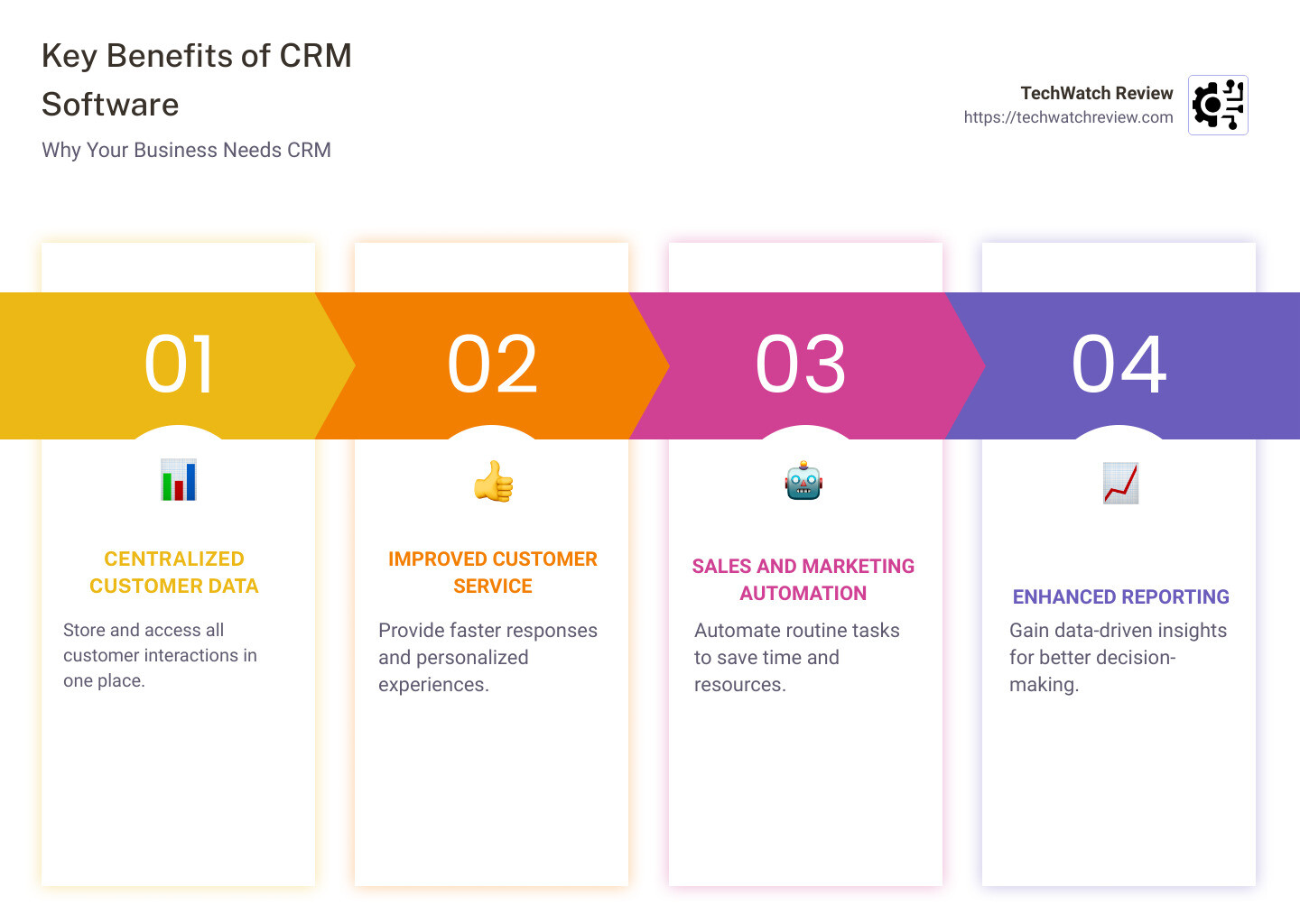
CRM Software is a game-changer for businesses looking to manage their customer relationships effectively. To quickly address your search intent, here are the key benefits of CRM Software:
- Centralized Customer Data: A single location for all interactions.
- Improved Customer Service: Faster responses and personalized experiences.
- Sales and Marketing Automation: Streamline routine tasks.
- Improved Reporting: Data-driven insights for better decision-making.
Customer Relationship Management (CRM) software is more than just a digital Rolodex. It combines data from multiple channels—like websites, social media, and emails—into one centralized system. This helps businesses not only track customer interactions but also predict customer needs and personalize communications.
You’ll see why so many companies are turning to CRM solutions to fuel their growth. Whether you’re a small start-up or a large enterprise, CRM software can scale with you, offering valuable insights and automation to turbocharge your sales process.

Essential CRM Software terms:
What is CRM Software?
Customer Relationship Management (CRM) Software is a tool that helps businesses organize and manage their interactions with current and potential customers. It centralizes customer data from various channels like email, social media, and phone calls, making it easier to track and analyze customer interactions.
Customer Data and Insights
CRM software collects detailed customer data, including contact information, purchase history, and interaction records. This centralized data provides valuable insights into customer behavior and preferences, helping businesses tailor their marketing and sales strategies.
Sales and Marketing
CRM systems streamline sales and marketing processes. They help track leads, automate follow-ups, and manage campaigns. For example, HubSpot offers tools for email tracking, deal tracking, and pipeline management, making it easier to convert leads into customers.
Customer Service
With CRM software, customer service teams can access a 360-degree view of customer interactions. This enables faster response times and more personalized support. Zendesk Sell, for instance, integrates email tracking and automation to improve customer service efficiency.
Commerce
CRM systems also support e-commerce by integrating with online stores and payment gateways. This allows businesses to track customer purchases and manage orders seamlessly.
Cloud-based vs. On-premise CRM
Cloud-based CRM
Cloud-based CRM, like Salesforce, is hosted on the vendor’s servers and accessed via the internet. It offers several advantages:
- Lower upfront costs: No need for physical servers or extensive IT resources.
- Accessibility: Access the CRM from anywhere, on any device.
- Scalability: Easily add or remove features as your business grows.
- Automatic updates: The vendor handles software updates and security patches.
On-premise CRM
On-premise CRM is installed on your company’s servers. While it offers more control over data and customization, it comes with higher upfront costs and requires dedicated IT resources for maintenance and updates. Companies with complex CRM needs or those in regions with unreliable internet may prefer this option.
Example: Zoho CRM
Zoho CRM offers both cloud-based and on-premise solutions. It features AI-driven insights, workflow automation, and integration with various third-party apps, making it a versatile choice for businesses of all sizes.
Whether you choose a cloud-based or on-premise CRM, the key is to find a solution that aligns with your business needs and goals. CRM software is a powerful tool for enhancing customer relationships, streamlining operations, and driving business growth.
10 Best CRM Software Platforms in 2026
Zendesk Sell
Zendesk Sell offers a modern CRM system that’s easy to set up and use, no matter the size of your business. It’s packed with tools that help your teams maximize revenue by boosting productivity, processes, and pipeline visibility.
- Email tracking and automation: Seamlessly track all email communication with real-time push notifications, activity reporting, and email template automation.
- Activity reporting and analytics: Access detailed insights into sales performance and customer interactions.
- Mobile app: Stay connected with a user-friendly mobile app that synchronizes with the desktop experience.
- Sales prospecting: Identify and create targeted lists of prospects using an untapped market of over 200 million professionals.
HubSpot
HubSpot is a popular choice for businesses just getting started with CRM software. Its free CRM includes essential features like customer data tracking, automated marketing, and detailed reporting.
- Free CRM: Offers a robust set of features at no cost.
- Reporting dashboard: Centralizes all important CRM tools, making data easier to find.
- Deal tracking: Monitor the status of deals and manage the sales pipeline effectively.
- Pipeline management: Streamline sales processes and improve lead conversion.
Less Annoying CRM
Less Annoying CRM is designed for simplicity, making it a solid choice for small businesses new to CRM software.
- Simplicity: Easy to use with straightforward features.
- Contact management: Easily track down contacts with a simple search feature.
- Calendar and tasks: Manage schedules and tasks efficiently.
- Mobile access: Access CRM data on the go.
Sales Creatio
Sales Creatio is built for midsize businesses and large corporations, offering comprehensive CRM software to manage sales, marketing, and services.
- Low-code technology: Customize the CRM without extensive coding knowledge.
- Customization: Tailor the platform to fit your specific business needs.
- Project management: Manage projects, orders, and invoices all in one place.
Apptivo
Apptivo provides an online CRM that integrates various business apps to streamline operations.
- Sales pipeline: Track and manage sales opportunities.
- Social news feed: Stay updated with a social news feed.
- IMAP email integration: Connect your email accounts for seamless communication.
- Developer API: Customize and extend the CRM with developer tools.
Insightly
Insightly focuses on project management and customer relationship management, making it suitable for businesses needing to track both sales and project progress.
- Google integration: Sync with Google apps for seamless functionality.
- Automatic address book: Automatically update and manage contact information.
- Web-to-contact forms: Capture leads directly from your website.
- File sharing: Share documents and files easily within the platform.
Salesforce
Salesforce is a comprehensive CRM platform designed to support sales, marketing, and customer service.
- AI capabilities: Leverage AI features within the Einstein 1 platform.
- Automation: Automate repetitive tasks to save time and increase efficiency.
- Sales forecasting: Predict future sales and plan accordingly.
- Document management: Manage documents and contracts within the CRM.
- Commission management: Track and manage sales commissions.
Copper
Copper is known for its seamless integration with G-Suite, making it a great choice for businesses using Google apps.
- G-Suite integration: Sync with Google apps for a unified experience.
- Pipeline reporting: Gain insights into your sales pipeline.
- Project management: Manage projects alongside sales processes.
- Task automation: Automate tasks to improve productivity.
Zoho CRM
Zoho CRM offers a versatile solution with AI-driven insights and extensive customization options.
- AI companion: Use Zia, the AI assistant, for insights and recommendations.
- Workflow automation: Automate workflows to streamline operations.
- Deal management: Track and manage deals through the sales pipeline.
- Process management: Manage and optimize business processes.
- Journey orchestration: Coordinate and personalize customer journeys.
Benefits of CRM Software
CRM Software offers numerous benefits that can transform your business operations. Let’s break down some of the key advantages:
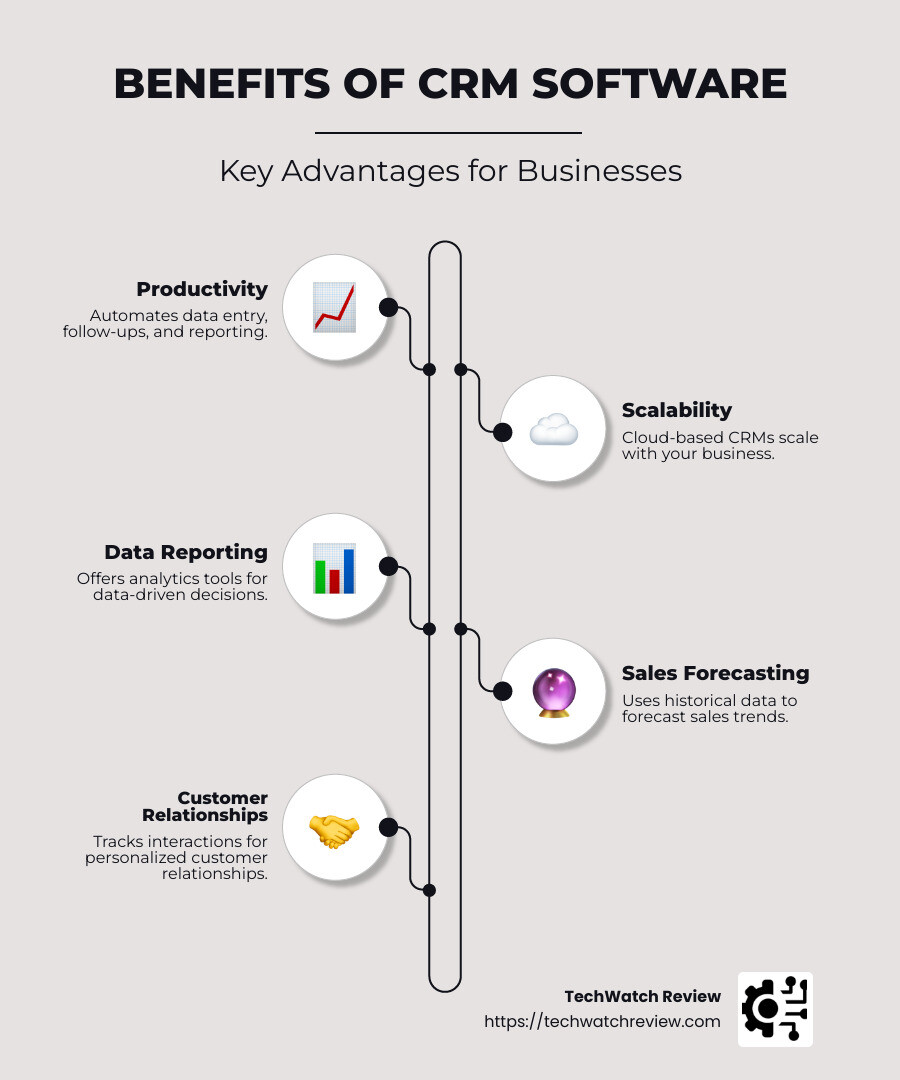
Contact Management
CRM systems store all customer information in one place, including contact details, communication history, and purchase records. This centralization makes it easy for your team to access up-to-date information, ensuring better customer interactions and support.
Example: Zoho CRM provides a comprehensive contact management system that helps businesses keep detailed records of customer interactions, making it easier to personalize communication and improve customer satisfaction.
Collaboration
CRMs promote collaboration by providing shared access to customer data and built-in communication tools. Teams can coordinate more effectively, ensuring everyone is on the same page.
Example: Salesforce offers collaboration features like Chatter, which allows team members to discuss deals, share insights, and work together in real-time.
Productivity
CRM software automates routine tasks such as data entry, follow-ups, and reporting. This automation frees up time for your team to focus on strategic activities, boosting overall productivity.
Example: monday CRM excels in workflow automation, helping sales teams automate sales pipelines and project management tasks, leading to higher productivity.
Scalability
As your business grows, your CRM should grow with you. Cloud-based CRMs can easily scale to accommodate increased data and user demands without requiring significant downtime or resources.
Example: HubSpot CRM offers scalable solutions that can grow with your business, adding more features and users as needed without disrupting operations.
Data Reporting and Analytics
CRMs provide powerful analytics tools that help businesses analyze customer data, track performance metrics, and generate customized reports. These insights support informed decision-making and strategy development.
Example: Salesforce uses its Einstein AI platform to deliver advanced analytics and predictive insights, helping businesses make data-driven decisions.
Sales Forecasting
CRMs use historical data to predict future sales trends, helping businesses plan more effectively and set realistic targets.
Example: Pipedrive CRM offers detailed reporting and sales forecasting tools that help sales teams prioritize prospects and close deals more effectively.
Improved Customer Relationships
By tracking interactions and preferences, CRMs help businesses understand their customers better. This understanding allows for personalized communication and service, increasing customer satisfaction and loyalty.
Example: Zendesk Sell focuses on activity tracking, ensuring that sales teams can follow up with leads and customers promptly, improving relationships and retention rates.
Improved Collaboration
CRMs promote collaboration among team members by providing shared access to customer data and communication tools. This collaboration ensures that everyone is aligned and working towards common goals.
Example: Insightly CRM offers project management features that allow teams to work together on sales and project tasks, ensuring seamless collaboration.
Continue reading to learn How to Choose the Right CRM Software for your business, considering factors like business size, scalability, and integration.
How to Choose the Right CRM Software
Choosing the right CRM Software can be a game-changer for your business. Here are key factors to consider:
Business Size
Your business size today and your growth plans for tomorrow should guide your CRM choice. Small businesses might prefer simpler, more affordable solutions like Less Annoying CRM, which focuses on ease of use and essential features. Larger enterprises might need robust platforms like Salesforce, offering extensive customization and scalability.
Scalability
A good CRM should grow with your business. Opt for cloud-based solutions like HubSpot, which can easily scale to add more users and features as your business expands. This ensures you won’t outgrow your CRM and need to switch systems later.
Flexibility
Flexibility is key. Look for CRMs that offer customization options to tailor the system to your unique needs. For instance, monday CRM allows you to customize pipelines, dashboards, and workflows without technical expertise.
Integration
Your CRM should integrate seamlessly with your existing tools. Zoho CRM excels in this area, offering integrations with popular software like email clients, calendars, and accounting programs. This ensures a smooth workflow and data consistency across platforms.
Pricing
Budget is always a consideration. Evaluate the total cost, including subscription fees, additional user costs, and any extra features. HubSpot offers a free tier for small businesses, while more advanced tiers are available as you grow. Always consider the value you get for the price.
Customer Support
Good customer support can make or break your CRM experience. Look for options that provide various support channels like phone, email, and live chat. Zendesk Sell is known for its excellent support, helping users resolve issues quickly and efficiently.
Key Takeaways
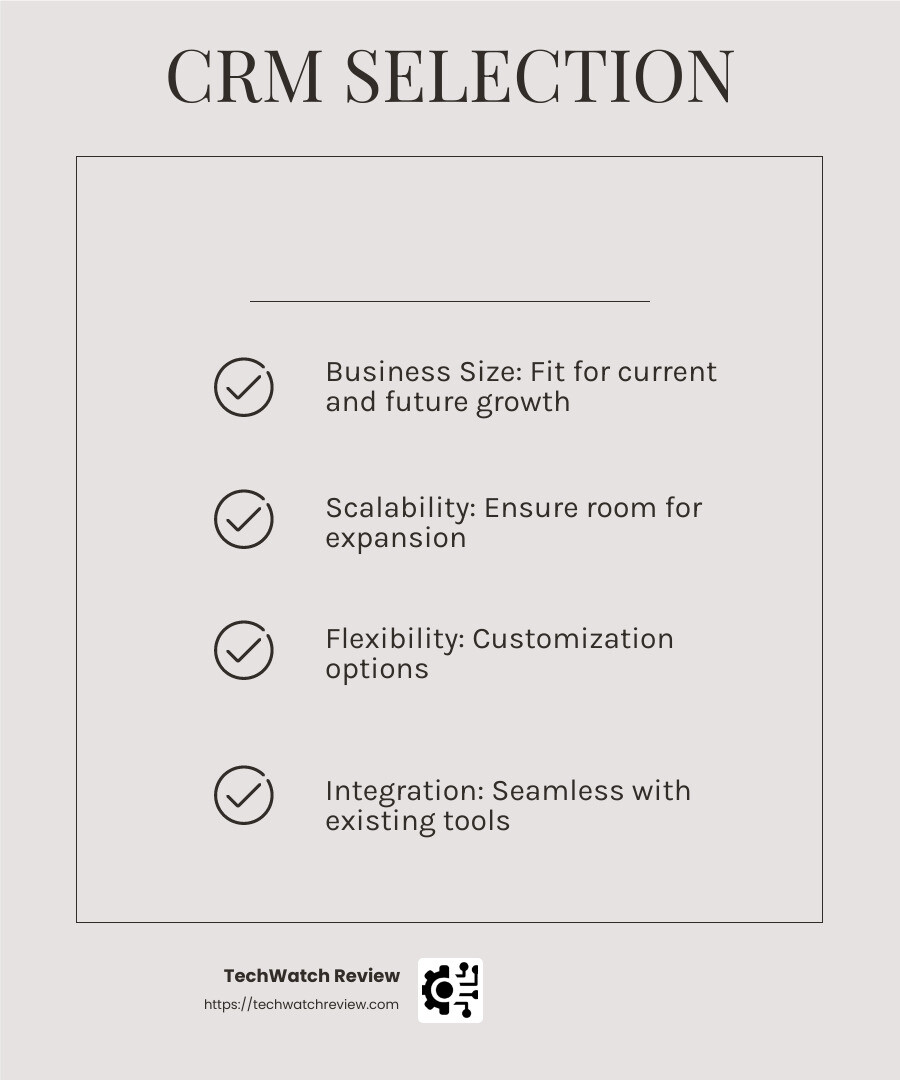
- Business Size: Choose a CRM that fits your current size and future growth.
- Scalability: Ensure the CRM can grow with your business.
- Flexibility: Look for customizable options.
- Integration: Seamless integration with existing tools is crucial.
- Pricing: Consider the total cost and the value for money.
- Customer Support: Reliable support is essential for smooth operation.
Continue reading in the next section to find answers to Frequently Asked Questions about CRM Software, including what CRM is used for and the main types of CRM systems.
Frequently Asked Questions about CRM Software
What is CRM software used for?
Customer Relationship Management (CRM) Software is a tool designed to help businesses manage their interactions with current and potential customers. It centralizes customer data, making it easily accessible to sales, marketing, and customer service teams. Here’s how it benefits each area:
- Sales: Track leads, manage customer interactions, and forecast sales.
- Marketing: Automate campaigns, segment audiences, and measure campaign performance.
- Customer Service: Manage support tickets, track customer issues, and provide timely resolutions.
- Commerce: Personalize shopping experiences, manage orders, and analyze customer buying behavior.
What are the main types of CRM systems?
CRM systems can be categorized into three main types:
-
Operational CRM: Focuses on automating business processes related to sales, marketing, and service. It streamlines daily operations, helping teams manage customer interactions efficiently.
- Example: Zoho CRM offers automation for sales and marketing processes.
-
Analytical CRM: Uses data analysis to help businesses make informed decisions. It provides insights into customer behavior, preferences, and trends.
- Example: Salesforce uses AI to analyze customer data and predict future behaviors.
-
Collaborative CRM: Facilitates information sharing across different departments. It ensures all teams have access to the same customer data, promoting better collaboration.
- Example: HubSpot integrates marketing, sales, and service data for a unified customer view.
How does AI improve CRM software?
Artificial Intelligence (AI) improves CRM software in several ways:
-
Lead Scoring: AI algorithms can prioritize leads based on their likelihood to convert, allowing sales teams to focus on the most promising prospects.
- Example: Salesforce’s Einstein AI provides predictive lead scoring.
-
Automation Workflows: AI can automate repetitive tasks, such as sending follow-up emails or scheduling appointments, freeing up time for more strategic activities.
- Example: Zendesk Sell automates sales workflows to improve efficiency.
-
24/7 Customer Support: AI-powered chatbots can handle customer inquiries around the clock, providing instant responses and improving customer satisfaction.
- Example: Zoho CRM includes AI chatbots for customer support.
-
Personalized Experiences: AI analyzes customer data to provide personalized recommendations and tailor interactions based on individual preferences.
- Example: HubSpot uses AI to personalize marketing content and improve engagement.
Continue exploring CRM options to find the best fit for your business needs. For more detailed comparisons and expert reviews, check out our Top CRM Software Platforms in 2026.
Conclusion
At TechWatch Review, our mission is to provide you with expert insights and help you make informed decisions about the best CRM solutions for your IT company. Navigating the CRM landscape can be daunting, but with the right information, you can find a solution that improves your customer relationships, streamlines your processes, and drives your business forward.
Expert Insights
Our team of experienced writers and tech enthusiasts has thoroughly researched and tested the top CRM solutions for IT companies. We aim to deliver clear, concise, and actionable information to help you choose the right CRM platform. Whether it’s the robust features of Salesforce CRM, the affordability of Zoho CRM, or the project management capabilities of monday.com, we’ve got you covered.
Informed Decisions
Making an informed decision means understanding not just the features, but also the costs, integrations, and support options of each CRM solution. For instance, while HubSpot CRM offers free core capabilities, it’s essential to consider potential costs for advanced features. Similarly, Freshsales provides excellent sales analytics and customer engagement tools, but ensure it fits seamlessly with your existing systems.
Global Audience
Our reviews and guides are designed to help IT companies worldwide. Whether you’re a startup looking for a cost-effective solution or an established enterprise needing a scalable CRM, our insights cater to a global audience. We understand that every business has unique needs, and our goal is to help you find a CRM that aligns with your specific requirements.
For more detailed comparisons and expert reviews, visit our dedicated page on CRM for Marketing Agencies. Here, you’ll find in-depth articles, user reviews, and expert recommendations to ensure you choose the best CRM for your IT company.
Thank you for trusting TechWatch Review. We hope our insights help you make the best choice for your business’s CRM needs.