Keeping factories running smoothly is a big deal. When machines break down, it costs time and money. For a long time, we’ve just waited for things to break and then fixed them. But now, there’s a smarter way. Thermal imaging cameras are changing how we look after equipment. They can see heat, which is often the first sign that something isn’t quite right. This means we can fix problems before they get serious, making factories more efficient and safer.
Table of Contents
- Leveraging Thermal Imaging for Proactive Asset Management
- The Role of Industrial Thermal Imaging Cameras in Smart Factories
- Expanding the Reach of Thermal Monitoring
- Key Applications of Thermal Imaging in Industrial Settings
- The Future of Predictive Maintenance with Thermal Imaging
- Maximizing Human Resources and Operational Uptime
- The Way Forward: Thermal Imaging in Smart Factories
- Frequently Asked Questions
Key Takeaways
-
Thermal imaging cameras spot heat issues that signal equipment problems long before they cause a breakdown.
-
Switching to predictive maintenance with tools like industrial thermal imaging cameras saves money and reduces unexpected downtime.
-
Modern thermal cameras can be set up wirelessly, allowing for continuous monitoring of hard-to-reach or dangerous equipment.
-
These cameras help in many areas, from checking motors and electrical systems to optimizing HVAC and data centers.
-
Combining thermal data with AI and other sensor information creates even more powerful ways to predict and prevent equipment failures.


Leveraging Thermal Imaging for Proactive Asset Management
It’s time to stop playing catch-up with equipment failures. For too long, many factories have operated on a reactive maintenance model, meaning teams only fix things when they break. This approach is not only costly due to unexpected downtime but also puts a huge strain on maintenance staff who are constantly scrambling to address the latest emergency. Shifting to a proactive strategy means we can anticipate problems before they even happen.
Thermal imaging is a game-changer here. Think of it as giving your equipment a non-invasive check-up. Heat is often one of the first signs that something isn’t quite right inside a machine. Whether it’s a motor running hotter than usual or an electrical connection that’s developing resistance, these temperature changes are early indicators of trouble. By spotting these anomalies with thermal cameras, maintenance teams can get ahead of potential breakdowns.
Here’s how this shift makes a difference:
-
Early Detection: Identify hot spots in electrical panels or overheating motors long before they cause a shutdown.
-
Reduced Downtime: Schedule maintenance during planned outages instead of dealing with costly emergency repairs.
-
Extended Asset Life: Address minor issues before they escalate into major component failures.
-
Improved Safety: Identify potential electrical hazards before they lead to fires or other dangerous situations.
This move towards predictive maintenance isn’t just about fixing things; it’s about smarter operations. It means maintenance teams can focus their efforts where they’re most needed, rather than constantly fighting fires. By using tools like thermal imaging, we gain data-driven insights that help us make better decisions about when and where to perform maintenance. This leads to more efficient operations overall, saving both time and money. It’s about moving from a cycle of repair to a cycle of prevention, which is a much more sustainable way to manage assets. This proactive approach is key to maintaining a reliable and efficient smart factory, and it’s a strategy that helps keep operations running smoothly. For more on this proactive approach, check out this overview of predictive maintenance.
The real benefit comes from integrating these thermal insights into a broader asset management plan. It’s not just about having the camera; it’s about using the information it provides to make informed decisions that keep the factory running optimally and safely.
The Role of Industrial Thermal Imaging Cameras in Smart Factories
Detecting Anomalies with Infrared Technology
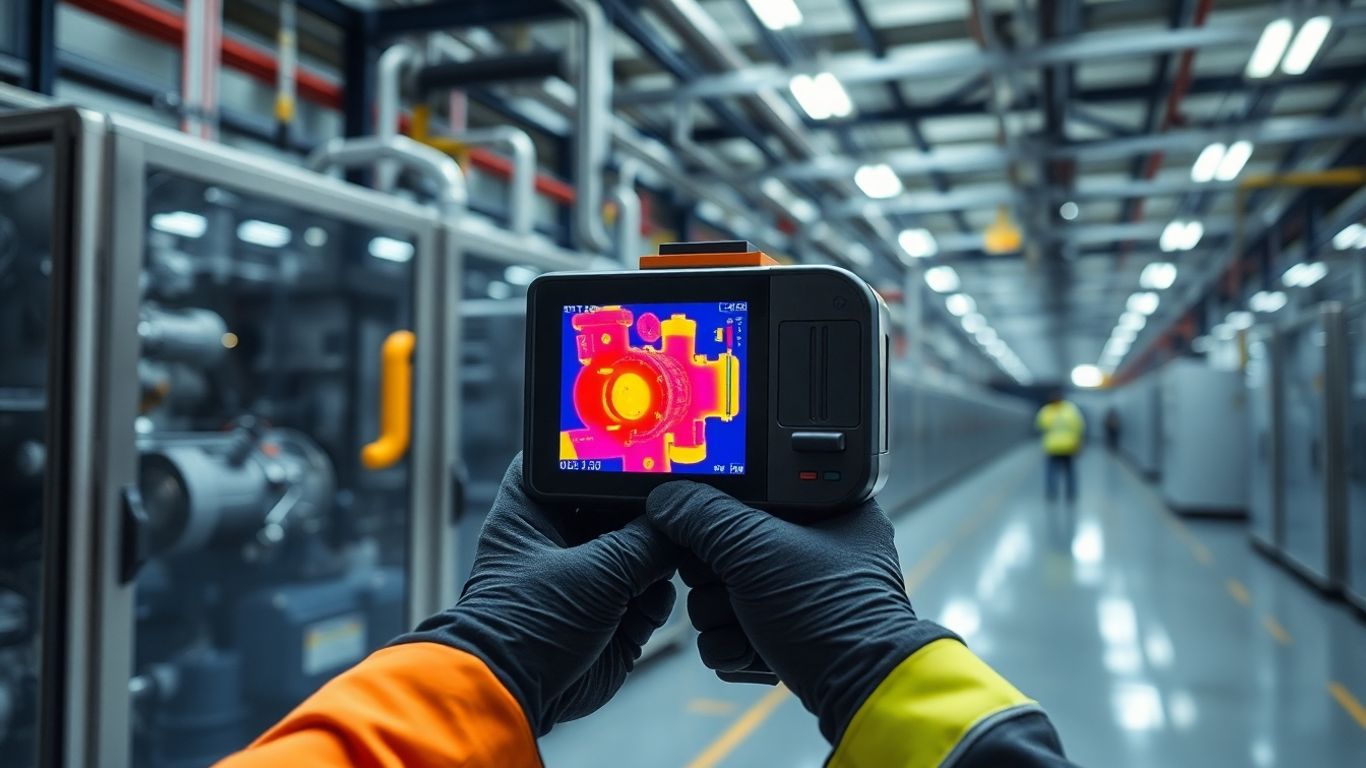
Think of thermal imaging cameras as super-powered eyes that see heat. Everything gives off heat, and these cameras turn that heat into a visual picture. This is super handy because many equipment problems start with a change in temperature, often a hot spot or a cold spot, long before you can see or hear anything wrong. Industrial thermal imaging cameras are key to spotting these early warning signs. They help us find things like loose electrical connections, overloaded circuits, or parts that are just working too hard and getting too hot. It’s like having a built-in diagnostic tool that can scan a whole area quickly.
Real-Time Monitoring and Analysis Capabilities
What’s really neat is that these cameras aren’t just for taking a quick snapshot. Many systems can do real-time monitoring. This means you can watch equipment as it runs, seeing how its temperature changes over time. This is especially useful for catching problems that only show up when the equipment is under a specific load or running for a while. For example, you might see a motor that’s fine when it starts up but gets progressively hotter as it runs. This kind of continuous observation helps us understand the normal operating temperatures and quickly flag anything that deviates. It’s a big step up from just checking things once in a while. This technology allows for proactive identification of potential issues, reducing downtime and optimizing operational efficiency. You can get a better picture of equipment health with AI-powered thermal inspection systems.
Integrating Thermal Data with Advanced Analytics
Just seeing a hot spot is one thing, but what do you do with that information? That’s where integrating thermal data with advanced analytics comes in. We can feed the temperature readings and images from thermal cameras into software that looks for patterns. This software can learn what’s normal for your specific equipment and alert you when something is out of the ordinary. It can even help predict when a failure might happen based on the rate of temperature increase. This turns raw thermal data into actionable insights. Instead of just knowing there’s a problem, you get a clearer idea of what the problem is and how serious it might be, helping you decide what to fix first. This data can also be combined with information from other sensors, like vibration or acoustic monitors, to give an even more complete view of an asset’s condition.
Expanding the Reach of Thermal Monitoring
Automated Image Collection with Wireless Sensors
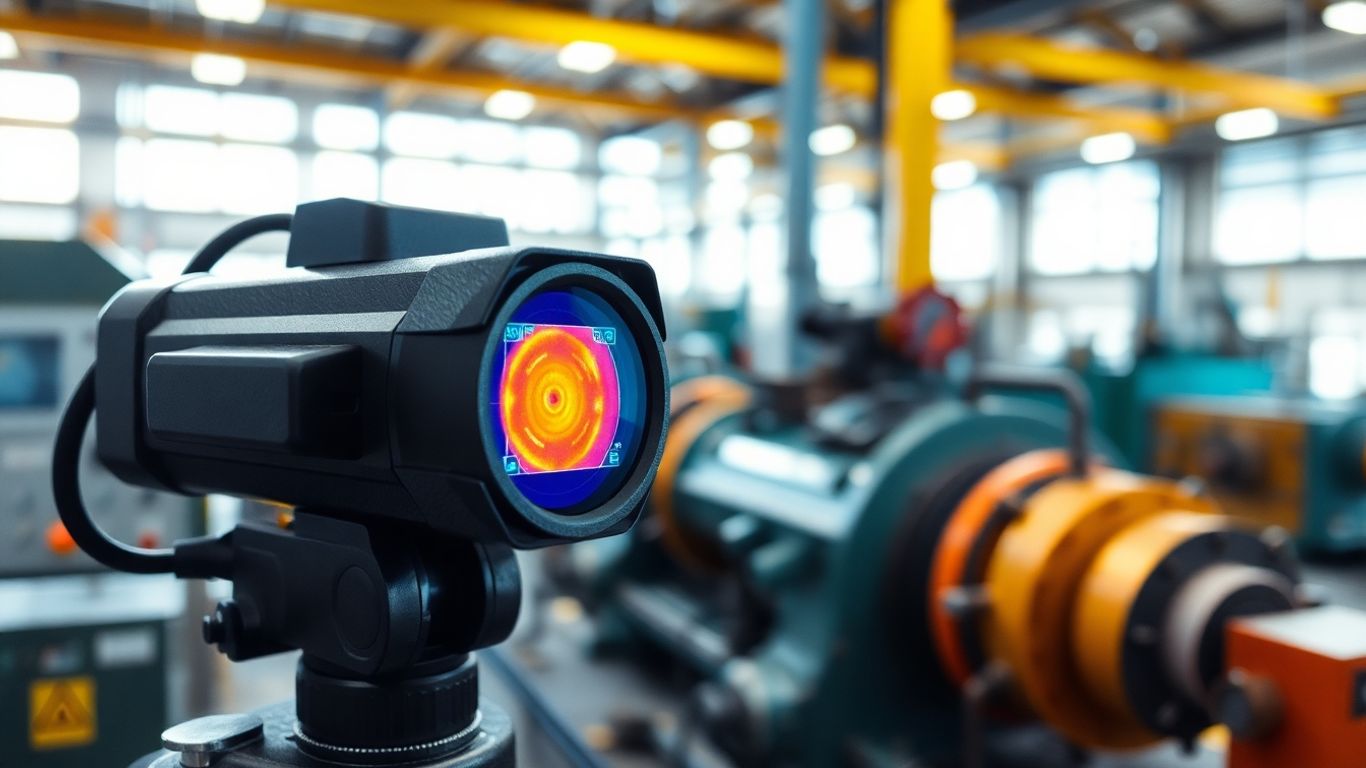
Think about how many spots in a factory are just too much trouble to check regularly. That’s where wireless thermal sensors really shine. They can be set up in places that are hard to get to, or even dangerous, and just keep an eye on things. These little gadgets send their findings back wirelessly, often through Wi-Fi or Bluetooth, straight to the cloud. No need to run a bunch of wires everywhere, which is a big plus. A simple app on your phone or computer can then pull up the data. This means you’re not relying on someone remembering to walk around with a camera every single day. The sensors do the legwork, collecting data automatically and consistently. This frees up your maintenance crew to focus on fixing things instead of just looking for problems.
Inspecting Hard-to-Reach and Hazardous Assets Safely
Some equipment is just a pain to get to, right? Maybe it’s high up, deep inside a machine, or in an area where it’s not safe for people to hang around for long periods. Thermal sensors can be placed in these spots. They’re non-invasive, meaning you can often install them while the equipment is still running. This gives you a look at what’s going on without putting anyone at risk. Imagine checking the temperature of a motor way up on a tall structure or inside a sealed unit. Instead of needing special lifts or taking the whole thing offline, a sensor can do the job. It’s all about getting that thermal picture without the danger.
Continuous Monitoring for Intermittent Fault Detection
Some equipment problems don’t happen all the time. They might pop up for a bit and then go away, making them really tricky to catch. These are called intermittent faults. If you’re only doing manual checks once a week or month, you could easily miss these. But with sensors that are always on, you’ve got a much better chance. They’re constantly watching, so if a component starts to overheat for just a few minutes and then cools down, the sensor will have recorded it. This continuous stream of data is gold for spotting those sneaky issues before they turn into a big breakdown. It’s like having a security camera for your machinery’s temperature.
Having a constant feed of thermal data, especially from hard-to-reach or hazardous areas, means you’re not just reacting to problems. You’re building a detailed history of how your equipment behaves over time. This history helps you spot patterns and predict when something might go wrong, even if the issue only shows up occasionally.
Key Applications of Thermal Imaging in Industrial Settings
When you think about keeping a factory running smoothly, you probably picture gears turning and robots moving. But a lot of what keeps things from breaking down happens behind the scenes, often related to temperature. Thermal imaging is a real game-changer here because, honestly, most equipment problems start with heat. Or sometimes, a lack of heat. It’s like a doctor using a thermometer to check for a fever; thermal cameras show us if something’s running too hot or too cold, which usually means something’s not right.
Monitoring Rotating Equipment and Electrical Systems
This is where thermal imaging really shines. Think about motors, pumps, and compressors – all those parts that spin and move. When they start to fail, they almost always get hotter. It’s a pretty reliable early sign. Instead of waiting for a motor to grind to a halt, a quick scan with a thermal camera can spot an overheating unit. This lets maintenance teams swap out a suspect part before it causes a major shutdown. It’s the same for electrical systems. Bad connections, overloaded circuits, or failing components in transformers and switchgear often show up as hot spots. Catching these early can prevent fires or costly equipment damage.
-
Detecting overheating in motors and bearings
-
Identifying faulty electrical connections
-
Spotting overloaded circuits
-
Monitoring transformer health
Optimizing Process Instrumentation and HVAC Systems
Factories have all sorts of pipes, valves, and control systems that move fluids and gases around. If a valve is sticking or a pipe is blocked, it can mess up the whole process. Thermal cameras can see temperature differences that point to these issues. They can even help find leaks in pipes, which is super useful if they’re hidden behind walls or underground. And let’s not forget HVAC systems. Keeping the right temperature is important not just for comfort but for the equipment itself, especially in places like control rooms or data centers. Thermal imaging helps make sure the cooling systems are working right, spotting areas that are too hot or unexpectedly cold.
Ensuring Data Center Efficiency and Building Envelope Integrity
Data centers are packed with servers that generate a ton of heat. If a server rack gets too hot, it’s a recipe for disaster. Thermal cameras can scan these racks in real-time, identifying hotspots before they cause equipment failure. This keeps everything running smoothly and saves energy. Beyond the equipment, thermal imaging is also great for checking the building itself. It can show where insulation is missing or where heat is escaping through windows and doors. This helps save money on heating and cooling and makes the building more comfortable. Plus, it can even help find hidden water leaks that could cause damage.
Thermal imaging is a powerful tool because heat is often the first symptom of a problem. By spotting these temperature anomalies early, we can fix things before they break, saving time, money, and a lot of headaches. It’s about being smart and proactive instead of just reacting when something goes wrong.
The Future of Predictive Maintenance with Thermal Imaging
The way we approach equipment upkeep is changing, and thermal imaging is right at the heart of it. We’re moving beyond just fixing things when they break. Instead, we’re looking ahead, using technology to spot trouble before it even starts. This shift is powered by some pretty cool advancements, especially in how we combine thermal data with other smart systems.
AI-Powered Predictive Maintenance Solutions
Artificial intelligence is really shaking things up. Think of it like this: AI can look at all the thermal data coming in, spot patterns that a human might miss, and predict when a piece of equipment is likely to cause problems. It’s not just about seeing a hot spot anymore; it’s about understanding what that hot spot means in the bigger picture. AI can analyze trends over time, learning the normal operating temperatures of different machines and flagging even slight deviations that could signal an issue. This means we can get ahead of failures, scheduling maintenance when it’s least disruptive.
Synergy of Thermal Imaging with Other Sensor Data
Thermal cameras are great on their own, but they’re even better when they work with other sensors. Imagine combining temperature readings with vibration data, or electrical current measurements. This layered approach gives us a much more complete picture of an asset’s health. For example, a motor might show a slight temperature increase, but when paired with increased vibration readings, it becomes a much clearer warning sign. This combined data helps us pinpoint the exact cause of a problem faster. The infrared imaging market is growing, partly because of this ability to integrate different data streams.
Advancements in Thermal Camera Technology
The cameras themselves are getting smarter and more capable. They’re becoming more sensitive, meaning they can detect smaller temperature differences. Plus, they’re getting smaller and more robust, making them easier to install in tough industrial environments. We’re also seeing more cameras that can operate wirelessly and continuously, providing a constant stream of data. This allows for the detection of intermittent faults that might be missed during periodic manual inspections. It’s all about making the technology more accessible and more effective for everyday use in smart factories.
Maximizing Human Resources and Operational Uptime
When you shift from just reacting to problems to actually predicting them, a lot changes. For starters, your maintenance crew isn’t constantly putting out fires. They can actually get ahead of things. Thermal imaging helps with this by spotting issues early, like a motor running hotter than it should. This means you can schedule repairs when it’s convenient, not when a machine breaks down unexpectedly. This proactive approach frees up your technicians to focus on more complex tasks and preventative work, rather than just emergency fixes. It makes their jobs less stressful and more productive.
Empowering Maintenance Teams with Actionable Data
Think about it: instead of just guessing what might be wrong, your team gets real data. Thermal cameras show exactly where a problem is brewing, like an electrical connection getting too warm. This isn’t just a vague ‘something’s wrong’; it’s a specific location and a clear indicator. This kind of information lets your team plan their work better. They know what tools they’ll need and what parts to order before they even get to the machine. It cuts down on wasted time and makes sure the right person is doing the right job.
Reducing Reliance on Manual Inspection Rounds
Manual inspections are necessary, but they can be time-consuming and sometimes miss things, especially in large facilities. You might have someone walking around with a thermal camera, but they can only be in one place at a time. By using automated thermal sensors, you can get continuous readings from critical areas without needing someone there all the time. These sensors can be placed in hard-to-reach spots or in areas that are normally off-limits for safety reasons. This means you get a more complete picture of your equipment’s health without having to constantly send people out on lengthy inspection routes. It’s like having extra eyes on your machinery, all the time.
Prioritizing Maintenance Tasks for Optimal Resource Allocation
Not all maintenance issues are created equal. Some problems are minor and can wait a bit, while others could lead to a major breakdown if ignored. Thermal imaging data helps you sort this out. You can see which assets are showing the most significant signs of stress, like a bearing that’s developing excessive heat. This allows you to create a prioritized list of maintenance tasks. Instead of just working through a list in the order things come up, you can tackle the most urgent issues first. This smart allocation of resources means you’re spending your time and budget where it will have the biggest impact, preventing costly downtime and keeping your operations running smoothly.
The Way Forward: Thermal Imaging in Smart Factories
So, looking at everything, it’s pretty clear that thermal imaging isn’t just some fancy gadget anymore. It’s become a really practical way for smart factories to stay ahead of problems before they even happen. By spotting those heat changes that we can’t see ourselves, we can catch issues with machines and electrical stuff early on. This means less unexpected downtime, which is a huge win for keeping things running smoothly and saving money. As the technology gets even better, especially with AI helping out, we’ll likely see even more smart uses for it. It’s all about making factories safer, more efficient, and just plain smarter. Thermal imaging is definitely leading the charge in making that happen.
Frequently Asked Questions
What is predictive maintenance and how is it different from regular maintenance?
Predictive maintenance is like knowing a problem is coming before it happens. Instead of waiting for a machine to break (that’s reactive maintenance), we use special tools, like thermal cameras, to spot early signs of trouble. This helps us fix things before they cause a big breakdown, saving time and money. Regular maintenance might involve scheduled checks, but predictive maintenance uses data to tell us *when* to check and what to look for.
How do thermal cameras help find problems in machines?
Think of thermal cameras as special eyes that can see heat. Most machines work best at a certain temperature. If a part is getting too hot or too cold, it’s usually a sign something is wrong. Thermal cameras show these hot or cold spots as different colors, like a colorful map of the machine. This helps us see problems, like a worn-out bearing or a loose wire, that we can’t see with our regular eyes.
Can thermal imaging be used for things other than machines?
Yes, absolutely! Thermal imaging is useful in many places. For example, it can help find where heat is escaping from buildings, making them less energy-efficient. It can also spot hidden water leaks behind walls or find problems in electrical systems that could be dangerous. It’s even used to check solar panels or wind turbines to make sure they’re working well.
Is it hard to use thermal cameras and sensors?
Not anymore! While older technology was more complex, newer thermal cameras and wireless sensors are much easier to use. Many can connect to your phone or tablet, and the images and data can be sent wirelessly to a computer for analysis. This makes it simpler for maintenance teams to collect information without needing to be experts in every tool.
What is a ‘smart factory’ and how does thermal imaging fit in?
A smart factory is a modern factory that uses technology, like sensors and computers, to make everything work better and more automatically. Thermal imaging is a key part of this because it provides important information about the health of equipment. By sending this heat data to computers, smart factories can automatically analyze it and predict when maintenance is needed, keeping everything running smoothly.
Does using thermal imaging mean we don’t need human workers for maintenance anymore?
No, not at all! Thermal imaging actually helps human workers. It gives them clear information about where problems are likely to occur, so they can focus their efforts on the most important tasks. This means they spend less time searching for problems and more time fixing them, making their work more effective and safer. It helps prioritize what needs fixing first.