Table of Contents
- Understanding Quality Control in Construction
- The Role of Procore in Quality Control
- Setting Up a Quality Control Process with Procore
- Quality Control vs. Quality Assurance
- Balancing Quality Control and Cost Control
- Roles and Responsibilities in Quality Control
- Creating a Quality Control Plan
- Quality Control Checklist
- Safety and Risk Mitigation
- The Role of Technology in Quality Control
- Frequently Asked Questions about Procore Quality Control
Mastering Procore Quality Control—Your Quick Guide
In the construction industry, maintaining the highest standards is crucial for success. Procore quality control provides an innovative solution to streamline these efforts, enhancing efficiency and boosting customer satisfaction. Procore simplifies the construction process by helping teams maintain quality through detailed tracking, oversight, and communication tools.
- What: Procore is a cloud-based construction management software.
- Why: It ensures quality in every phase of a construction project.
- How: By offering tools that facilitate inspections, documentation, and proactive corrections.
In a complex industry where every detail counts, integrating quality control with digital tools like Procore is essential. It not only reduces rework but ensures that projects are completed on time and within budget, ultimately delighting clients.
Our guide explores how Procore streamlines quality control, providing you with clear, actionable insights for your next construction project. Dive in to find how Procore can help you uphold the integrity and excellence of your work.

For more insights, check out our articles on construction quality control software, procore drawing management, and construction project management platform.
Understanding Quality Control in Construction
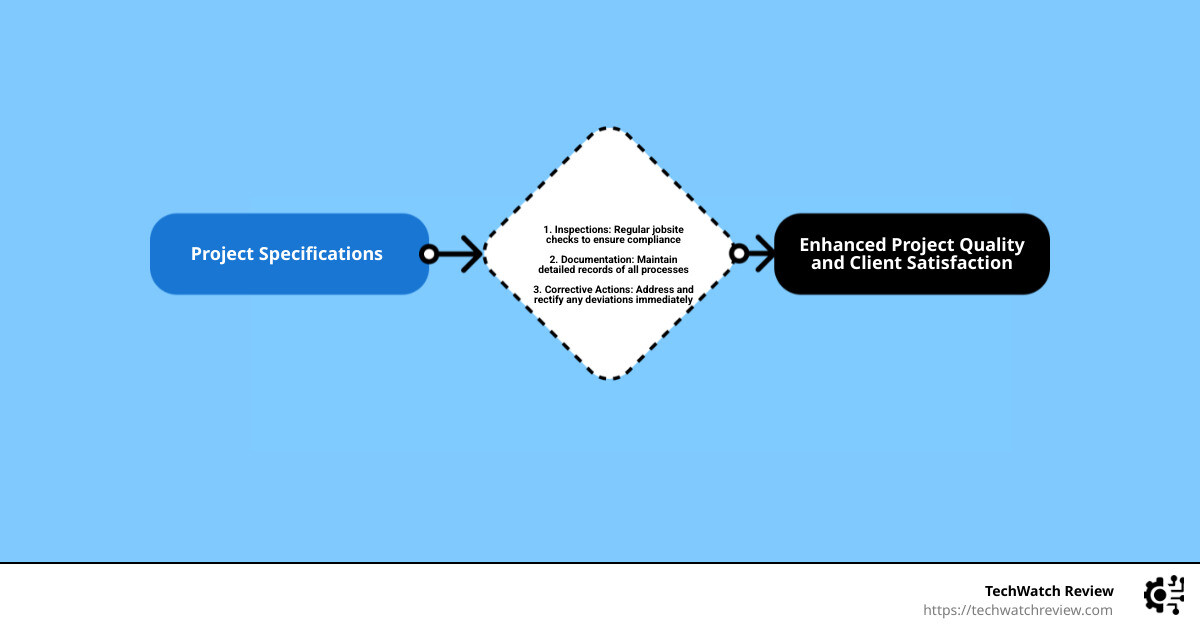
Quality control (QC) in construction ensures that every aspect of a project meets predefined standards. This involves monitoring, inspections, and addressing deviations to maintain quality.
Specifications
Specifications are the backbone of construction quality. They provide detailed guidelines for materials and processes. Developed by the design team, including architects and engineers, these guidelines ensure the project aligns with the owner’s vision and safety standards.
In the U.S., the Construction Specifications Institute (CSI) uses MasterFormat, a structured format for organizing construction specifications. This helps ensure that all details are systematically categorized and easily accessible.
Specifications inform subcontractors about quality requirements. They serve as a benchmark during inspections, allowing for easy identification of errors and omissions.
Submittals
The submittal process is crucial for quality control. It involves submitting shop drawings, material samples, and other documents to the general contractor. These documents provide detailed information about proposed materials and methods.
The general contractor reviews these submittals and forwards them to the architect and engineer for approval. This process ensures alignment with design specifications and identifies discrepancies before construction begins.
Effective communication is key. The general contractor acts as a coordinator, ensuring all parties are aligned on quality requirements. This collaboration helps resolve potential issues, such as sourcing alternative materials or adjusting construction methods.
Inspections
Regular jobsite inspections and daily logs are essential. They help identify and fix potential issues, ensuring adherence to quality standards.
Inspections occur at various stages, not just at project closeout. They can uncover problems like MEP clashes, where piping may not align properly. Early identification prevents costly rectifications later.
When quality issues arise, they’re documented, and corrective actions are taken. This might involve repositioning or reinforcing elements to comply with design specifications. Effective communication among the general contractor, architects, and engineers is vital in this process.
Procore quality control tools streamline these inspections, allowing for real-time communication and efficient resolution of issues. This proactive approach ensures that projects meet quality standards and client expectations.
For more insights on construction quality control, you can explore TechWatch Review’s article on construction technology.
The Role of Procore in Quality Control
Procore is a powerful tool for quality management in construction. It’s a cloud-based software that offers a range of features to make quality control easier and more effective.
Key Features of Procore for Quality Control
Configurable Workflows and Forms
Procore allows users to create customizable workflows and forms. This flexibility is crucial for adapting to the unique needs of each project. Teams can set up specific processes for inspections, safety checks, and quality assurance, ensuring that all steps are consistently followed.
Automation and Centralized Systems
Automation is a standout feature in Procore. It streamlines routine tasks like scheduling inspections and sending reminders. This reduces human error and ensures deadlines are met. Additionally, Procore’s centralized system keeps all project information in one place. This makes it easy to track progress, share updates, and maintain clear communication among all stakeholders.
Comprehensive Tools for Inspections and Safety
Procore includes robust tools for managing inspections and safety protocols. Users can document observations, track corrective actions, and ensure compliance with safety standards. This is vital for preventing accidents and maintaining a safe work environment.
Integration with Financials and Field Productivity
Procore also integrates quality control with financial management and field productivity tools. This holistic approach helps teams align quality goals with budget constraints and productivity targets. It ensures that quality control efforts do not disrupt overall project timelines or financial plans.
Benefits of Using Procore
Using Procore for quality control offers several significant benefits:
-
Improved Quality and Reduced Rework: With Procore’s tools, teams can catch and address issues early, reducing the need for costly rework and ensuring higher quality outcomes.
-
Increased Construction Volume: By streamlining quality control processes, Procore allows construction teams to handle more projects simultaneously, boosting overall productivity.
-
Faster Defect Closure: Procore enables quick identification and resolution of defects. This leads to faster project completion and increased client satisfaction.
-
Improved Collaboration and Communication: Procore’s centralized platform fosters better communication among team members. This collaboration minimizes misunderstandings and keeps everyone aligned on quality goals.
Incorporating Procore into construction projects not only improves quality control but also lifts the entire construction process. It helps teams deliver projects that meet both quality standards and client expectations, all while staying on schedule and within budget.
Setting Up a Quality Control Process with Procore
Creating an effective quality control process is crucial for construction projects to meet high standards and client expectations. With Procore quality control, setting up this process becomes streamlined and efficient. Here’s a step-by-step guide to help you get started.
Step-by-Step Guide
1. Determine Quality Standards
The first step is to establish clear quality standards. These standards should align with industry regulations and specific project requirements. Refer to industry standards, codes, and client specifications to ensure comprehensive coverage. This foundation will guide all subsequent quality control activities. For more insights on setting quality standards, you can explore this article on TechWatch Review.
2. Select a QC Method
Choose a quality control (QC) method that fits the project’s needs. This could be statistical process control, inspection-based methods, or a combination of approaches. Procore’s configurable workflows can be custom to support your chosen QC method, ensuring consistent application across the project. Learn more about different QC methods in this detailed guide.
3. Train Employees
Training is essential for effective quality control. Conduct workshops or training sessions to educate your team about the quality standards and QC methods. Procore can facilitate this with its centralized platform, making it easy to share training materials and track progress. For tips on effective training, check out this resource.

4. Conduct QC Testing
Implement quality control testing at various stages of the project. Use Procore’s inspection tools to schedule and document tests. This ensures that any deviations from quality standards are identified early. Testing should be thorough and cover all critical aspects of the construction process. For a deeper dive into QC testing, visit this article.
5. Analyze Results
Once testing is complete, analyze the results to identify trends or recurring issues. Procore’s centralized system allows for easy access to test data, enabling comprehensive analysis. This step is crucial for understanding the root causes of any quality issues. For more on data analysis, see this analysis guide.
6. React and Adjust
Based on the analysis, take corrective actions to address any identified issues. Procore’s automation features can help streamline this process by assigning tasks and sending notifications to relevant team members. Adjust the QC process as needed to prevent future occurrences of similar issues. For strategies on making adjustments, refer to this article.
Procore quality control not only simplifies the setup of a quality control process but also improves its effectiveness. By following these steps and leveraging Procore’s tools, construction teams can ensure their projects meet the highest quality standards while maintaining efficiency and client satisfaction.
Next, we’ll explore the differences between Quality Control and Quality Assurance and how they complement each other in construction projects.
Quality Control vs. Quality Assurance
In construction, quality control (QC) and quality assurance (QA) are two distinct approaches to managing quality, each with its own focus and methodology. Understanding the differences between these processes is vital for optimizing construction outcomes.
Correction vs. Prevention
Quality Control is primarily about correction. It’s a reactive process that involves identifying defects or deviations from quality standards and taking corrective actions to fix them. QC is like a safety net, ensuring that any errors are caught and addressed before they affect the final product. For instance, during a construction project, QC activities might include inspections and testing to catch non-conforming work. For more insights on QC practices, you can explore this article on construction quality control.
On the other hand, Quality Assurance is about prevention. It’s a proactive process that focuses on optimizing construction processes to prevent defects from occurring in the first place. QA involves establishing robust systems and protocols to ensure quality is built into every phase of the project. This might include training programs, process audits, and continuous improvement initiatives. Learn more about QA strategies in construction here.
Reactive vs. Proactive Process
The reactive nature of QC means that it deals with issues as they arise. For example, if a batch of concrete doesn’t meet strength specifications, QC measures would involve testing, identifying the problem, and making necessary adjustments. Procore’s inspection tools can be instrumental in this reactive process, helping teams document and correct issues efficiently.
QA, being proactive, involves setting up systems and processes that reduce the likelihood of errors. This could include implementing standardized procedures and using Procore’s configurable workflows to ensure consistency and quality from the start. The goal is to minimize the need for QC interventions by getting things right the first time. For a deeper dive into proactive QA measures, check out this resource.
Optimizing Construction Processes
Both QC and QA play crucial roles in optimizing construction processes. While QC ensures that any deviations are corrected promptly, QA focuses on creating a framework where such deviations are less likely to occur. By using both approaches in tandem, construction teams can achieve higher quality outcomes.
Procore quality control tools support both QC and QA efforts by providing a centralized platform for tracking quality metrics, facilitating communication among stakeholders, and automating routine tasks. This integration helps streamline processes, reduce rework, and ensure that projects meet both quality and regulatory standards. For more on how Procore can enhance your construction projects, visit TechWatch Review’s article on Procore tools.
Next, we’ll dig into how balancing quality control with cost control can lead to better project outcomes and explore various project delivery methods that support this balance.
Balancing Quality Control and Cost Control
Achieving a balance between maintaining quality standards and adhering to budget constraints is a critical challenge in construction. While ensuring high-quality outcomes is a priority, it often comes with increased costs. However, strategic planning and the right project delivery methods can help manage these costs effectively.
Project Delivery Methods
Different project delivery methods offer varying levels of flexibility and collaboration, which can directly impact both quality and cost. Here’s a look at some common methods:
-
Design-Bid-Build (DBB): This traditional approach involves separate contracts for design and construction. While it can lead to higher quality through detailed specifications, it often lacks flexibility, making it harder to adapt to unforeseen changes without incurring additional costs.
-
Design-Build: This method combines design and construction responsibilities under a single contract. It allows for greater collaboration and flexibility, enabling teams to make design adjustments that align with budget constraints without compromising on quality.
-
Integrated Project Delivery (IPD): IPD promotes a collaborative approach where all stakeholders work together from the project’s inception. It encourages value engineering, where contractors can propose cost-effective alternatives that still meet quality standards. This method can help control costs while maintaining high quality.
Contingency Funds and Value Engineering
To address unexpected challenges like material defects or natural disasters, projects often include contingency funds. These reserves act as a financial cushion, protecting the project from budget overruns while ensuring quality standards are met. As noted in the research, negotiating and allocating a contingency reserve is a “win” for all parties involved.
Value engineering is another strategy that can help balance quality and cost. By reviewing materials and construction methods, teams can find cost-effective alternatives that maintain or even improve quality. This process often involves close collaboration between the design team and contractors, ensuring that the project remains within budget without sacrificing quality.
Flexibility and Collaboration
The key to balancing quality and cost is flexibility and collaboration. Methods like design-build and IPD foster an environment where adjustments can be made efficiently, reducing the likelihood of costly rework. These methods also support the use of technology, such as Procore’s cloud-based software, which facilitates communication and coordination among all stakeholders.
By leveraging these strategies and tools, construction teams can achieve a harmonious balance between quality control and cost control, leading to successful project outcomes.
Roles and Responsibilities in Quality Control
Quality control in construction is a team effort, involving various roles and responsibilities. Each stakeholder plays a crucial part in ensuring that projects meet the desired quality standards. Let’s explore the key players and their responsibilities in this process.
Owners
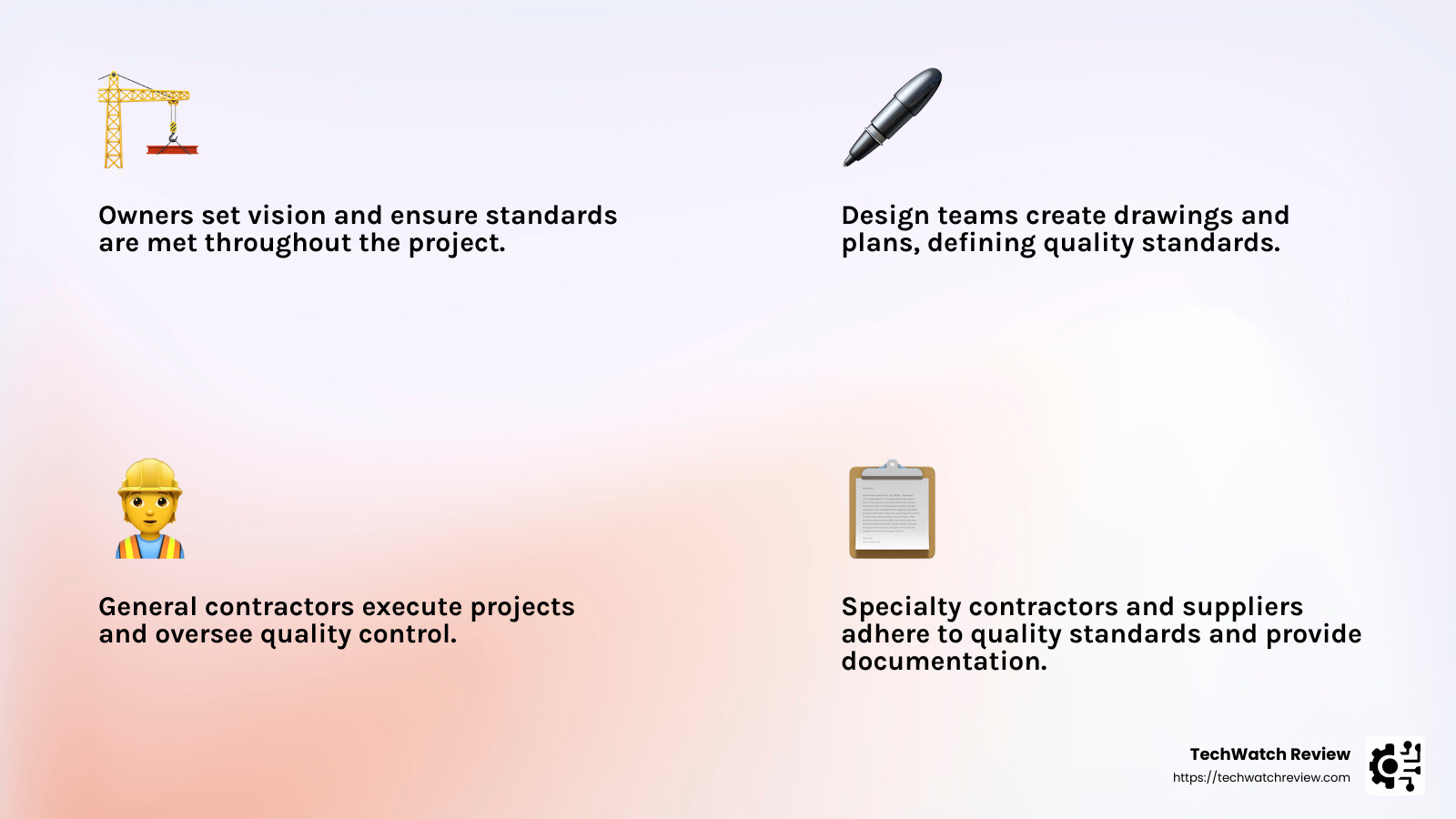
Owners set the vision and establish the standards for the project. They are involved from the start, setting expectations and ensuring that the project’s quality aligns with their goals. During construction, owners often participate in inspections to verify that the work meets their standards. They also handle prequalification and procurement, selecting contractors who can deliver quality work. For more insights on the role of owners in construction, check out this article.
Design Team
The design team, which includes architects and engineers, is responsible for creating the project’s drawings, plans, and specifications. They define the quality standards and ensure all submittals meet design requirements. Their role is crucial in the approval process for materials and methods, ensuring everything aligns with the project’s vision. By setting clear guidelines, they help maintain consistency and quality throughout the project. Learn more about the design team’s impact on quality here.
General Contractor
The general contractor is at the forefront of executing the project according to the established quality standards. They coordinate the activities of subcontractors and manage the construction process. The general contractor must ensure compliance with the plans and specifications, often requiring approval for any change orders. They also appoint a Quality Control Manager to oversee quality assurance processes, ensuring all work meets the required standards. Discover more about the general contractor’s role here.
Specialty Contractors and Suppliers
Specialty contractors and suppliers are responsible for adhering to the quality standards set by the design team and general contractor. They ensure compliance with specifications and provide necessary documentation. Suppliers must deliver materials that meet project requirements, and specialty contractors focus on specific areas, like electrical or plumbing, ensuring their work is up to standard. They also handle replacement parts if needed, ensuring continuous quality throughout the project. For further reading on specialty contractors, visit this page.
Individual Roles
Several individual roles contribute to quality control, each with distinct responsibilities:
-
Construction Manager: Oversees the entire construction process, ensuring all activities align with the quality control plan. They coordinate between different teams and manage resources efficiently.
-
Project Manager: Focuses on meeting project deadlines and budgets while maintaining quality standards. They handle communication between stakeholders and ensure that all aspects of the project are on track.
-
Site Superintendent: Manages daily onsite operations, ensuring that construction activities comply with quality standards. They conduct regular jobsite inspections and maintain detailed inspection reports to track progress and identify any issues.
By understanding and executing these roles effectively, construction teams can ensure that projects meet the highest quality standards, resulting in successful and satisfactory outcomes.
Creating a Quality Control Plan
Creating a robust Quality Control Plan (QCP) is essential for ensuring that construction projects meet high standards of quality, safety, and efficiency. A well-structured QCP provides a roadmap for achieving project objectives, detailing roles, protocols, and documentation requirements.
Key Elements of a QCP
-
Project Overview: Start with a clear description of the project, including its scope and objectives. This sets the stage for all quality control activities.
-
Quality Standards & References: Define the specific quality standards the project must meet. Reference industry codes, regulations, and client specifications to ensure compliance.
-
Inspections and Testing: Outline the inspections and testing required at various stages. Specify the timing, personnel involved, and the criteria for acceptance.
-
Documentation and Record Keeping: Establish procedures for maintaining accurate records. This includes inspection reports, test results, and any other relevant documentation.
-
Control of Non-Conforming Work: Detail the procedures for identifying and rectifying non-conforming work. This includes decisions on repair, rework, or rejection.
-
Training: Describe the training programs necessary for personnel involved in quality control. This ensures everyone is equipped to maintain quality standards.
-
Resources: List the tools, equipment, and facilities needed for quality control. Include any external agencies or labs involved in the process.
-
Performance Monitoring & Continuous Improvement: Implement procedures for monitoring the effectiveness of the QCP. Include strategies for reviewing and updating the plan based on feedback and performance metrics.
Establishing Protocols and Procedures
A site-specific plan is crucial for addressing unique challenges that may arise during construction. This involves setting up protocols and procedures custom to the project’s needs, ensuring quick responses to unforeseen issues.
Documentation is key to transparency and accountability. Keep detailed records of defects, inspection results, and any changes to the original plan. This not only provides a clear trail of quality assurance activities but also helps in identifying patterns and areas for improvement.
Leverage centralized systems or construction management software to streamline the documentation process. Tools like Procore can help manage quality control efficiently by providing a centralized platform for tracking inspections, testing, and corrective actions. This reduces the risk of costly rework and helps maintain high standards throughout the project lifecycle.
By defining clear protocols and utilizing technology, construction teams can collaborate effectively to meet quality objectives. This approach not only ensures compliance with standards but also improves overall project performance.
For more insights on quality control in construction, check out this article on TechWatch Review.
Quality Control Checklist
Tailoring the Checklist
A quality control checklist is a crucial tool in ensuring that construction projects meet their specific quality standards. However, there is no one-size-fits-all solution. Each project demands a checklist custom to its unique requirements, drawing from the project’s spec book and historical data.
Project-Specific Customization: Begin by understanding the specific needs of the project. Whether it’s a commercial office building or a road construction project, the quality concerns will differ. Tailor the checklist to address these specific concerns, ensuring it aligns with the project’s objectives and the standards outlined in the spec book. This targeted approach helps in focusing on the most critical quality issues. For more on project-specific customization, check out this article on construction quality.
Historical Data Utilization: Use historical data from similar projects to identify common quality issues. This data-driven approach helps in anticipating potential problems and incorporating preventive measures into the checklist. Experienced construction managers can leverage this information to refine the checklist, ensuring it is both comprehensive and practical. Learn more about using historical data in construction here.
Evolving Checklist Through Project Phases: As a project progresses, the quality control checklist should evolve to address the specific quality concerns relevant to each phase. For example, during the foundation phase, focus on structural integrity and material quality. In the finishing phase, shift attention to aesthetics and final inspections. This phased approach ensures that quality standards are consistently maintained from start to finish.
Adapting to Quality Concerns: Regularly update the checklist to reflect any changes in project scope or unforeseen challenges. This adaptability is crucial in maintaining high quality standards and ensuring that the project meets its objectives. For strategies on adapting to quality concerns, visit this guide on quality management.
By tailoring the quality control checklist to the specific needs of each project and updating it as the project evolves, construction teams can effectively manage quality concerns. This approach not only ensures compliance with the project specifications but also improves the overall efficiency and success of the project.
For more insights on creating effective quality control plans, visit TechWatch Review.
Safety and Risk Mitigation
Quality Control as a Foundation for Safety
In construction, quality control is not just about meeting standards—it’s a key component of ensuring safety. By establishing robust safety standards and a systematic approach to quality control, teams can mitigate risks effectively.
Material Standards and Structural Safety: Quality control ensures that all materials used meet specific standards, which is crucial for preventing material failures. For example, using substandard steel in a building’s framework can lead to catastrophic failures. By adhering to strict material standards, these risks can be minimized, ensuring structural safety.
Proactive Risk Identification: A strong quality control system allows for the proactive identification of potential risks. This means issues can be addressed before they become significant problems. For instance, regular inspections and tests can catch deviations early, preventing costly rework and maintaining safety.
Safety Teams and Systematic Approaches: Quality control provides a framework for how safety teams operate. It ensures that all safety protocols are followed and that any risks are systematically identified and mitigated. This collaboration between quality control and safety teams helps create a safer work environment.
Addressing Material Failures: One of the key roles of quality control is to prevent material failures that could lead to safety hazards. By ensuring that all materials are tested and verified, potential failures can be addressed before they impact the project’s integrity.
Incorporating quality control into every phase of a construction project not only upholds safety standards but also improves the project’s overall success. By focusing on material standards, structural safety, and proactive risk identification, construction teams can ensure that safety is an integral part of their workflow. For more information on integrating quality control and safety, explore TechWatch Review’s articles.
The Role of Technology in Quality Control
Emerging Technologies
In the rapidly evolving construction industry, technology plays a pivotal role in enhancing quality control processes. Modern tools and software are changing how construction projects are managed, making them more efficient and effective.
Construction Management Software: Platforms like Procore provide a centralized system for managing various aspects of construction projects, including quality control. These systems streamline processes by automating inspections, tracking deviations, and facilitating communication across teams. This integration leads to fewer errors and faster resolution of issues.
Building Information Modeling (BIM) and Virtual Design and Construction (VDC): BIM and VDC are revolutionizing construction by allowing teams to create detailed digital representations of buildings. These models help in identifying potential issues before construction begins, ensuring that all elements are aligned with quality standards. This proactive approach reduces the likelihood of costly rework and improves overall project efficiency. For more on BIM, check out this article on TechWatch Review.
Augmented Reality (AR) and Virtual Reality (VR): AR and VR technologies enable construction teams to visualize projects in a virtual environment. This capability allows for real-time inspections and assessments, making it easier to spot potential quality issues early. For instance, using AR, a project manager can overlay digital information onto the physical site, ensuring that all components meet the required specifications. Learn more about AR in construction here.
Digital Twins: A digital twin is a virtual replica of a physical asset. In construction, digital twins can be used to monitor and analyze the performance of a building in real time. This technology provides valuable insights into how a structure behaves under different conditions, allowing for adjustments that improve quality and durability. Explore the benefits of digital twins in construction in this article.
Streamlined Processes and Proactive Mitigation: By leveraging these technologies, construction teams can streamline their quality control processes. Automated workflows and real-time data collection ensure that potential issues are identified and addressed swiftly. This proactive mitigation reduces downtime and improves overall project outcomes.
Visualization Tools and Efficiency: Visualization tools, such as 3D modeling and simulation, allow for a clearer understanding of complex construction elements. These tools improve communication among stakeholders by providing a visual representation of potential challenges and solutions. As a result, projects can be completed more efficiently, with a higher degree of accuracy.
Incorporating these emerging technologies into construction projects not only improves quality control but also drives innovation within the industry. By adopting tools like BIM, AR, and digital twins, construction professionals can ensure that their projects meet the highest standards of quality and safety. For further insights on how technology is changing construction, visit TechWatch Review.
Frequently Asked Questions about Procore Quality Control
What is the pro of quality control?
Quality control plays a crucial role in ensuring customer satisfaction, resource efficiency, and profit increase in construction projects. By maintaining high standards, construction firms can deliver projects that meet or exceed client expectations, leading to repeat business and positive referrals. Efficient use of resources minimizes waste and reduces costs, directly impacting the bottom line. Moreover, fewer defects and rework translate into higher profitability and smoother project completion.
What does quality control include?
Quality control involves monitoring and managing various aspects of a construction project to ensure adherence to quality standards. It includes:
- Deviations: Identifying and addressing any deviations from the project specifications to maintain the desired quality.
- Quality Standards: Establishing benchmarks and criteria that the project must meet.
- Monitoring: Continuously overseeing project activities to ensure compliance with quality standards.
- Inspections: Conducting regular inspections and tests to verify that work meets specified requirements.
These elements are critical in maintaining the integrity and success of a construction project.
Which software is used for quality control?
Several software solutions are available to support quality control in construction. Procore is a leading cloud-based platform that provides configurable workflows and automation features to streamline quality management processes. Procore’s tools help manage inspections, track deviations, and facilitate communication, ensuring efficient project delivery. For more insights on Procore, you can explore this article on TechWatch Review.
Another option is QT9 QMS, which offers a comprehensive quality management system with cloud-based capabilities. It supports automation and configurable workflows, making it a flexible choice for construction firms looking to improve their quality control processes. More details about QT9 QMS can be found on their official website.
By utilizing these software solutions, construction companies can improve their quality control efforts, reduce errors, and ensure projects are completed to the highest standards. For more information on quality control software, visit TechWatch Review’s software section.
At TechWatch Review, our mission is to provide you with comprehensive insights into the latest technology products, helping you make informed decisions. With our expert reviews and guidance, navigating the complex landscape of construction management software becomes straightforward. Whether you’re a small firm or a large enterprise, understanding tools like Procore can significantly improve your quality control processes.
Our global audience benefits from custom content that addresses the unique challenges faced by construction professionals worldwide. We dig into the specifics of how Procore’s features can streamline operations and improve project outcomes. By leveraging our insights, you can ensure your construction projects not only meet but exceed industry standards.
For more detailed information and to explore other helpful resources, visit our TechWatch Review blog. Here, you’ll find a wealth of articles designed to equip you with the knowledge you need to succeed in the changing construction industry. Additionally, explore our in-depth analysis of construction software and Procore’s impact on project management to further enhance your understanding.


