Table of Contents
B2B video marketing tips are crucial in today’s competitive landscape. Video content not only enhances customer engagement but also increases conversion rates. Tech-savvy professionals and businesses are increasingly adopting video marketing strategies to connect with their target audience, making it an indispensable tool in B2B marketing. Visitors to this article can expect to find reliable and concise tips on maximizing video content’s potential.
- Incorporate storytelling: Videos are effective for conveying stories that resonate emotionally with customers. Learn more about storytelling in video marketing.
- Focus on quality: High production values ensure your message comes across professionally. Explore quality video production tips.
- Optimize for SEO: Proper use of keywords and descriptions can improve video visibility. Check out SEO optimization strategies.
- Leverage platforms like LinkedIn and YouTube: These are ideal for reaching industry professionals and decision-makers. Discover platform-specific strategies.
TechWatch Review understands the importance of keeping up with evolving marketing trends. With video expected to account for most internet traffic, businesses adopting video strategies can improve brand recognition and drive purchase decisions. Companies like Monday.com and Zendesk set great examples with their creative use of video.
Why B2B Video Marketing is Essential
B2B video marketing is more than just a trend—it’s a necessity. The benefits are clear, from higher ROI to increased brand awareness. Let’s explore why video is a must-have in your B2B marketing toolkit.

ROI Statistics and Engagement Rates
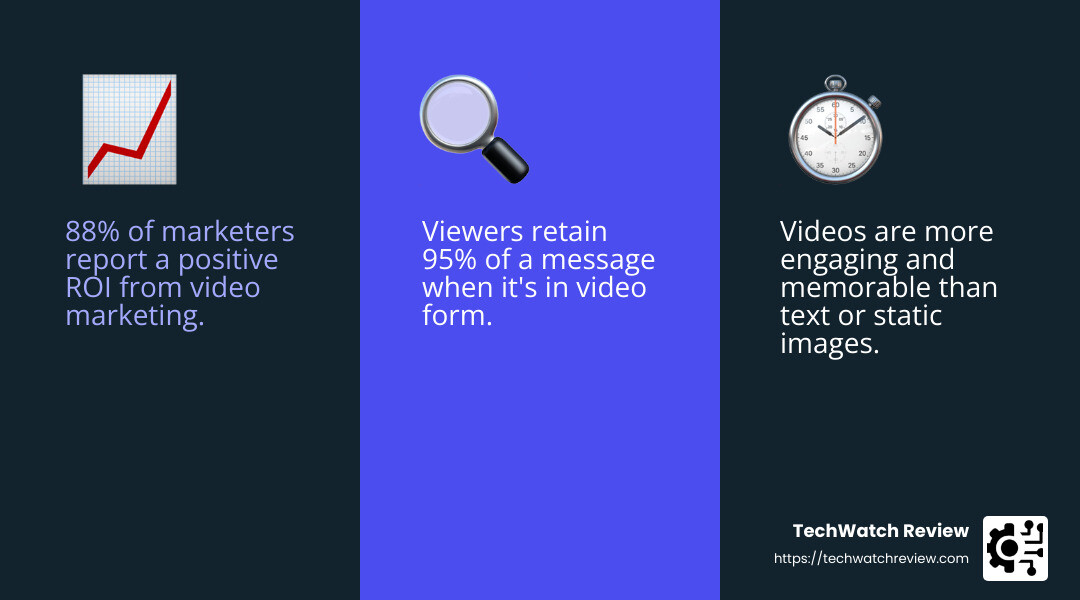
Video marketing offers impressive returns on investment. According to HubSpot, 88% of marketers report a positive ROI from video marketing. This is a significant increase from just a few years ago when only 33% reported the same. Videos are not only engaging but also memorable. They capture attention and hold it longer than text or static images.
Conversion Rates
Videos are powerful conversion tools. They not only attract viewers but also convert them into customers. Research from Animoto shows that 93% of businesses have landed a new customer due to a video on social media. By providing compelling and persuasive messages, videos can dramatically increase conversion rates.
Consider using customer testimonials or product demos to showcase your brand’s value. These types of videos can guide potential clients through the decision-making process, leading to higher conversion rates.
Brand Awareness
Increasing brand awareness is crucial for any business. Video marketing is particularly effective at this. A study from Wyzowl found that 95% of marketers see video as a key tool for increasing brand awareness. Videos allow businesses to present their stories, share expertise, and connect with audiences on a personal level.
Platforms like YouTube and LinkedIn are excellent for reaching industry professionals. They offer vast audiences and opportunities for engagement. For example, Zendesk uses customer testimonials to highlight their service quality, boosting their brand recognition. For more insights on video content strategies, check out Wyzowl’s research.
Conclusion
Incorporating video into your B2B marketing strategy is no longer optional—it’s essential. With the right approach, videos can improve engagement, boost conversion rates, and increase brand awareness. Businesses that leverage video effectively will find themselves ahead of the competition.
Next, we’ll explore how to create a successful B2B video marketing strategy.
How to Create a B2B Video Marketing Strategy
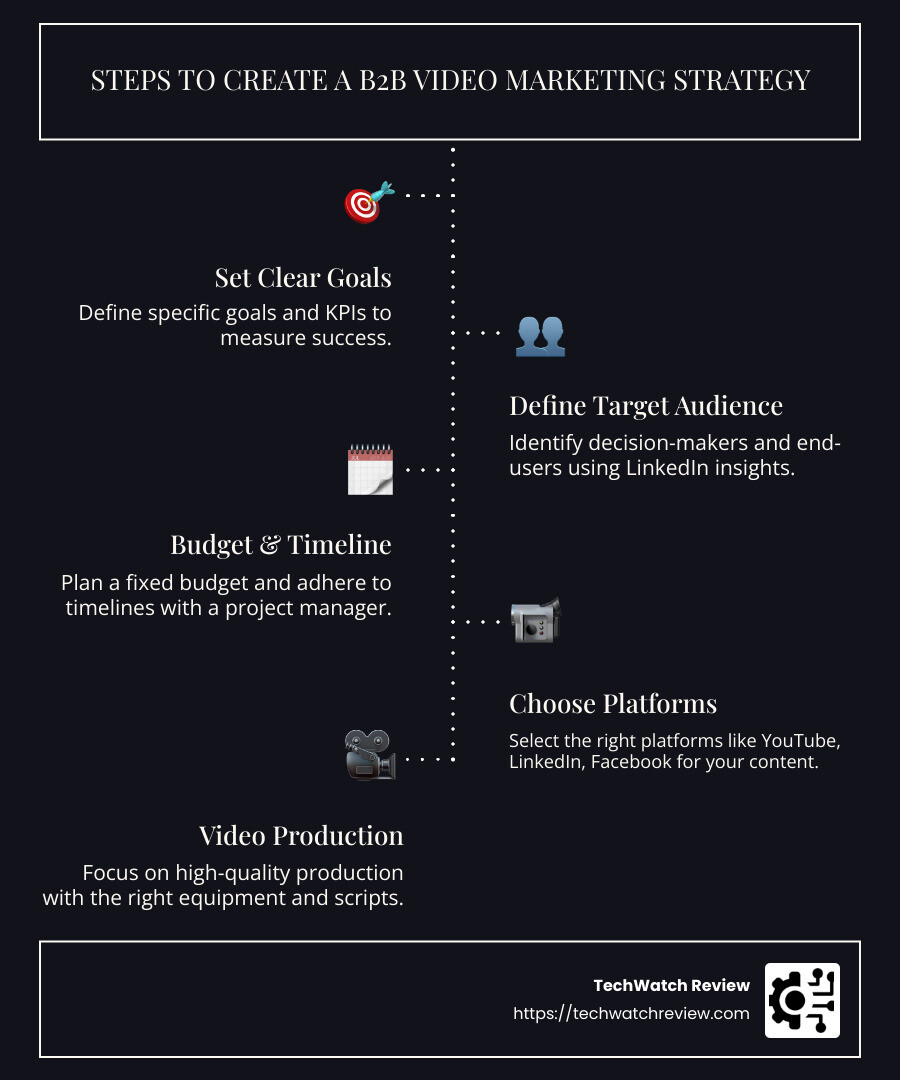
Creating a successful B2B video marketing strategy requires a well-thought-out plan. Let’s explore the key steps to ensure your video marketing efforts yield the best results.
Set Clear Campaign Goals
Start with defining specific goals for your video campaigns. Are you aiming to increase brand awareness or drive more social media followers? Maybe your focus is on improving Return on Ad Spend (ROAS). Whatever your objectives, ensure they are clear and measurable. Use Key Performance Indicators (KPIs) to track progress and make data-driven decisions.
For instance, if your goal is lead generation, focus on metrics like click-through rate and conversion rate. This will help you understand how effective your videos are in achieving your goals. For more insights on setting effective KPIs, check out this article on TechWatch Review.
Define Your Target Audience
Understanding your target audience is crucial. Consider their job descriptions and whether you’re targeting decision-makers or end-users. This will shape the content and tone of your videos. For example, a video aimed at decision-makers might focus on strategic benefits, while one for end-users could highlight practical features.
Platforms like LinkedIn are ideal for reaching industry professionals. Here, you can tailor your content to resonate with specific job roles and industry sectors. Learn more about targeting the right audience on LinkedIn here.
Budget and Timeline
A successful video marketing strategy requires a well-planned budget and timeline. Assign a project manager to oversee the process and ensure everything stays on track. Having a fixed budget will help you manage costs effectively and avoid overspending.
It’s tempting to add various components to your video, but these can quickly inflate your budget. Plan carefully and stick to your financial parameters. Adhering to a timeline is equally important to ensure timely delivery of your video content. For tips on managing your marketing budget, visit this guide on TechWatch Review.
Choose the Right Platforms
Selecting the right platforms is key to reaching your audience. Consider where your target audience spends their time online. Platforms like YouTube and LinkedIn are great for professional content, while Facebook and Vimeo can reach a broader audience. Animoto is another option for creating engaging videos with ease.
Each platform has its own specifications and audience preferences, so tailor your videos accordingly. For instance, YouTube allows for longer videos, while Facebook might require shorter, more engaging content. For a detailed comparison of video platforms, see this article.
By following these steps, you’ll be well on your way to creating a B2B video marketing strategy that resonates with your audience and achieves your business goals. Next, we’ll dig into the different types of B2B marketing videos and how they can benefit your strategy.
Types of B2B Marketing Videos
In B2B marketing, leveraging different types of videos can significantly improve your strategy. Let’s dive into some of the most effective B2B video formats and how they can benefit your business.
Explainer Videos
Explainer videos are a fantastic way to introduce your product or service. These videos simplify complex concepts, making them easy for your audience to understand. Companies like Databricks have successfully used animated explainer videos to convey intricate platforms and processes. Similarly, Practicus employs explainer videos to demonstrate how their solutions address specific business challenges.
Key Benefits:
– Simplifies complex ideas
– Engages viewers
– Builds brand authority
For more insights on creating effective explainer videos, check out this guide from Databricks.
Case Study Videos
Case study videos offer powerful social proof. They showcase real-life success stories, allowing potential clients to see the tangible benefits of your product or service. Slack and Testimonial Hero are excellent examples of brands that use case study videos to highlight customer success.
Key Benefits:
– Builds credibility
– Showcases real-world results
– Engages potential clients with relatable stories
Learn more about how Slack uses case study videos by visiting Slack’s customer stories.
Product Demos
Product demo videos provide an in-depth look at your product’s features and benefits. They are particularly effective for high-value, complex products. Trello and Salesforce use product demos to highlight their unique features and demonstrate their value to potential customers.
Key Benefits:
– Demonstrates product value
– Builds trust with potential customers
– Encourages informed purchasing decisions
Explore Salesforce’s demo videos for more examples.
Customer Testimonials
Customer testimonials are a powerful form of social proof. They feature satisfied customers sharing their positive experiences, which can help build trust with potential clients. Companies like Zendesk and Mailchimp effectively use customer testimonials to validate their offerings and highlight user satisfaction.
Key Benefits:
– Builds trust and credibility
– Provides authentic customer perspectives
– Encourages new customer acquisition
For more on how Mailchimp uses customer testimonials, visit Mailchimp’s customer stories.
Brand Videos
Brand videos are essential for showcasing your company’s culture and values. They help humanize your brand and connect with your audience on a deeper level. Hootsuite and Monday.com create compelling brand videos that highlight their company culture and mission, attracting both customers and potential employees.
Key Benefits:
– Improves brand image
– Attracts talent and customers
– Builds emotional connections
Check out Hootsuite’s brand videos to see how they connect with their audience.
By incorporating these types of videos into your B2B marketing strategy, you can effectively communicate your brand’s value, engage your audience, and drive business growth. Next, we’ll explore best practices for optimizing your B2B video marketing efforts.
Best Practices for B2B Video Marketing
SEO Optimization
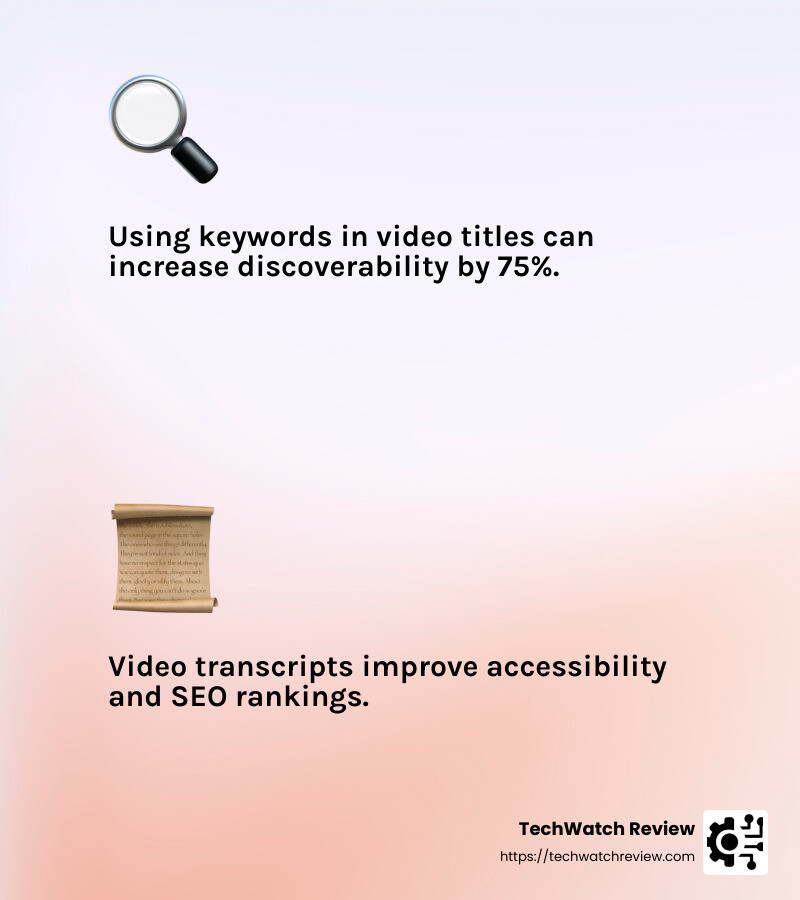
Optimizing your B2B videos for search engines is crucial for improving visibility and reach. Start by identifying relevant keywords that potential clients might use when searching for your products or services. Incorporate these keywords naturally into your meta descriptions and video titles. Additionally, providing video transcripts can improve SEO by making your content more accessible to search engines, while also catering to audiences who prefer reading.
Storytelling Techniques
Effective storytelling can transform your B2B videos from mere promotional tools to engaging narratives that resonate with your audience. Focus on creating an emotional appeal by weaving a narrative structure that highlights relatable challenges and solutions. This approach not only makes your content more engaging but also helps build a deeper connection with your viewers. People are more likely to remember stories than facts alone.
Using Humor
Incorporating humor into your B2B videos can significantly boost engagement and shareability. A touch of humor helps break the monotony of corporate communications and adds a layer of brand personality. While humor can be a powerful tool, it’s important to ensure it aligns with your brand’s voice and doesn’t distract from the main message.
Quality Production
High-quality production is essential for conveying professionalism and credibility. Investing in professional equipment, or hiring skilled videographers and scriptwriters, can make a significant difference in the final output. Quality production not only ensures your message is clear and visually appealing but also reflects positively on your brand image.
Effective CTAs
A compelling Call to Action (CTA) can drive viewers to take the next step, whether it’s lead generation, trial sign-ups, or demo bookings. Place your CTAs strategically within the video—consider using pre-roll, mid-roll, or post-roll positions depending on the desired action. Ensure your CTA is clear, concise, and aligned with the video’s content to maximize its effectiveness.
By integrating these B2B video marketing tips into your strategy, you can improve the impact of your video content and achieve your marketing objectives. Next, we’ll address some frequently asked questions about B2B video marketing strategies.
Frequently Asked Questions about B2B Video Marketing Tips
How to Create a B2B Video Marketing Strategy?
Creating an effective B2B video marketing strategy involves understanding the 4 C’s of B2B marketing: Customer, Cost, Convenience, and Communication. These elements ensure your strategy is customer-centric, focusing on the specific needs and preferences of your target audience.
-
Customer: Identify who your ideal customers are. Understand their pain points and how your product can solve their problems. Tailor your video content to address these needs directly. For more insights, check out this article on customer-centric strategies.
-
Cost: Consider not just the price of your product but the overall cost to the customer, including time and effort. Your videos should communicate the value and benefits that justify these costs.
-
Convenience: Make it easy for customers to access and understand your content. Choose platforms that your audience frequently uses and ensure your videos are easy to find and view.
-
Communication: Engage with your audience through clear and compelling messaging. Use storytelling techniques to convey your brand’s story and values effectively.
A customer-centric approach is key. By focusing on what your audience wants and needs, you can create videos that resonate and drive action.
What are the 7 P’s of B2B Marketing?
The 7 P’s of B2B marketing provide a comprehensive framework for developing a marketing strategy:
-
Product: Clearly define what you are offering. Ensure it meets the needs of your target market and stands out from competitors.
-
Price: Set a pricing strategy that reflects the value provided and is competitive within your industry.
-
Place: Determine where your product is available, including distribution channels and online presence.
-
Promotion: Use various promotional tactics, such as video marketing, to communicate your product’s benefits and reach your audience. Learn more about effective promotion strategies here.
-
People: Focus on everyone involved in your business, from employees to customers, ensuring positive interactions.
-
Process: Streamline processes to improve customer satisfaction and ensure efficient delivery of your product or service.
-
Physical Evidence: Provide tangible proof that your product or service is real, such as through packaging, branding, and online reviews.
These elements help create a robust marketing strategy that aligns with your business goals and customer expectations.
What is the Rule of Seven in Marketing?
The Rule of Seven states that a prospect needs to interact with your brand at least seven times before they are ready to make a purchase. This rule emphasizes the importance of consistent and varied brand interactions to build familiarity and trust.
-
Brand Interactions: Use multiple touchpoints such as social media, email, webinars, and video content to engage with potential customers. Each interaction should provide value and reinforce your brand message. For more on leveraging brand interactions, visit this resource.
-
Purchase Likelihood: By increasing the number of interactions, you improve the likelihood of conversion. Ensure each touchpoint is meaningful and contributes to moving the prospect closer to a purchase decision.
Understanding and applying these principles can significantly improve your B2B video marketing efforts and drive better results.
In today’s digital landscape, video marketing has become a vital tool for B2B companies. It’s not just about keeping up with trends; it’s about leveraging a medium that has proven to engage and convert. Videos can transform complex concepts into digestible content, making them an essential part of any B2B strategy.
At TechWatch Review, we understand the importance of staying informed about the latest technology and marketing trends. Our mission is to provide you with the insights needed to make informed decisions. Explore more about B2B marketing strategies in our Marketing category.
Importance of Video Marketing
The statistics are clear: video content is a powerhouse in the marketing world. According to research, 93% of marketers have reported that video has helped increase brand awareness. Additionally, 81% of marketers say it has directly increased sales, proving its effectiveness in converting viewers into customers.
Video marketing offers a higher engagement rate than other forms of content. It allows businesses to showcase their products, share customer testimonials, and tell compelling brand stories. As a B2B marketer, using video can help you reach decision-makers and end-users effectively, making it a must-have tool in your marketing arsenal.
Final Tips for Success
-
Set Clear Goals: Define what you want to achieve with your videos, whether it’s increasing brand awareness, generating leads, or boosting sales.
-
Know Your Audience: Tailor your content to the needs and preferences of your target audience. Use platforms like LinkedIn to reach decision-makers.
-
Optimize for SEO: Use relevant keywords, meta descriptions, and transcripts to improve your video’s visibility on search engines.
-
Tell a Story: Engage your audience by focusing on storytelling. Use emotional appeal and relatable content to connect with viewers.
-
Ensure Quality Production: Invest in professional equipment and skilled videographers to ensure your videos are polished and engaging.
By implementing these B2B video marketing tips, you can create a strategy that not only captures attention but also drives results. The key is to stay consistent, be creative, and always keep your audience at the forefront of your efforts. For more insights, check out our article on Effective Video Marketing Strategies.