Table of Contents
- What is Medical Office Management Software?
- Top Medical Office Management Software of 2026
- Key Features to Look for in Medical Office Management Software
- Benefits of Using Medical Office Management Software
- Comparing EHR and Practice Management Software
- Best Electronic Health Record (EHR) Software
- Frequently Asked Questions about Medical Office Management Software
- Conclusion
Medical office management software is revolutionizing modern healthcare practices by providing comprehensive tools that allow clinics to efficiently manage appointments, patient records, billing, and more—all in one place. By leveraging these systems, medical offices can enhance operational efficiency, improve patient care, and ensure data security.
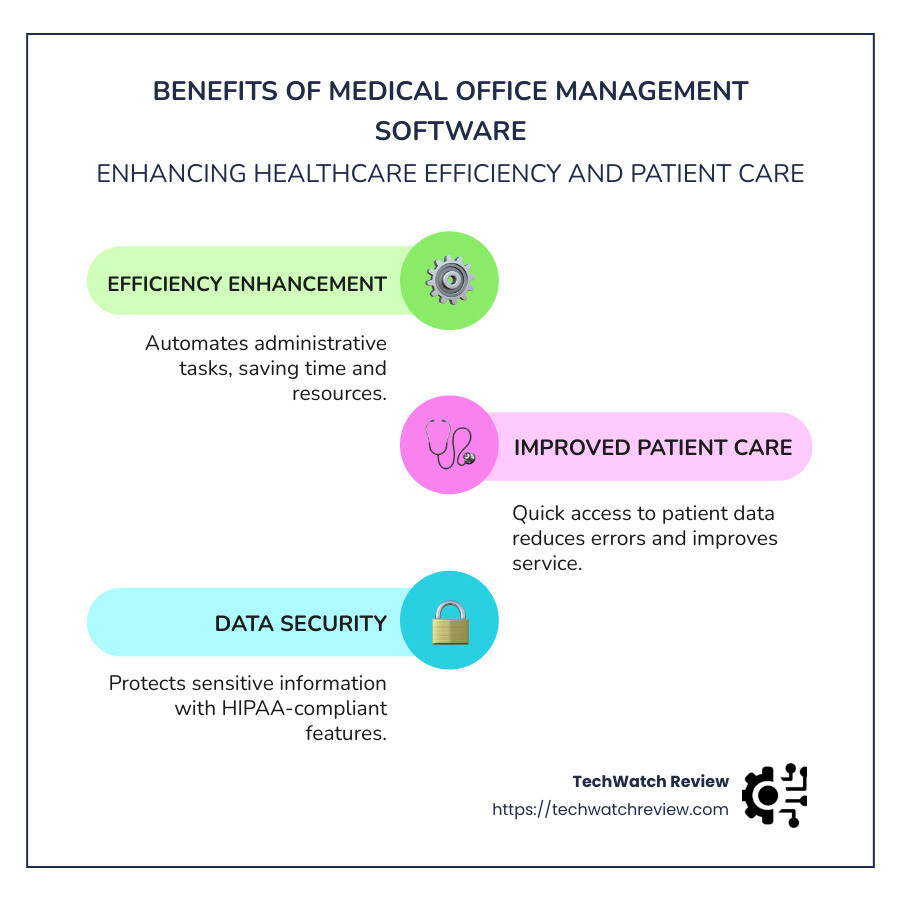
Here are some key benefits of using medical office management software:

- Efficiency Improvement: Streamlines workflows by automating administrative tasks.
- Improved Patient Care: Provides quick access to patient data, reducing errors.
- Cost Reduction: Cuts down on paper use and clerical overhead costs.
- Data Security: Protects sensitive information with HIPAA-compliant features.
- Cloud Accessibility: Access your office’s database from anywhere, any device.
Efficient practices are vital in healthcare due to the high demand for quality services and patient satisfaction. According to Medesk, using management software helps clinics analyze their performance indicators effectively, forming the basis for an optimized marketing strategy. Today’s patients expect seamless interactions with their healthcare providers, from booking appointments online to viewing test results on portals. With robust management software like NextGen Healthcare and McKesson, medical offices can meet these expectations while improving internal processes.

By adopting such systems, medical offices avoid the pitfalls of outdated practices. As TechRadar highlights, comprehensive solutions like Eclipse and Greenway Health allow healthcare providers to consolidate their operational needs into one platform.
For more insights on specific software solutions, check out our articles on appointment scheduling software for medical office, medical office billing software, and medical office EMR.
What is Medical Office Management Software?
Medical office management software is a specialized tool designed to streamline the administrative and operational tasks within healthcare practices. This software serves as a comprehensive platform that integrates various functionalities essential for running a medical office efficiently.
Purpose
The primary purpose of medical office management software is to improve the workflow of healthcare facilities. By automating routine tasks such as scheduling, billing, and patient record management, this software allows healthcare professionals to focus more on patient care rather than administrative duties. This shift not only increases productivity but also improves the overall patient experience.
Key Features
Medical office management software comes with a range of features custom to the unique needs of healthcare providers:
-
Appointment Scheduling: Simplifies the process of booking and managing patient appointments. This feature often includes automated reminders to reduce no-show rates.
-
Billing and Invoicing: Facilitates efficient billing processes by automating the generation of invoices and management of insurance claims. Solutions like DrChrono and Kareo Billing excel in this aspect.
-
Electronic Health Records (EHR) Integration: Ensures seamless access to patient records, enabling healthcare providers to view and update medical histories with ease. This integration reduces errors and improves continuity of care.
-
Patient Portal: Offers patients access to their health information, appointment scheduling, and communication with their healthcare providers. This feature promotes patient engagement and satisfaction.
-
Cloud-Based Access: Provides the flexibility to access the system from any location, at any time. This is particularly beneficial for practices with multiple locations or providers who need remote access.
-
Security and Compliance: Ensures that sensitive patient information is protected through HIPAA-compliant features, safeguarding against data breaches and unauthorized access.
By incorporating these features, medical office management software supports healthcare providers in delivering high-quality care while maintaining efficient operations. Platforms like AdvancedMD and CureMD offer robust solutions that cater to the diverse needs of medical offices.
Efficient use of medical office management software not only streamlines operations but also improves the patient experience, making it an indispensable tool in modern healthcare practices.
Top Medical Office Management Software of 2026
In 2024, several medical office management software solutions stand out for their comprehensive features and user-friendly interfaces. Here’s a closer look at some of the top contenders:
CareCloud Central
CareCloud Central is renowned for its intuitive design and robust functionality. It acts as a practice management control center, optimizing both administrative and financial processes. One of its key strengths is the seamless integration of various services, from practice management to electronic health records (EHR) and billing. This integration simplifies tasks for users, requiring little more than drag-and-drop actions. CareCloud is particularly noted for its competitive pricing, making it a popular choice among healthcare providers.
Eclipse Practice Management
Originally designed for chiropractors, Eclipse Practice Management has expanded its capabilities to cater to a wide range of medical practices. It offers an all-in-one solution that includes practice management, EHR, and billing. The software is flexible and adaptable, making it suitable for single practices as well as multi-site operations. Eclipse is praised for its user-friendly interface and strong support system, ensuring that even those with minimal technical expertise can use it effectively.
Greenway Health
Greenway Health provides a suite of solutions aimed at improving practice efficiency and patient care. It focuses on delivering integrated systems that streamline workflows and improve the continuity of care. Greenway Health is designed to support a variety of healthcare specialties, offering customizable features to meet the unique needs of each practice.
Allscripts
Allscripts is a well-established player in the healthcare software market. It offers comprehensive solutions that integrate EHR, practice management, and patient engagement tools. Allscripts is favored for its robust analytics capabilities, which help practices optimize their operations and improve patient outcomes. The software is particularly beneficial for larger practices seeking to manage complex workflows.
Practice Fusion
Practice Fusion is known for its cloud-based EHR system that is easy to use and cost-effective. It offers a range of features, including appointment scheduling, billing, and patient records management. Practice Fusion’s user-friendly interface makes it a popular choice for small to medium-sized practices looking for a straightforward solution.
DrChrono
DrChrono offers a versatile platform that combines EHR, practice management, and billing functionalities. It is particularly known for its mobile-friendly design, allowing providers to access patient information and manage appointments on-the-go. DrChrono’s integration with telemedicine platforms also improves its appeal, providing flexibility for remote consultations.
Kareo Clinical
Kareo Clinical is custom for small to medium-sized practices, offering a range of features that streamline operations and improve efficiency. It includes tools for EHR, billing, and practice management, with a focus on enhancing the user experience. Kareo is praised for its affordability and ease of use, making it an attractive option for budget-conscious practices.
CureMD
CureMD offers a comprehensive solution that integrates EHR and practice management functionalities. Its specialty-specific templates and robust patient engagement tools make it a favorite among diverse medical specialties. CureMD prioritizes data security and HIPAA compliance, ensuring that patient information is well-protected.
AdvancedMD
AdvancedMD provides a flexible and scalable platform suitable for practices of all sizes. Its extensive customization options allow practices to tailor the system to their specific workflows and needs. While its pricing model can be complex, the software’s comprehensive features, such as electronic prescribing and patient portals, improve patient engagement and streamline communication.
CentralReach
CentralReach is designed for practices specializing in applied behavior analysis (ABA) and therapy services. It offers a suite of tools that support practice management, clinical data collection, and billing. CentralReach is particularly valued for its focus on improving outcomes for therapy providers and their clients.
These software solutions each offer unique advantages, catering to different practice sizes and specialties. When selecting medical office management software, it’s important to consider the specific needs and goals of your practice to ensure the best fit.
Key Features to Look for in Medical Office Management Software
When selecting medical office management software, it’s crucial to focus on features that improve efficiency and patient care. Here are some key features to look for:
EHR Integration
Electronic Health Record (EHR) integration is fundamental. It allows seamless access to patient records, ensuring continuity of care. Integrated EHR systems, like those offered by Practice Fusion, enable easy sharing of patient information across different healthcare providers. This integration reduces errors and improves clinical decision-making.
Billing
Efficient billing processes are vital for the financial health of a practice. Medical billing software should streamline claims processing, reduce denials, and speed up payment collection. AdvancedMD provides a robust billing platform that includes features like electronic superbills and ICD-10 ready systems, ensuring quick and accurate billing.
Scheduling
A reliable scheduling system prevents double bookings and optimizes provider time. Software like CareCloud offers robust scheduling capabilities that improve practice efficiency. Automated appointment reminders and real-time availability checks improve patient satisfaction and reduce no-shows.
Patient Portal
Patient portals are essential for enhancing patient engagement. They allow patients to access their health information, schedule appointments, and communicate with providers. DrChrono includes a user-friendly patient portal that facilitates better communication and empowers patients to take charge of their healthcare.
Mobile Access
With the rise of telehealth, mobile access has become a critical feature. Providers need to manage patient data and appointments on-the-go. Kareo Clinical is known for its mobile-friendly design, allowing healthcare professionals to access vital information anytime, anywhere.
Cloud-Based
Cloud-based solutions offer flexibility and scalability. They allow practices to access their systems from any location, enhancing collaboration and reducing IT costs. Practice Fusion is a popular cloud-based option, providing a seamless experience across devices without the need for extensive hardware.
Security
Security is paramount in healthcare to protect sensitive patient data. Look for software with robust security measures, such as multi-factor authentication and data encryption. CureMD prioritizes HIPAA compliance and data protection, ensuring that patient information remains confidential and secure.
Choosing the right medical office management software involves evaluating these features to match your practice’s specific needs. Whether you prioritize billing efficiency, patient engagement, or data security, these key features will guide you in making an informed decision.
Benefits of Using Medical Office Management Software
Boosting Efficiency
Medical office management software is designed to streamline daily operations in healthcare practices. By automating routine tasks, such as appointment scheduling and billing, staff can focus more on patient care. For instance, CureMD offers cloud-based solutions that simplify scheduling and billing, helping practices avoid payment delays and improve communication. This increased efficiency leads to more productive staff and a smoother workflow.
Streamlining Workflow
By centralizing patient information and administrative tasks, medical office software ensures that all team members have access to the same data. This reduces duplication of work and minimizes errors. AdvancedMD provides customizable workflows that can be tailored to fit the unique needs of any practice, ensuring that processes are consistent and efficient across the board.
Improving Patient Care
With integrated features like electronic health records (EHR) and patient portals, medical office management software improves patient care. Patients can easily access their health records and communicate with providers, leading to better engagement and satisfaction. DrChrono offers a comprehensive patient portal that empowers patients to take charge of their health, improving overall care quality.
Reducing Costs
Automating tasks like billing and scheduling not only saves time but also cuts costs. Practices can reduce the need for additional administrative staff, lowering overhead expenses. DocVA Virtual Medical Assistant, for example, automates administrative tasks, allowing clinics to reduce staffing costs and allocate resources more effectively.
Real-Time Data Access
Access to real-time data is crucial for making informed clinical and administrative decisions. Cloud-based systems like Practice Fusion provide real-time access to patient data from any device, facilitating better decision-making and improving patient outcomes. This immediate access to information ensures that healthcare providers can deliver timely and accurate care.
Incorporating medical office management software into your practice can transform how you operate, leading to improved efficiency, reduced costs, and improved patient care. As you continue exploring your options, consider how these benefits align with your practice’s goals and needs.
Comparing EHR and Practice Management Software
When it comes to running a medical office, understanding the difference between Electronic Health Records (EHR) and Practice Management (PM) software is essential. Though they may seem similar, each serves distinct purposes and offers unique benefits for healthcare practices.
Differences Between EHR and PM Software
EHR Software focuses on the clinical side of healthcare. It stores and manages patient medical records, including demographics, medical history, and treatment plans. EHRs are designed to improve patient care by providing comprehensive and accessible health information. For example, Practice Fusion offers cloud-based EHR solutions that allow healthcare providers to access patient records from any device, ensuring continuity of care.
Practice Management Software, on the other hand, is centered around the administrative tasks of a medical office. It handles appointment scheduling, billing, and insurance claims, streamlining the office’s workflow. For instance, AdvancedMD provides PM solutions that automate these processes, reducing administrative burdens and enhancing office efficiency.
Use Cases for EHR and PM Software
-
EHR Software is ideal for healthcare providers who need a detailed view of a patient’s medical history. It is particularly useful in settings where multiple specialists are involved in patient care, as it facilitates seamless information sharing. EHRs like those from Allscripts support interoperability, allowing different healthcare providers to access the same patient data.
-
Practice Management Software is best suited for managing the business side of a medical practice. It helps healthcare offices optimize their scheduling, billing, and patient communication, making it a valuable tool for clinics focused on operational efficiency. Systems like Kareo Clinical offer integrated PM solutions that streamline these tasks.
Integration Benefits
Integrating EHR and PM software can significantly improve a medical office’s functionality. By linking clinical and administrative data, practices can benefit from improved workflow efficiency and better patient care coordination. For example, CureMD provides solutions that combine EHR and PM functionalities, ensuring that both patient care and office management are seamlessly connected.
This integration allows for real-time data access, reducing the chances of errors and duplication of work. It also ensures that both clinical and administrative staff are on the same page, enhancing communication and decision-making processes within the practice.
Understanding the distinct roles and integration benefits of EHR and PM software can help healthcare providers choose the right tools to meet their practice’s needs, ultimately leading to more efficient operations and improved patient outcomes.
Best Electronic Health Record (EHR) Software
Choosing the right Electronic Health Record (EHR) software is crucial for any medical practice aiming to improve patient care and streamline clinical operations. Here, we explore some of the top EHR software options available in 2026.
DrChrono
DrChrono stands out for its mobile-friendly design, making it ideal for practices that require flexibility. It offers a comprehensive suite of features, including customizable medical forms, e-prescribing, and a patient portal. DrChrono’s integration with billing software ensures a seamless workflow from patient check-in to billing.
Practice Fusion
As the most popular cloud-based EHR, Practice Fusion is known for its ease of use and affordability. It supports over 4 million patient visits per month, offering robust features like electronic prescriptions and lab integrations. Its intuitive interface allows healthcare providers to manage patient records efficiently from any device.
Kareo Clinical
Kareo Clinical is specifically designed for small practices. It combines EHR functionalities with practice management features, allowing for a seamless experience. Kareo Clinical is praised for its user-friendly interface and dedicated support through a ‘Success Coach,’ ensuring practices get the most out of the software.
PrognoCIS
PrognoCIS offers a customizable EHR solution that caters to various specialties. It includes features like telemedicine, patient scheduling, and medical billing, all within a single platform. PrognoCIS supports the transition to ICD-10, making it a future-proof choice for practices looking to stay compliant with regulatory changes.
AdvancedMD
AdvancedMD offers a comprehensive EHR solution that seamlessly integrates with its practice management software. It provides tools for charting, scheduling, and billing, all designed to improve practice efficiency. AdvancedMD’s cloud-based platform ensures that patient data is accessible anytime, anywhere, supporting continuity of care.
Each of these EHR solutions offers unique features custom to different practice needs. Whether you prioritize mobile access, integration capabilities, or specialty-specific tools, there’s an EHR software that can meet your requirements and improve your practice’s operations.
Selecting the right medical billing software is essential for streamlining the billing process and improving revenue cycle management in healthcare practices. Here are some of the top medical billing software options for 2026:
DrChrono
DrChrono is a cloud-based platform that combines medical billing with EHR functionalities. Its user-friendly interface and mobile access make it a favorite among small to medium-sized practices. DrChrono offers features like real-time claim tracking, electronic remittance advice, and customizable billing codes. This integration ensures a smooth transition from patient care to billing, reducing administrative workload and improving cash flow.
Kareo Billing
Kareo Billing is designed specifically for small practices, offering a comprehensive suite of billing tools. It integrates seamlessly with Kareo’s EHR, allowing practices to manage patient records and billing within a single platform. Users appreciate its easy-to-steer interface and the ability to automate claim submissions, which helps reduce errors and speed up the reimbursement process. While some users have noted occasional support issues, Kareo remains a cost-effective solution for practices looking to improve their billing operations.
CureMD
CureMD is known for its all-in-one medical practice management solution, which includes robust billing features. It automates billing tasks such as claim submissions and insurance verifications, ensuring compliance with industry standards. CureMD also provides detailed financial reports, enabling practices to monitor revenue streams and optimize billing processes. Its focus on financial transparency and compliance makes it a reliable choice for practices aiming to minimize billing errors and maximize profitability.
AdvancedMD
AdvancedMD offers a comprehensive billing solution that integrates with its practice management and EHR software. It provides features like automated claim scrubbing, real-time eligibility checks, and customizable reporting tools. AdvancedMD’s cloud-based platform ensures data accessibility and security, supporting practices in maintaining efficient billing operations. The software’s robust analytics capabilities help practices identify trends and improve financial performance.
CentralReach
CentralReach focuses on serving behavioral health practices, offering specialized billing features custom to their unique needs. It includes tools for managing insurance claims, tracking authorizations, and generating detailed billing reports. CentralReach’s platform is designed to handle the complexities of behavioral health billing, making it a valuable asset for practices in this field. Its emphasis on compliance and ease of use has earned it a strong reputation among its users.
Each of these medical billing software options provides a unique set of features to cater to various practice needs. Whether you’re looking for seamless integration with EHR systems, specialized behavioral health billing tools, or robust analytics, there’s a solution that can improve your practice’s billing efficiency and financial health.
Frequently Asked Questions about Medical Office Management Software
What is the best medical office software?
Choosing the best medical office software depends on the specific needs of your practice. Among the top contenders is Allscripts, known for its comprehensive features and broad range of integrations. Allscripts offers solutions that streamline workflows and improve efficiency, making it a popular choice for many healthcare providers. Its software includes electronic health records (EHR), billing, and scheduling, which are crucial for managing patient data and ensuring continuity of care. However, it’s important to note that some users have reported issues with customer support and pricing complexity, so evaluate if it fits your practice’s unique requirements. For more information, you can visit Allscripts.
What type of software is used in a medical office?
Medical offices typically use a combination of software solutions to manage various aspects of their operations. EHR software is essential for maintaining patient data and ensuring continuity of care. It allows healthcare providers to access and share patient information easily, reducing errors and improving patient outcomes. Additionally, Practice Management Software (PMS) plays a crucial role in handling administrative tasks such as scheduling, billing, and insurance claims. These systems often integrate with EHRs to create a seamless workflow, enhancing overall efficiency and patient care. For a deeper dive into EHR systems, check out our article on EHR solutions.
What is practice management software in healthcare?
Practice Management Software (PMS) in healthcare is designed to streamline the administrative and operational tasks of a medical office. It handles essential functions like scheduling appointments, managing patient records, billing, and processing insurance claims. For instance, Kareo is a popular PMS that offers a user-friendly interface and integrates with EHR systems to provide a comprehensive solution for small to medium-sized practices. By automating routine tasks, PMS helps reduce administrative workload, allowing healthcare providers to focus more on patient care. Additionally, it improves billing accuracy and speeds up the reimbursement process, ultimately enhancing the practice’s financial health. For more insights on practice management, visit our practice management guide.
Conclusion
Navigating medical office management software can be overwhelming, but making informed decisions is crucial for optimizing your practice’s operations. At TechWatch Review, we provide expert insights to help you choose the right tools for your healthcare practice. Our comprehensive reviews and up-to-date information aim to equip you with the knowledge needed to streamline workflows, improve patient care, and manage costs effectively.
Understanding the varied functionalities of medical office software—like Allscripts for its robust integrations or Kareo for user-friendly practice management—can significantly impact your practice’s efficiency. Whether you’re looking for EHR integration, efficient billing systems, or comprehensive patient management solutions, our resources are designed to guide you through the best options available.
Our global audience benefits from our commitment to providing detailed analyses and comparisons, ensuring you have the latest information at your fingertips. For more insights on healthcare software and to explore other tech solutions, visit our TechWatch Review blog. Stay informed and ahead of the curve with our expert guidance custom to meet the diverse needs of medical offices worldwide.