Table of Contents
A SaaS startup is one of the most exciting business ventures in today’s tech landscape. These companies deliver software solutions over the internet, usually with a subscription model. Imagine, no downloads or installations—just instant service access anytime, anywhere.
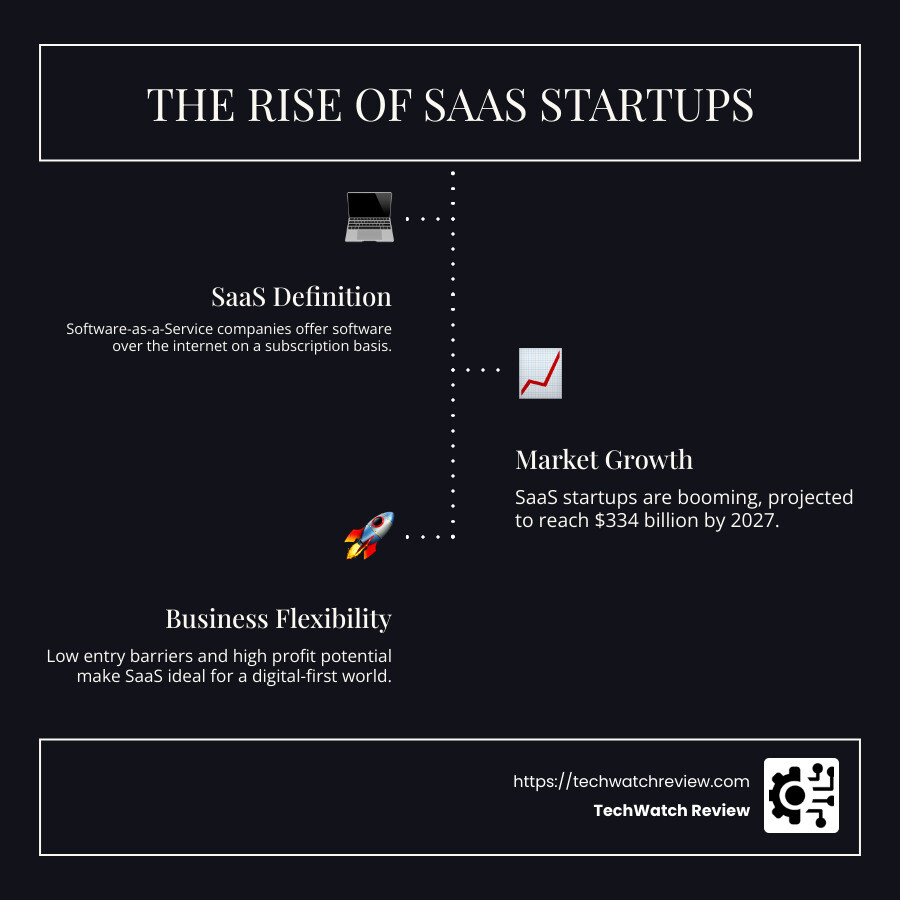
- Definition: Software-as-a-Service companies offer software over the internet on a subscription basis.
- Growth: SaaS startups are booming. The market continues to expand at a rapid pace.
- Market Size: By 2027, the global SaaS market is projected to hit $334 billion, making it a key player in tech. Learn more about SaaS metrics that fuel this growth.
The reasons for this explosion are clear: SaaS businesses require lower entry barriers, are flexible, and have the potential to be highly profitable. They don’t need hefty logistics like traditional companies do. Instead, they thrive by being nimble, innovative, and especially suited to a digital-first world. Interested in diving deeper? This comprehensive SaaS metrics guide explains the essential metrics every startup should know about.
For those looking to start their own SaaS business, understanding the initial steps and costs is crucial. Check out these resources on how to start a saas business, cost to start a software company, and business software development for more insights.

What is a SaaS Startup?
A SaaS startup is a company that offers software solutions via the internet, typically on a subscription basis. These businesses are part of the broader Software-as-a-Service (SaaS) model, which has transformed how software is delivered and consumed.
Subscription Model
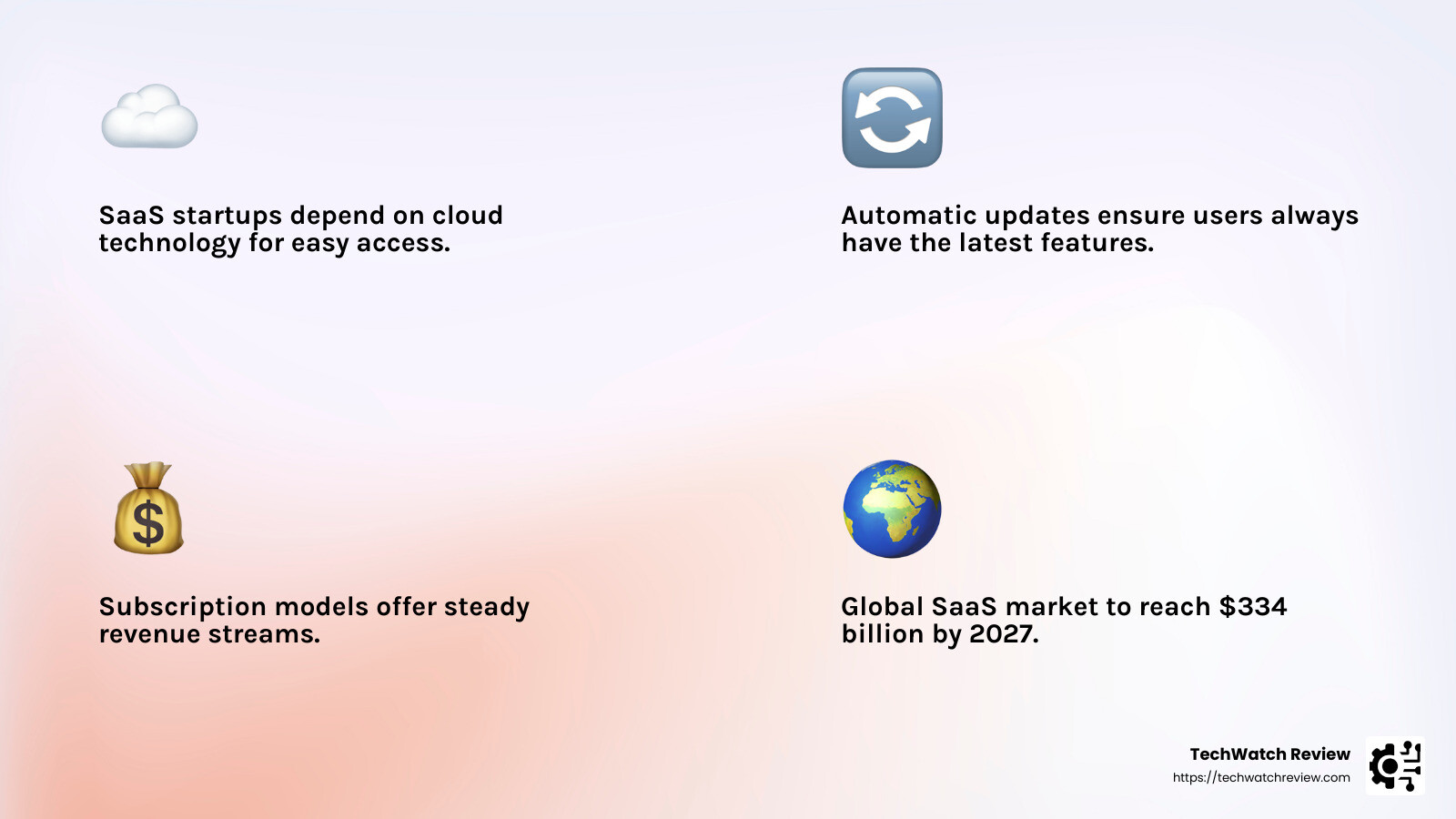
The backbone of a SaaS startup is its subscription model. Instead of paying a hefty upfront fee, customers pay a recurring fee—usually monthly or annually—to access the software. This model provides a steady revenue stream for startups and offers flexibility for customers. They can scale up or down based on their needs, making it a win-win situation. For instance, companies like InVideo leverage this model to provide scalable video creation services.
Cloud-Based Apps
SaaS startups rely heavily on cloud technology. This means that their applications are hosted on remote servers, not on a user’s local computer. This setup offers several advantages:
- Accessibility: Users can access the software from anywhere with an internet connection. This is a game-changer for remote work and global teams.
- Automatic Updates: Unlike traditional software, which requires manual updates, cloud-based apps update automatically. This ensures that users always have the latest features without any hassle.
- Cost Efficiency: By using cloud infrastructure, startups can reduce costs related to hardware and maintenance. This allows them to focus more on innovation and less on logistics.
For more insights on cloud technology, you can explore Amazon Web Services, a leading provider in this space.
The Rise of SaaS Startups
The SaaS startup landscape is booming. With the global market expected to reach $334 billion by 2027, these companies are not just surviving—they’re thriving. This growth is fueled by the increasing demand for digital solutions that are both flexible and scalable. Startups like Linktree and Printify exemplify this trend, offering unique services that cater to modern digital needs.
For more information on the growth of SaaS startups, check out TechWatch Review’s article on SaaS trends.
A SaaS startup is about leveraging the power of the internet to deliver innovative software solutions. With a subscription model and cloud-based infrastructure, these startups are well-positioned to meet the demands of a rapidly evolving digital landscape.
Steps to Start Your SaaS Startup
Develop a Great Idea
Starting a SaaS startup begins with a simple yet powerful concept: solve a specific problem. Identify issues that are prevalent in your industry or community. For example, Linktree recognized the challenge of managing multiple social media links and created a solution that streamlines this process.
Brainstorm Solutions: Once you’ve pinpointed a problem, brainstorm potential solutions that can be delivered as a software application. Think about how your solution can stand out. Is there a unique feature or a more user-friendly design that others lack?
Validate Your Ideas: Before diving into development, validate your ideas by engaging with potential customers. This can be done through surveys, interviews, or even a simple landing page to gauge interest. The goal is to ensure there’s a genuine demand for your solution. Creating a product nobody wants is a common pitfall for startups.
Build a High-Quality Software Application
With a validated idea, the next step is building your software. Focus on design and development to ensure your application is both functional and user-friendly. A well-designed application can significantly improve the user experience, making it easier to attract and retain customers.
User Experience (UX): In the SaaS world, UX is crucial. A smooth, intuitive interface can set your product apart from competitors. According to industry insights, high cancellation rates can kill SaaS startups if the UX is poor. So, invest time in designing a seamless user experience.
Create a Sales and Marketing Strategy
To reach potential customers, you’ll need a robust sales and marketing strategy. This involves multiple channels:
- Website: Your website is your storefront. Ensure it clearly communicates your value proposition and is optimized for search engines.
- Email Marketing: Build a high-quality email list and use it to send newsletters and updates about your product.
- Social Media and LinkedIn: Platforms like Twitter and LinkedIn are excellent for reaching professionals and businesses. Use these channels to share valuable content and engage with your audience.
Skimping on marketing can stall your growth. Consistent and strategic marketing efforts are essential for acquiring new customers.
Provide Excellent Customer Support
Customer support is the backbone of customer satisfaction and retention. When users encounter issues, they need quick and helpful responses. Implement strategies such as:
- Live Chat: Offer real-time support to resolve issues promptly.
- Help Center: Create a comprehensive help center with FAQs and tutorials to empower users to solve common problems independently.
Providing excellent support not only helps in retaining customers but also builds a positive reputation for your SaaS startup.
Manage Your Cash Flow Carefully
Financial management is critical for the sustainability of your SaaS startup. Since SaaS businesses typically operate on a subscription-based pricing model, it’s crucial to track revenue and expenses carefully.
- Revenue Tracking: Use tools to monitor your income streams and ensure they align with your financial goals.
- Expense Management: Keep a close eye on your expenses and adjust as needed to maintain profitability.
- Subscription Pricing: Experiment with different pricing tiers to find the sweet spot that maximizes revenue while remaining attractive to customers.
Managing cash flow effectively ensures that your startup can weather financial challenges and continue to grow.
Common Challenges and How to Overcome Them
Operational Challenges
Running a SaaS startup comes with a unique set of operational challenges. These challenges can affect the day-to-day running of your business, so it’s important to address them early.
Server Infrastructure: One of the biggest problems is managing your server infrastructure. This involves ensuring your servers are always running smoothly and can handle increased usage as your customer base grows. Consider adopting cloud-based solutions for scalability and flexibility. Cloud migration can significantly improve your infrastructure’s efficiency.
Customer Support: Providing top-notch customer support is vital. Fragmented customer support can lead to customer dissatisfaction. Implementing a robust support system with live chat and a comprehensive help center can improve user experience and retention. For more insights on customer support strategies, check out TechWatch Review’s guide on customer support.
Updates and Maintenance: Regular updates and maintenance are necessary to keep your software relevant and bug-free. Adopt agile methodologies to streamline your update process and ensure your team is prepared to address any issues promptly.
Security and Compliance: Ensuring security and compliance is crucial for maintaining customer trust. Your software must meet industry security standards and comply with relevant regulations. Regular security audits and compliance checks can help safeguard your business. Learn more about security best practices in this article from TechWatch Review.
Financial Challenges
Financial challenges can be daunting for any SaaS startup, especially with a subscription-based model where revenue might be inconsistent.
Cash Flow Management: Managing cash flow is critical. SaaS businesses need to continually generate revenue to cover costs. Implement tools for tracking your income and expenses. Delayed invoicing can harm cash flow, so ensure timely billing and follow-up on payments.
Expansion Planning: As your startup grows, planning for expansion becomes essential. This includes investing in infrastructure and hiring personnel. However, be mindful of overextending your resources. Start small and scale gradually to avoid financial strain.
Pricing: Finding the right pricing model can be challenging. Experiment with different pricing tiers to find what works best for your customers while ensuring profitability. Consider offering a freemium model to attract users and convert them to paying customers later. For more on pricing strategies, visit TechWatch Review’s pricing strategy article.
Raising Capital: Securing funding is often necessary for growth. Many startups struggle with this, especially in a competitive market. Partnering with fundraising experts can help you steer this process and avoid undercapitalization. Raising capital is not just about finding investors but also ensuring they align with your vision. Explore TechWatch Review’s tips on raising capital.
Overcoming these challenges requires a proactive approach and strategic planning. By addressing operational and financial problems, your SaaS startup can thrive in a competitive landscape.
Top SaaS Startups Making Waves in 2026
InVideo
InVideo is revolutionizing video creation with its user-friendly platform. Founded in 2017, this Singapore-based startup offers a vast library of templates and media, making it easy for users to produce professional-quality videos. Their platform has attracted over 7 million users, who create hundreds of thousands of videos each month. With a recent $40M Series B funding round, InVideo is ready for even more explosive growth, particularly with backing from notable investors like Tiger Global. Learn more about InVideo’s journey.
Linktree
Linktree is a pioneer in the “link-in-bio” space, allowing users to consolidate their most important content into a single link. Founded in Melbourne, Australia, in 2016, Linktree has raised over $165M and surpassed 50 million users as of May 2024. It’s a go-to tool for influencers and brands looking to improve their social media presence by directing followers to multiple resources from platforms that typically limit link sharing, like Instagram. Explore Linktree’s features.
Printify
Printify has made waves in the eCommerce sector with its freemium printing platform. Based in Wilmington, North Carolina, this startup enables artists and entrepreneurs to create custom printed products, from T-shirts to tablecloths, without upfront costs. Printify reached profitability in 2023 and is now exploring expansion into on-demand consumer packaged goods. With $54.1M in Series A funding and backing from investors like H&M Group, Printify is set to continue its upward trajectory in the print-on-demand market. Discover Printify’s offerings.
NitroPack
NitroPack is all about speed—specifically, website speed optimization. This Bulgarian startup, founded in 2018, automates tasks like caching and image optimization to improve website performance. With features accessible via plugins for popular platforms like WordPress and Magento, NitroPack has been installed by over 219,000 customers. Their approach to optimizing website speed is crucial in today’s digital landscape, where faster load times can significantly impact user experience and SEO. Check out NitroPack’s solutions.
Navan
Navan is changing corporate travel management with its cloud-based platform. Founded in Palo Alto, California, in 2015, Navan simplifies booking and managing business trips, offering features like automated expense reimbursement through its proprietary Navan’s Liquid technology. Despite a slight dip in search growth, Navan’s massive $2.2B in debt financing underscores the market’s confidence in its solutions. Their platform provides 24/7 support, making it an indispensable tool for companies looking to streamline travel logistics and manage expenses efficiently. Find out more about Navan.
These SaaS startups are not only innovating within their respective industries but are also setting the pace for future growth and expansion. Keep an eye on these companies as they continue to disrupt traditional business models and redefine what’s possible with software as a service.
SaaS Startup Business Models
Choosing the right business model is crucial for any SaaS startup. Let’s explore three popular models: Freemium, Subscription, and Per User.
Freemium
The freemium model offers basic services for free while charging for premium features. This approach is designed to attract a large user base quickly. Companies like Printify have successfully used this model by providing basic printing services for free and offering advanced features as paid add-ons.
Pros:
– Low barrier to entry for users.
– Potential for viral growth through word-of-mouth.
Cons:
– Converting free users to paying customers can be challenging.
– Requires a clear value proposition for premium features.
Subscription
The subscription model is the backbone of many successful SaaS companies. It involves charging users a fixed fee, typically monthly or yearly, for access to the software. This model is prevalent because it provides predictable revenue streams. For example, Navan uses a subscription model to offer its travel management services, ensuring steady income while providing value to its clients.
Pros:
– Predictable and recurring revenue.
– Easier to forecast financials and plan for growth.
Cons:
– High churn rates can impact revenue.
– Requires ongoing customer engagement to maintain subscriptions.
Per User
The per-user model charges customers based on the number of users accessing the software. This model is ideal for complex software solutions that offer significant value per user. Companies like InVideo might employ this model for enterprise clients who need multiple user accounts.
Pros:
– Scales with customer growth, increasing revenue potential.
– Aligns cost with customer usage.
Cons:
– Can be a barrier for smaller teams due to higher costs.
– Requires clear communication of value per user to justify pricing.
Each of these models has its unique advantages and challenges. The key is to align your SaaS startup‘s business model with your product’s value proposition and your target market’s needs. By doing so, you can set the stage for sustainable growth and success.
Marketing Strategies for SaaS Startups
Marketing is a crucial component for the success of any SaaS startup. Let’s explore some effective strategies that can help you reach and engage your target audience.
Content Marketing
Content marketing is about creating valuable content to attract and retain customers. One of the most effective ways to do this is through blogs. Writing about industry trends, insights, and tips can position your startup as a thought leader. Share case studies and success stories to demonstrate how your SaaS solution solves real problems. This not only builds trust but also showcases your expertise.
Additionally, consider guest blogging on relevant industry sites to expand your reach and gain high-quality backlinks. This can drive traffic to your website and improve your search engine ranking. For more insights on content marketing strategies, check out this article on TechWatch Review.
Social Media Marketing
Social media platforms like Twitter and Facebook offer excellent opportunities to connect with your audience. Share updates, industry news, and engaging content to keep your followers interested. Use tools like Hootsuite and Bufferapp to schedule posts and manage your social media presence efficiently.
Engage with your audience by responding to comments and messages promptly. This interaction helps build a community around your brand and encourages customer loyalty. Learn more about effective social media strategies in this TechWatch Review article.
Email Marketing
Building a high-quality email list is vital for effective email marketing. Use newsletters to keep your subscribers informed about new features, updates, and industry insights. Personalize your emails to make them more relevant and engaging for your audience.
Focus on delivering value through your emails rather than just promoting your services. This approach can lead to higher open rates and better customer retention. For tips on email marketing, visit TechWatch Review’s guide.
Referral Programs
Referral programs can be a powerful way to acquire new customers. Encourage your existing customers to refer your SaaS startup to others by offering incentives. This could be discounts, free months of service, or exclusive features.
You can also hire an inbound marketing agency to help set up and manage your referral program. A well-executed referral program can lead to a steady stream of new customers and increase your brand’s visibility. For more on setting up referral programs, see this article on TechWatch Review.
Frequently Asked Questions about SaaS Startups
What is a SaaS startup?
A SaaS startup is a new business that develops and offers software solutions as a service. These companies provide cloud-based applications that customers can access via the internet, typically on a subscription basis. Unlike traditional software, which requires installation and maintenance on individual devices, SaaS products are hosted on remote servers. This model allows users to access their software from anywhere, making it highly convenient and scalable.
Example: InVideo, a SaaS startup founded in 2017, offers a video creation platform with ready-made templates and a vast media library, allowing users to create videos online without downloading any software.
What does SaaS stand for?
SaaS stands for Software as a Service. It is a delivery model where software is provided over the internet, eliminating the need for physical installation on local devices. The SaaS model is popular due to its flexibility, ease of use, and cost-effectiveness. Users pay a recurring fee, typically monthly or annually, to access the software and benefit from regular updates and support.

What qualifies as a SaaS company?
A company qualifies as a SaaS company if it meets the following criteria:
-
Cloud-Based Delivery: The software is hosted on the cloud, allowing users to access it via the internet.
-
Subscription Model: Customers pay a recurring fee to use the software, rather than purchasing a one-time license. This model offers predictable revenue streams and continuous customer engagement.
-
Maintenance and Updates: The company is responsible for maintaining the software and providing regular updates, ensuring users have access to the latest features and security patches.
-
Scalability: SaaS solutions are designed to scale easily, allowing businesses to add or remove users and features as needed.
Case Study: Linktree, founded in 2016, is a SaaS company that provides a platform for creating a single link to house multiple pieces of content. It has grown rapidly due to its innovative approach and subscription-based model, reaching over 50 million users by May 2024.
At TechWatch Review, we recognize the vast potential and challenges involved in launching a successful SaaS startup. The SaaS industry is experiencing significant growth, with the global market expected to reach $334 billion by 2027. This expansion offers a prime opportunity for entrepreneurs to innovate and establish a niche in this ever-evolving field.
Innovation is crucial for any successful SaaS startup. Companies like Bubble.io exemplify how innovation can break barriers and create new markets by enabling users to build apps without traditional coding. Startups that prioritize unique solutions and user-friendly designs often find themselves leading the industry.
The growth potential for SaaS startups is immense. For instance, Kajabi has shown how a robust business model and a focus on customer needs can lead to exponential growth. Starting as a bootstrapped venture, Kajabi grew to a valuation of over $2 billion, demonstrating that with the right strategy, success is within reach.
To succeed, SaaS startups should concentrate on several key areas:
- Customer Acquisition and Retention: Building strong relationships and ensuring customer satisfaction are essential for sustained growth.
- Scalability: As demand increases, so should your infrastructure and services.
- Continuous Improvement: Regular updates and enhancements keep your product relevant and valuable.
For those ready to enter the SaaS world, now is the time to act. With the right approach and a commitment to innovation, your SaaS startup could become the next big success story in the tech industry.
For more insights and expert advice on launching your SaaS startup, explore our TechWatch Review blog. We offer comprehensive reviews and the latest trends to help you stay informed and make the best decisions for your venture.