Table of Contents
Understanding BIM Management: The Cornerstone of Modern Construction
Choosing the right bim management platform is vital for any construction project. Here’s a quick snapshot to make an informed choice:
- Streamlined Collaboration: Facilitates smooth communication among architects, engineers, contractors, and owners.
- Digital Efficiency: Converts traditional blueprints into digital models, reducing errors.
- Compliance and Standards: Ensures adherence to industry standards like ISO 19650.
- Real-time Monitoring: Tracks project progress and detects clashes before they become issues.
In construction, communication and coordination are king. Wouldn’t it be great to streamline your entire building process and keep everyone in the loop? With advancements in Building Information Modeling (BIM), this is now possible. BIM transforms traditional blueprints into digital models, making it easier for everyone involved to collaborate, plan, and execute construction projects flawlessly.
Imagine a scenario where all project stakeholders can view, comment, and approve plans in real-time. No more costly mistakes or time-consuming revisions. BIM management just makes sense.
Explore more about optimizing your construction process here.

bim management platforms – bim management platform infographic pillar-4-steps” class=”aligncenter” src=”https://images.bannerbear.com/direct/4mGpW3zwpg0ZK0AxQw/requests/000/065/019/591/NWlVkgmbMQEwlLBqzZyAqEwDo/a15eeb62c7d0e4816882d90c67ef8b672d2ac2e5.jpg” style=”display: block; margin-left: auto; margin-right: auto; max-width: 100%;” title=”Benefits of BIM management platforms – bim management platform infographic pillar-4-steps”/>
For more insights on BIM management, check out our detailed guide on Plannerly.
What is a BIM Management Platform?
A BIM management platform is a digital tool that helps streamline construction projects by converting traditional blueprints into interactive digital models. These platforms facilitate collaboration among architects, engineers, contractors, and owners. They ensure everyone is on the same page, reducing errors and improving project efficiency.
Key Features of BIM Management Platforms
1. Modeling Tools:
BIM platforms come with robust modeling tools that allow professionals to create detailed 3D models of buildings and structures. These models are not just visual; they contain critical data about materials, dimensions, and other specifications.
2. Project Management:
Effective project management is crucial in construction. BIM platforms offer tools for scheduling, task management, and resource allocation. This ensures that projects stay on track and within budget.
3. Compliance Standards:
Compliance with industry standards like ISO 19650 is essential. BIM platforms ensure that all models and documents adhere to these standards, making it easier to meet legal and contractual requirements.
Popular BIM Management Platforms
Autodesk Revit:
A leader in the industry, Autodesk Revit is known for its comprehensive modeling tools and seamless integration with other Autodesk products like AutoCAD and BIM 360.
Plannerly:
Plannerly is a cloud-based platform that simplifies BIM management by offering features like drag-and-drop templates, visual scoping, and automated model checking. It’s designed for easy collaboration and compliance with industry standards.
Trimble Connect:
Trimble Connect focuses on improving coordination and collaboration. It offers cloud-based storage and easy access to project data, making it a popular choice for large construction projects.
Revizto:
Revizto specializes in real-time issue tracking and collaboration. It integrates with various BIM tools to provide a unified platform for managing project data and communications.
BIMCollab:
BIMCollab is known for its issue management capabilities. It integrates with tools like Revit and Navisworks to help teams track and resolve issues efficiently.
Dalux:
Dalux offers a range of tools for BIM coordination, including augmented reality features that allow users to visualize models on-site.
Autodesk BIM 360:
Autodesk BIM 360 is a comprehensive construction management platform that connects workflows and teams. It offers features for document management, project tracking, and issue resolution.
BricsCAD BIM:
BricsCAD BIM provides a robust set of modeling tools and supports various file formats, making it a versatile option for BIM management.
Graphisoft ArchiCAD:
Graphisoft ArchiCAD is known for its user-friendly interface and powerful design tools. It’s a favorite among architects for creating detailed building models.
Solibri Model Checker:
Solibri Model Checker focuses on quality assurance and compliance. It offers advanced model-checking features to ensure that all designs meet industry standards.
Autodesk Navisworks:
Autodesk Navisworks is a powerful tool for project review and coordination. It allows users to combine models from different sources and perform clash detection.

Each of these platforms offers unique features custom to different aspects of BIM management. Choosing the right one depends on your specific needs and project requirements.
Benefits of Using Plannerly for BIM Management
Simplified Document Management
One of the standout features of Plannerly is its simplified document management system. This makes it incredibly easy to manage all your project documents in one place. Whether you need to handle Building Information Modeling (BIM) standards, processes, or legal agreements, Plannerly has you covered.
Key Highlights:
-
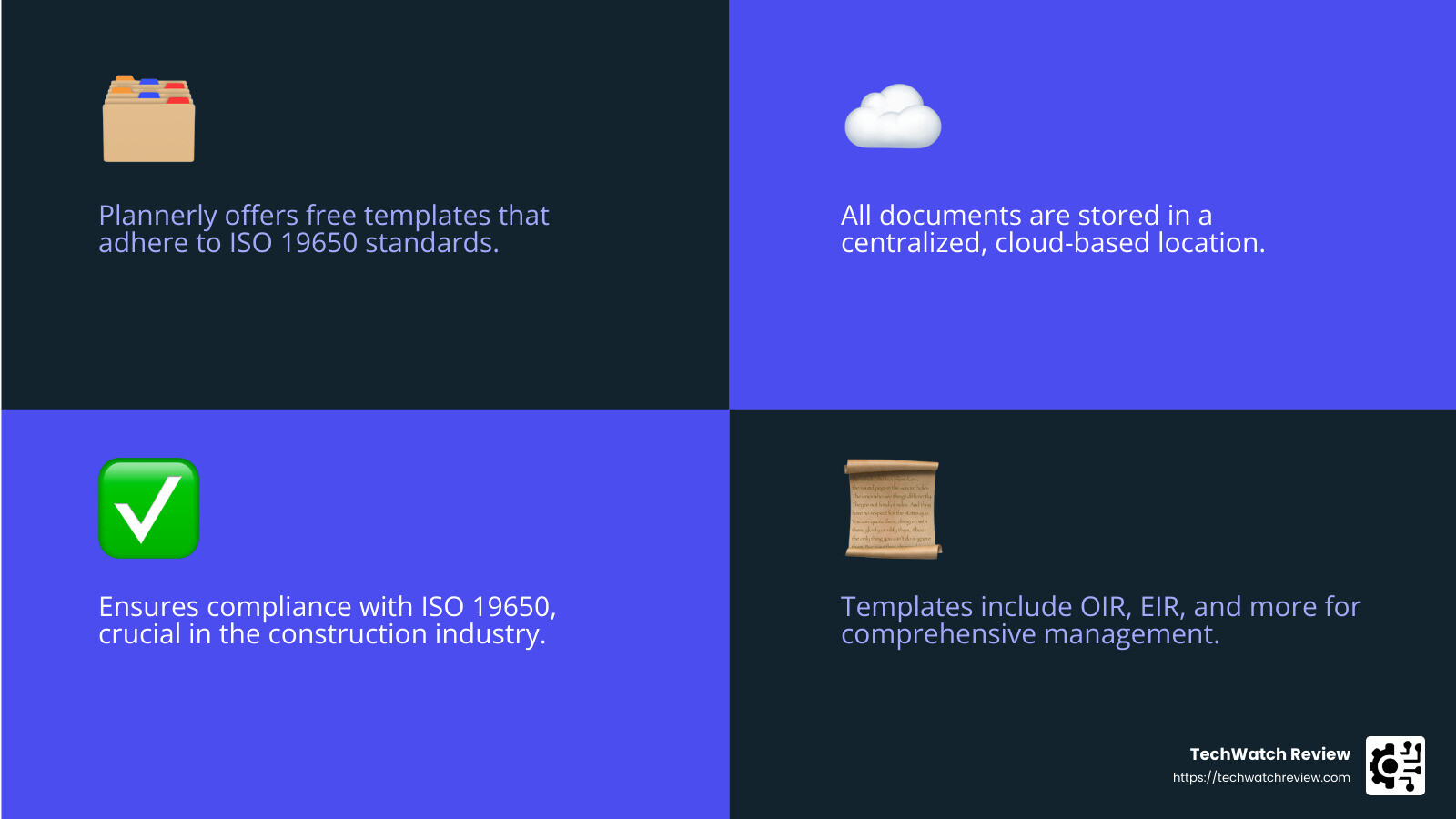
Document Templates: Plannerly offers a variety of free templates that adhere to ISO 19650 standards. These include templates for Organizational Information Requirements (OIR), Exchange Information Requirements (EIR), and more. This ensures you’re always in compliance.
-
Centralized Storage: All your documents are stored in a centralized, cloud-based location. This makes it easy to access, share, and manage your files, eliminating the chaos of unstructured documents.
-
ISO 19650 Compliance: Compliance is crucial in the construction industry. Plannerly ensures that all your documents meet ISO 19650 standards, making it easier to adhere to legal and contractual requirements.
Visual Scoping and Task Management
Plannerly excels in visual scoping and task management, ensuring everyone on your team knows what needs to be done and when.
Key Features:
-
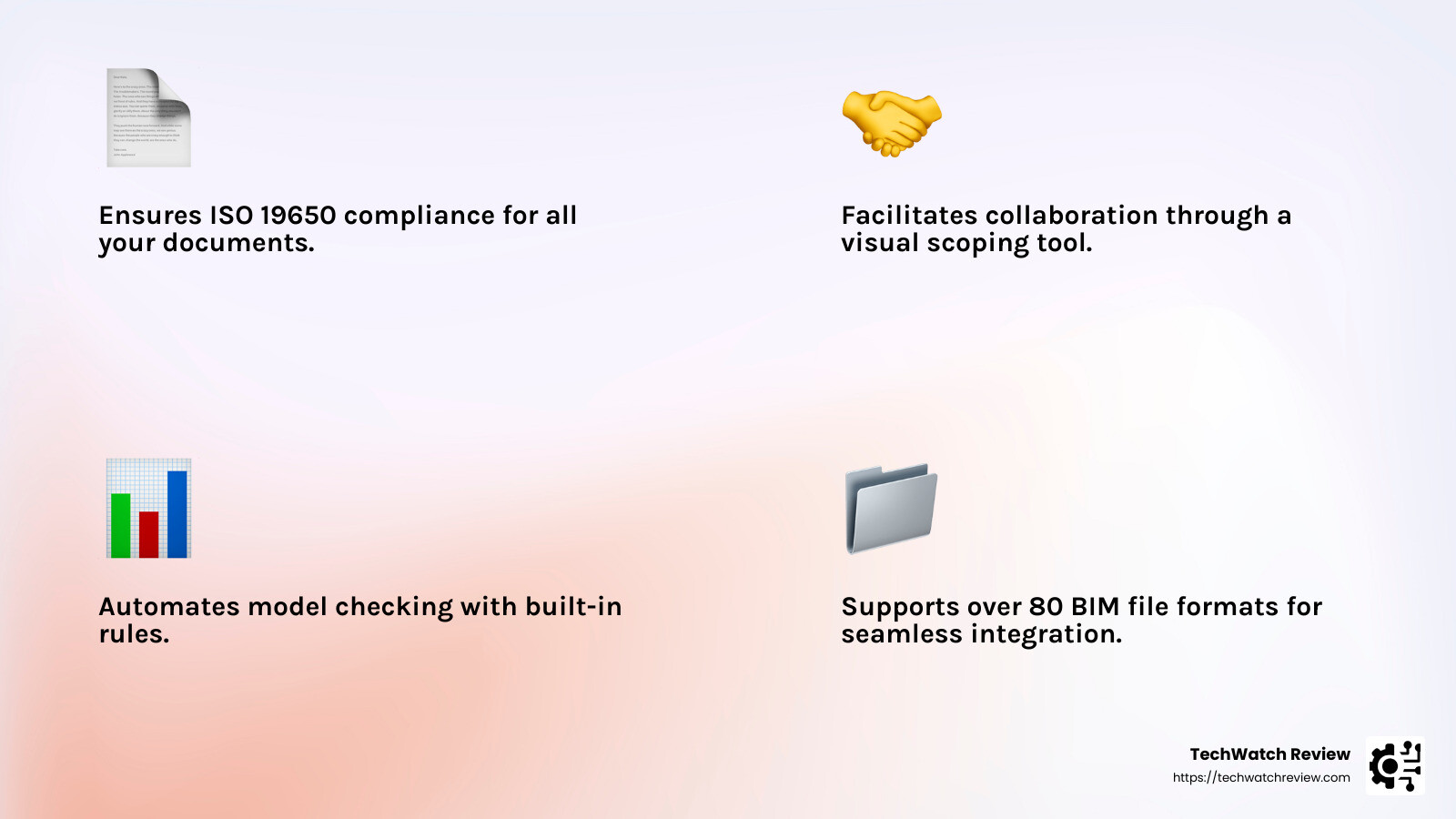
Collaborative Framework: Plannerly’s visual scoping tool allows for easy collaboration. You can set standards and assign tasks using a sleek, intuitive interface. This ensures that everyone is on the same page, reducing miscommunication and last-minute surprises.
-
Industry Standards: The platform follows nearly all industry-standard frameworks such as AIA, BIM Forum, and ISO 19650. This ensures that your project meets all necessary guidelines.
-
Intuitive Interface: The drag-and-drop functionality makes it easy to assign tasks, set deadlines, and monitor progress. It’s designed to be user-friendly, so even those who aren’t tech-savvy can steer it easily.
Automated Model Checking and Compliance
One of the most time-consuming aspects of BIM management is ensuring that all models comply with set standards. Plannerly simplifies this with its automated model checking and compliance features.
Advantages:
-
Information Requirements: Integrated information requirements make it easy for suppliers to check their models for compliance before sharing them. This reduces the risk of errors and ensures that all models meet your project’s standards.
-
Model-Checking Rules: Plannerly includes built-in model-checking rules that automate the compliance process. This saves time and reduces the need for manual checks.
-
File Format Support: With support for over 80 BIM file formats, including Revit and IFC, Plannerly makes it easy to work with various types of files. This ensures that you can integrate models from different sources seamlessly.
By linking up with Autodesk Construction Cloud (ACC), Plannerly also allows for automatic syncing and verification of versions. No more tedious manual checks—just stress-free compliance.
Next, we’ll dive into how to get started with Plannerly, including a step-by-step guide for setting up your account, uploading plans, and inviting users.
How to Get Started with Plannerly
Step-by-Step Guide
Getting started with Plannerly is straightforward. Follow these steps to set up your account and get your project rolling:
-
Create an Account
- Join Free: Head over to the Plannerly website and sign up for a free account.
- Create Your Account: Fill in your details to create your profile. This will be your workspace where you manage all your BIM projects.
-
Upload Plans
- Upload Your Documents: Once your account is set up, you can upload your project plans. Plannerly supports various file formats like PDF, JPEG, and PNG. For BIM models, you can upload IFC files from software like Revit and ArchiCAD.
-
Invite Users
- Collaborate with Your Team: Invite your team members to join your workspace. This ensures everyone can access the latest plans and contribute to the project seamlessly.
-
Download the App
- Stay Connected: Download the Plannerly app on your mobile device to manage your project on the go. This way, you can keep track of updates and communicate with your team anytime, anywhere.
Integration with Other Tools
Plannerly seamlessly integrates with various tools to improve your BIM management experience. Here’s how you can make the most of these integrations:
-
Autodesk Construction Cloud (ACC): By integrating with ACC, you can connect workflows, teams, and data, ensuring your project runs smoothly from start to finish. This integration helps in avoiding data duplication and exploring new workflows.
-
Dropbox, Google Drive, and OneDrive: Plannerly supports integrations with popular storage solutions like Dropbox, Google Drive, and OneDrive. This makes document sharing and storage efficient and straightforward.
-
Open API and Webhooks: If you have specific integration needs, Plannerly offers an open API and webhooks. This allows your IT team to set up custom integrations to meet your unique requirements.
By following these steps and leveraging these integrations, you can streamline your BIM processes and ensure efficient project management.
Next, we’ll address some frequently asked questions about BIM management platforms to help you make informed decisions.
Frequently Asked Questions about BIM Management Platforms
What is BIM management system?
A BIM management system is a digital tool designed to streamline the planning, execution, and maintenance of building projects using Building Information Modeling (BIM). It allows architects, engineers, contractors, and owners to collaborate effectively by managing project data in a centralized location. This ensures that everyone involved is working with the most up-to-date information, reducing errors and improving efficiency.
What is a BIM platform?
A BIM platform is software that provides tools for creating, managing, and sharing digital representations of physical and functional characteristics of places. These platforms facilitate project coordination, allowing stakeholders to visualize and modify building models in real-time. Examples include Autodesk Revit and Plannerly.
What software is used for BIM manager?
BIM managers use a variety of software to oversee BIM processes and ensure project success. Some popular options include:
- Plannerly: Known for its user-friendly interface and powerful BIM management tools.
- Autodesk BIM 360: Offers comprehensive project management features.
- Revizto: Focuses on real-time issue tracking and model coordination.
- Graphisoft ArchiCAD: Provides robust modeling tools for architects.
- Solibri Model Checker: Ensures compliance and quality control through advanced model checking.
These tools help BIM managers coordinate teams, manage data, and ensure compliance with industry standards, making them essential for successful project delivery.
Conclusion
At TechWatch Review, our mission is to provide you with expert insights and help you make informed decisions about the best technology products for your business. When it comes to choosing a BIM management platform, we understand the importance of detailed, reliable information.
Informed Decisions
Making an informed decision means understanding the features, benefits, and limitations of each BIM platform. For instance, Plannerly offers a comprehensive solution for creating and managing BIM Execution Plans (BEPs), with features like AI-powered templates and automated model checking. This can significantly improve your project coordination and compliance.
Comprehensive Insights
Our team of experienced writers and tech enthusiasts has thoroughly researched and tested top BIM management platforms. We aim to deliver clear, concise, and actionable information to help you choose the right platform. Whether it’s the robust features of Autodesk BIM 360 or the visual scoping tools of Trimble Connect, we’ve got you covered.
By offering detailed comparisons, user reviews, and expert recommendations, we help you find the best BIM management platform that aligns with your specific needs. For more detailed comparisons and expert reviews, visit our dedicated page on construction management software.
Thank you for trusting TechWatch Review. We hope our insights help you make the best choice for your business’s BIM management needs.