Table of Contents
In a rapidly evolving digital world, no code ecommerce platform solutions are making waves by breaking down barriers to entry for countless aspiring online entrepreneurs. These platforms do not require any coding expertise, democratizing the e-commerce space and allowing users to quickly and efficiently set up online stores. This surge is enabled by user-friendly interfaces and pre-built templates that simplify the entire process.
Here’s why no code ecommerce platforms are game-changers:
- Ease of Use: No technical skills required; just drag and drop features.
- Cost-Effective: Saves on hiring developers; many have free plans.
- Scalable: Easily handle growth without a rebuild.
- Customizable: Offers diverse templates and design options.
The e-commerce landscape is ready for tremendous growth as global e-commerce sales are expected to skyrocket to $6.4 trillion by the end of 2023, according to Statista. This massive growth is not just a testament to increasing online shopping trends but also highlights the critical role of no-code solutions in enabling businesses to keep pace with technological advancements.
For more insights on the impact of no-code platforms, you can explore TechWatch Review’s article on digital transformation. Now is the perfect time to explore these no code options as they offer easy access to online commerce, allowing you to focus more on your products and customers instead of the technical complexities.

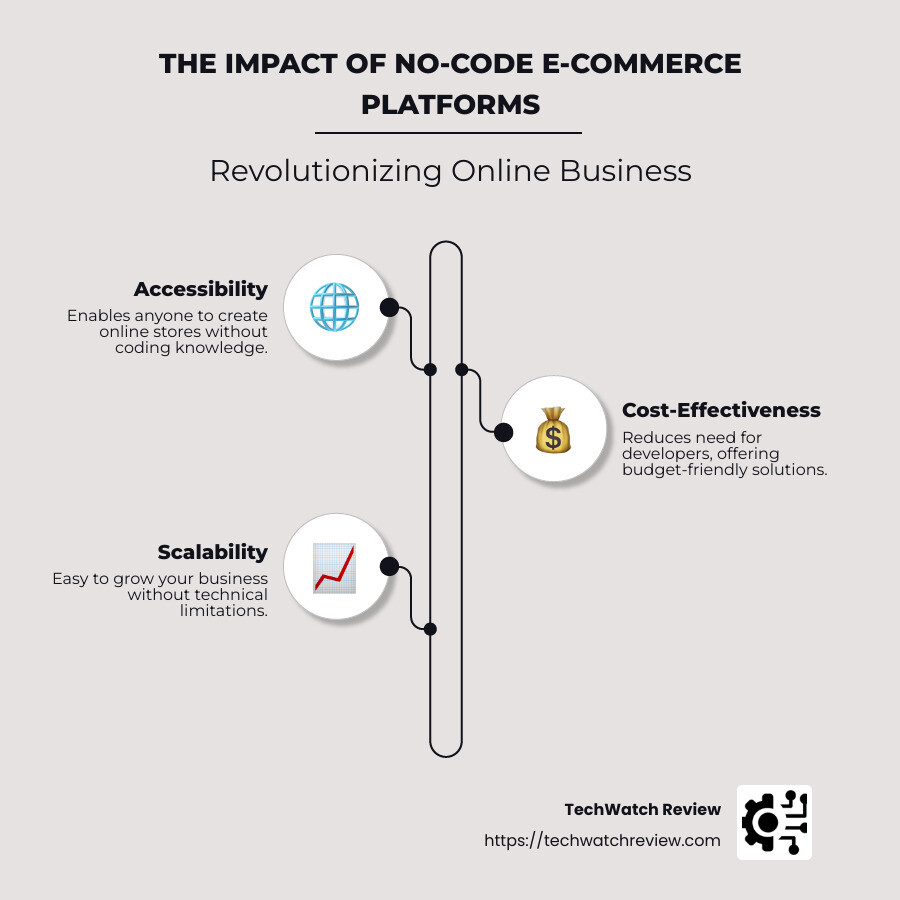
A no code ecommerce platform is a digital tool that allows anyone to create and manage an online store without writing a single line of code. These platforms use visual editors and pre-designed templates to simplify the process of building an e-commerce site, making it accessible to everyone—from tech novices to seasoned entrepreneurs.
Benefits of No-Code E-commerce Platforms
Ease of Use: The primary advantage of no-code e-commerce platforms is their simplicity. With drag-and-drop interfaces, setting up an online store becomes as easy as pie. You can add products, customize your store’s look, and manage sales without touching any code.
Accessibility: No-code platforms open the doors of e-commerce to a broader audience. Whether you’re a small business owner, a hobbyist, or someone with a brilliant idea, you can create a professional-looking online store without needing technical skills.
Cost-Effective: Hiring developers can be expensive. No-code platforms eliminate this cost, offering free or affordable plans. This makes them ideal for startups and small businesses working with tight budgets.
Flexibility and Customization: Many no-code platforms provide a range of templates and design options to help you create a unique store that reflects your brand. You can customize layouts, color schemes, and even add features through integrations.
Ease of Use and Accessibility
The beauty of no-code platforms lies in their user-friendly nature. They are designed for people who want to focus on their business rather than get bogged down by technical details. This democratization of technology allows anyone to enter the e-commerce space, as highlighted by the surge in popularity of platforms like Shopify and Wix.
Moreover, these platforms often come with robust support systems. Tutorials, community forums, and dedicated customer support ensure that users can get help whenever needed. This support is crucial for beginners who might feel overwhelmed at first. For more insights on how these platforms are transforming the e-commerce landscape, check out TechWatch Review’s article on e-commerce trends.

In summary, no code ecommerce platforms are revolutionizing the way businesses enter the online market. By removing the barriers of technical expertise and high development costs, they empower a diverse range of individuals and businesses to launch and grow their online presence. As the e-commerce market continues to expand, these platforms will play an even more significant role in shaping the future of online retail.
Top No-Code E-commerce Platforms for 2026
Shopify
Shopify stands out as a leader in the no code ecommerce platform space, offering an intuitive drag-and-drop interface that makes setting up an online store straightforward and efficient. With a rich ecosystem of apps and integrations, Shopify provides everything from inventory management to marketing tools. Its vast array of templates allows users to create visually appealing storefronts without any coding knowledge. This platform is particularly popular among small businesses and startups looking to quickly establish an online presence. Learn more about Shopify’s features.
Webflow
Webflow is a go-to for those seeking more customization in their e-commerce platforms. It combines a powerful no-code editor with a comprehensive set of design tools, allowing users to build highly customized e-commerce sites. Webflow University offers an extensive library of tutorials, making it easier for users to learn and leverage the platform’s capabilities. This platform is ideal for users who want more control over the design and functionality of their online store. Explore Webflow’s capabilities.
Wix
Known for its user-friendly interface, Wix is another prominent player in the no code ecommerce platform arena. It offers a variety of templates and a simple drag-and-drop editor, making it easy for users to build and customize their online stores. The Wix ecosystem includes a range of tools and features that support SEO, marketing, and customer engagement, providing a comprehensive solution for businesses of all sizes. Discover more about Wix.
WooCommerce
WooCommerce is a powerful plugin that transforms WordPress sites into fully functioning online stores. As an open-source platform, it offers extensive customization options and a robust community for support and development. The WooCommerce ecosystem includes numerous plugins and themes, allowing businesses to tailor their e-commerce sites to their specific needs. This platform is particularly favored by those already familiar with WordPress and looking for a flexible e-commerce solution. Find out more about WooCommerce.
BigCommerce
BigCommerce is known for its enterprise-level capabilities and open-source flexibility. It is part of the MACH alliance, which promotes open and modular software architectures. This platform offers a comprehensive suite of e-commerce tools, making it suitable for businesses looking to scale. The BigCommerce ecosystem supports a wide range of integrations and extensions, providing users with the flexibility to build complex e-commerce solutions without coding. Learn about BigCommerce’s offerings.
FlutterFlow
FlutterFlow is a unique platform that focuses on mobile app creation without the need for coding. It provides a range of tutorials and a supportive community, making it accessible to beginners and experienced developers alike. This platform is ideal for businesses looking to create mobile-first e-commerce experiences, leveraging the growing trend of mobile shopping. Explore FlutterFlow.
Bubble
Bubble is a versatile no-code platform that allows users to build and launch full-stack web applications. It boasts a large community and a comprehensive set of features, making it one of the most flexible options available. The Bubble ecosystem supports rapid prototyping and easy customization, enabling users to create sophisticated e-commerce solutions with minimal effort. This platform is perfect for those who need a robust solution that can grow with their business. Discover Bubble’s potential.
Best No-Code Tools for E-commerce
Airtable
Airtable is a powerhouse for database management and inventory tracking. This tool combines the simplicity of a spreadsheet with the functionality of a database, making it perfect for organizing e-commerce operations. You can seamlessly integrate Airtable with other tools to streamline processes. For example, link it with Zapier to automate updates across platforms, ensuring your inventory is always up-to-date.
Carrd
If you need a sleek one-page website, Carrd is your go-to. It’s incredibly user-friendly and offers a variety of templates to get you started quickly. Carrd’s pricing is also a standout feature, with a free version and a “Pro” plan at just $19 per year, making it an affordable option for small businesses.
Chatfuel
Automating customer support can save time and resources. Chatfuel offers an automated chatbot solution that can handle inquiries about products, stock, and more. It’s perfect for businesses with high customer interaction. Chatfuel provides a free tier, and its pricing scales with the level of automation and user support you need.
Chipbot
Chipbot replaces traditional live chat with interactive videos, offering self-service support to customers. This tool is great for engaging users and providing them with the information they need. The free version allows one video, while the “Startup” plan costs $10/month, making it a cost-effective solution for growing businesses.
Deliverr
For e-commerce fulfillment, Deliverr is a game-changer. It allows small businesses to sell across multiple platforms and offers competitive 2-day delivery options. Deliverr charges per unit, with a cost calculator available to help you manage expenses and pricing.
Famous
Famous provides design tools focused on mobile experiences. It’s ideal for creating visually stunning mobile sites that capture customer attention. While pricing details vary, the platform is known for offering competitive rates that cater to small and medium businesses.
Glide
Glide lets you build customizable apps using Google Sheets as a backend. It’s perfect for those who want to create simple, data-driven applications without coding. Glide’s pricing is accessible, with options that fit different business needs and scales.
Gumroad
Gumroad is designed for direct sales and automation workflows. It’s a great tool for creators and small businesses looking to sell digital products. Gumroad offers a straightforward pricing model, making it easy to understand and budget for.
Mesa
Mesa specializes in Shopify automation and tool integration. It helps automate routine e-commerce tasks, freeing up time for more strategic activities. Pricing varies based on the level of automation required, but it’s a worthwhile investment for Shopify users.
Printful
Printful offers a print-on-demand service, allowing businesses to create custom products without holding inventory. This model is perfect for startups and artists. Printful’s pricing is competitive, with costs based on the products and services used.
ReallySimpleStore
For those needing embeddable payment cards, ReallySimpleStore is an excellent choice. It integrates with Zapier, allowing for seamless automation across your e-commerce platform. Pricing is straightforward, making it easy for small businesses to get started.
Sandbox Commerce
Sandbox Commerce allows businesses to build mobile apps and send push notifications. It’s a great tool for enhancing customer engagement through mobile platforms. Pricing is flexible, accommodating different business sizes and needs.
Tapcart
Tapcart is perfect for businesses using Shopify, offering a no-code solution for building mobile apps. This tool provides real-time updates for products and pricing, ensuring a unified shopping experience. Tapcart’s pricing is custom to the level of service and support required.
Zapier
Zapier is a versatile tool for automation and task management, connecting over 3,000 apps to streamline your e-commerce operations. With a free plan available and basic plans starting at $9.99/month, it’s an affordable way to boost efficiency and save time.
How to Build an E-commerce Website Without Coding
Building an e-commerce website without touching a single line of code is a dream come true for many budding entrepreneurs. With no-code e-commerce platforms, you can bring your online store to life in just a few simple steps. Let’s explore the process from start to finish:
Step 1: Find Your Inventory
First things first, you need products to sell. Two popular options are:
-
Alibaba Express: This platform is synonymous with e-commerce. It offers a vast global market of wholesale goods, which you can drop-ship directly to your customers. This means you don’t have to hold inventory yourself, reducing risk and upfront costs.
-
Printful: Ideal for those looking to start a clothing brand or sell custom prints. Printful allows you to create products on-demand from your own designs. This print-on-demand service means you don’t have to worry about unsold stock.
Step 2: Set Up Your Shop
With inventory sorted, it’s time to set up your online store. Here are two excellent platforms:
-
Shopify: Known for its ease of use, Shopify allows you to set up an online store without any coding. With its drag-and-drop interface and a wide range of templates, you can get your store up and running quickly.
-
WooCommerce: If you’re already using WordPress, WooCommerce is a great option. It integrates seamlessly and offers a wide ecosystem of themes and plugins to customize your store.
Step 3: Choose a Name and Register a Domain
Your store needs a catchy name and a domain to match. Here are two tools to help:
-
Shopify Name Generator: This tool not only helps you brainstorm names but also checks domain availability. It’s integrated with Shopify, making it a convenient choice if you’re using their platform.
-
Business Name Generator: Another great option that suggests names and checks domain availability, helping you make a quick decision.
Step 4: Get a Logo
A professional logo is crucial for brand recognition. Here are two no-code tools to design one:
-
UCraft: Offers a simple interface with minimalist and modern icons to create a logo without signing up.
-
Lunchaco: Select a few preferences, and it will generate a random logo for you. It’s an easy way to get started with your branding.
Step 5: Launch!
It’s time to go live! Here are tools to help with the launch:
-
Oberlo: If you’re drop-shipping from Alibaba, Oberlo is a must-have. This plugin automates order placement, saving you time and effort.
-
Canva: Use Canva to create stunning designs for your social media promotions. Even if you’re not a designer, Canva’s templates make it easy to create professional-looking graphics.
These steps will guide you through building your no-code e-commerce platform from start to finish. With these tools, launching an online store is more accessible than ever, allowing you to focus more on growing your business and less on technical problems.
Frequently Asked Questions about No-Code E-commerce Platforms
Can we make an e-commerce website without coding?
Absolutely! Thanks to modern builders, creating an e-commerce website without any coding skills is not just possible, it’s becoming the norm. Platforms like Shopify, Wix, and Squarespace offer intuitive drag-and-drop interfaces that let you design your store visually. This means you can focus on what really matters—your products and customers—without worrying about the technical details of web development.
No-code platforms are designed to be beginner-friendly. They offer templates and customization options that make it easy to create a professional-looking site. Plus, with features like secure payment gateways and inventory management, you have everything you need to run your online store efficiently. For more insights on how to choose the right platform, check out our guide on selecting e-commerce platforms.
Is Shopify a no-code platform?
Yes, Shopify is a prime example of a no-code platform. It allows users to build and manage their online stores without writing a single line of code. Shopify’s drag-and-drop interface means you can easily add products, create pages, and customize your store’s look and feel.
Shopify is especially popular among beginners because it simplifies the e-commerce setup process. It provides a wide range of templates and themes to choose from, so you can have a beautiful storefront up and running in no time. Additionally, the Shopify ecosystem includes numerous apps and integrations that can improve the functionality of your store, all without requiring any coding knowledge. For a deeper dive into Shopify’s features, visit the Shopify website.
How to make an e-commerce app without coding?
Creating an e-commerce app without coding is just as straightforward as building a website. Platforms like FlutterFlow and Glide are excellent for this purpose. Here’s how you can do it:
-
Basic Details: Start by defining the core features of your app. Decide what functionalities are essential for your users, such as product browsing, cart management, and checkout.
-
Customization: Use the platform’s drag-and-drop tools to customize your app’s appearance and layout. You can adjust colors, fonts, and images to match your brand’s identity.
-
Preview: Most no-code platforms allow you to preview your app in real-time. This feature lets you see how your app will look and function on different devices, ensuring a seamless user experience.
-
Publish: Once you’re satisfied with your app, it’s time to publish it. No-code platforms provide straightforward publishing options, allowing you to launch your app on app stores or distribute it directly to users.
By using these tools, you can create a fully functional e-commerce app that meets your business needs without the hassle of coding. This approach not only saves time but also makes app development accessible to everyone, regardless of their technical background. For more tips on app development, explore our app development resources.
In the rapidly evolving world of e-commerce, the rise of no code ecommerce platforms has been a game-changer. These platforms have democratized the process of building online stores, making it accessible to everyone, regardless of technical expertise. From Shopify to Wix and Squarespace, these tools offer user-friendly interfaces that allow anyone to create a professional online presence.
At TechWatch Review, we are committed to providing you with the most comprehensive and up-to-date information on the latest technology products. Our goal is to help you make informed decisions by offering expert insights and reviews. As we’ve explored in this article, no-code solutions are not only a trend but a pivotal shift in how businesses approach e-commerce.
As we look to the future, the potential for no-code platforms to further simplify and improve the e-commerce landscape is immense. Whether you’re a budding entrepreneur or an established business, embracing these tools can streamline your operations and open new avenues for growth.
For more insights and expert reviews on the latest tech trends, visit our main category page. Stay informed and ahead of the curve with TechWatch Review. Additionally, explore our articles on Shopify’s latest features and Wix’s e-commerce capabilities to deepen your understanding of these platforms.